







$1,740.83 Each Prices subject to change



We never sell your data to third parties
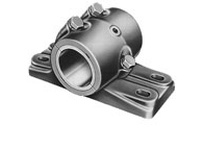
Dodge 230068 P4B-BAA-315 four-bolt pillow block sleeve bearing with 3-15/16" bore, tin babbitt insert, cast iron split housing, expansion (float) design, and grease lubrication for heavy-duty industrial applications.
MODEL 230068
Contact supplier for technical support on: +1-864-284-5700
$1,903.31 Each
Prices are subject to change
FREE SHIPPING ON ORDERS OVER $100
Select Quantity
Typically Ships in: 1 day
Returnable: See conditions

#123821
Brand
Dodge
Model
230062

#123878
Brand
Dodge
Model
230080

#122573
Brand
Dodge
Model
023795

#123822
Brand
Dodge
Model
230065
Base to center height
3.5000 in, 88.9 mm
Bearing type
Journal, journal
Bolt Diameter
0.7500 in
Bolt to bolt max
12.5000 in, 317.5 mm
Bolt to bolt min
11.5000 in, 292.1 mm
Bolt width
3.0000 in, 76.2 mm
Bore length
8.0000 in, 203.2 mm
Expansion capability
Expansion (float)
Greasable
No
Housing construction
Split
Housing material
Cast iron
Housing type
Four-bolt pillow block
Insert material
Tin babbitt
Lubrication type
Grease
Rolling element
Sleeve
Shaft diameter
3.9375 in
Take-up frame size
HD-350
4-Bolt Pillow Block Bearings Dodge 4-Bolt Pillow Block Bearings are engineered to provide robust support and stability for rotating shafts in various industrial applications. Designed for high-load capacity and durability, these bearings are ideal for environments that demand precision and reliability.
Key Features
| High Load Capacity | Designed to handle substantial radial and axial loads, ensuring optimal performance in demanding conditions. |
|---|---|
| Durable Construction | Made with high-quality materials that resist wear and corrosion, extending the lifespan of the bearing. |
| Easy Installation | The 4-bolt mounting design simplifies installation and alignment, saving time and reducing labor costs. |
| Precision Engineering | Manufactured to exacting tolerances for smooth operation and reduced vibration, enhancing overall system performance. |
| Versatile Compatibility | Suitable for a wide range of applications, including conveyor systems, manufacturing equipment, and agricultural machinery. |
Applications
| Industrial Equipment | Ideal for use in conveyor systems, mixers, and other machinery where reliable shaft support is vital. |
|---|---|
| Agricultural Machinery | Perfect for applications in tractors and harvesters that require durable and efficient bearing solutions. |
| Material Handling | Commonly used in automated systems that rely on precise movement and load distribution. |
Benefits
| Enhanced Performance | The robust design and high load capacity minimize downtime and maintenance needs, contributing to increased productivity. |
|---|---|
| Reliability | Engineered for longevity, these bearings offer consistent performance in challenging environments, ensuring operational reliability. |
| Cost-Effective | By reducing the frequency of replacements and maintenance, Dodge 4-Bolt Pillow Block Bearings provide significant cost savings over time. |

SKU: 126843
Replacement pillow block bearing
I ordered 2 Dodge Pillow block bearings to replace replace a failed bearing on my chipper and to replace a second bearing as a precaution. I received the both bearings promptly, but discovered that the failed bearing also damaged it's housing. Since the housing without a bearing doesn't seem to be readily available, I requested to return the one bearing and replace it with the complete pillow (housing with bearing). Since I was getting an entirely different part, MROSupply customer support suggested that I get a full refund for the bearing and place a new order for the pillow block (housing with bearing). I have received the pillow block and am waiting for the refund which I expect to receive very soon.
Read moreNo questions match your search.
How do I keep water out of a bearing on a wet shaft (washers, washdown conveyors)? This product
Three factory-recommended angles: a more robust multi-lip seal option for the housing where one exists; Dodge's modern SAF-style mounted bearing, which installs faster than a traditional SAF assembly and seals better; and continuous lubrication with an automatic lubricator (IntelliLube), which keeps a positive grease purge at the seal so water is pushed out instead of drawn in.
Which Dodge bearings hold up on sand-and-gravel conveyors with regular washdown? This product
Dodge's Harsh Duty series (formerly the Defender series) was designed for aggregate duty. It's a seal upgrade over the standard product with identical mounting dimensions, so it drops into your existing footprint: Harsh Duty versions exist for Type E and TAF tapered-roller pillow blocks and for ball bearings (ED suffix). The tapered line carries a one-year performance guarantee against solid-particle-contamination failure when commissioned with a Dodge IntelliLube automatic lubricator.
What grease do Dodge bearings come with from the factory? This product
Standard Dodge mounted bearings ship shaft-ready with an NLGI #2 lithium-based grease. Ball bearing inserts are factory-filled with Mobil Unirex N2 (a lithium complex grease); roller bearings get a heavier grease, Mobil XHP 222. Bearings can also be ordered dry, or with a special grease, if your plant runs its own lubrication standard.
How much grease is in a Dodge bearing out of the box? This product
Most standard Dodge bearings ship with a 33–35% factory grease fill. Washdown bearings ship 100% full; Harsh Duty ball bearings ship at 66%. All are shaft-ready out of the box — no pre-lube needed before installation.
How does Dodge warranty evaluation work if a product fails? This product
Failed units go to Dodge's US plants for evaluation — about a week in transit plus one to two weeks of analysis, and you get the findings either way. Warranty covers workmanship and material defects; failures caused by the application (lubrication, installation) fall to the customer, but the failure analysis tells you the root cause so it doesn't repeat.
Q4: How often should I relubricate a 4-bolt pillow block bearing? Bearing basics
Relubrication intervals depend on operating conditions: clean environments typically require relubrication every 1,500–2,500 operating hours, while dusty agricultural or harsh applications may need it as frequently as every 200 hours. Monitor the bearing for unusual heat, noise, or vibration and follow the manufacturer's schedule based on your specific operating conditions.
Q5: What load ratings and speeds are typical for 4-bolt pillow block bearings? Bearing basics
Load ratings and maximum speeds vary significantly by shaft size and bearing type; for example, a 2.25″ tapered roller bearing pillow block unit has a dynamic load rating of 11,600 lbf with a maximum speed of 2,420 rpm. Always verify the specific dynamic load rating (C90), maximum speed rating, and application limits with your bearing manufacturer's datasheet for your exact bore and width specification.
Q3: What are the proper installation and torque specifications? Bearing basics
Align both bearing units hand-tight before final torquing; use Class 8.8 bolts or better with heavy washers under bolt heads. Torque values vary by bolt size and shaft diameter—for example, 3/8-16 bolts on small shafts typically torque to 24 ft-lbs, while larger 1-8 bolts on 4–7″ shafts require 512–640 ft-lbs. Over-torquing can distort the housing; under-torquing allows bolts to loosen over time.
Q1: When should I choose a 4-bolt pillow block over a 2-bolt configuration? Bearing basics
A 4-bolt configuration provides more than 2x the tilting stiffness of a 2-bolt unit, making it essential for applications with cantilevered (overhung) loads that create overturning moments. The additional mounting points resist lateral loads and misalignment better, ensuring superior performance in demanding industrial settings.
Q2: How do I properly size a pillow block bearing for my shaft? Bearing basics
Measure your shaft diameter with a micrometer and match it to the bore size—standard inserts are manufactured approximately 0.025 mm (0.001 in) larger than nominal shaft diameter for a controlled interference fit. Follow the manufacturer's shaft tolerance recommendations (h7 or h8 for metric, ±0.001 inch for imperial) and verify roundness and surface finish to ensure reliable performance.
Should I choose a cast iron or pressed steel housing pillow block bearing? Bearing basics
Cast iron housings are the standard material choice and provide the highest load-carrying capacity, making them suitable for heavy-duty and high-load applications. Pressed steel housings are lighter, less expensive, and are designed for medium-to-low speed, light-load applications where cost and weight are priorities. Cast iron can withstand continuous heavy loads and harsh conditions; pressed steel is stamped from carbon structural steel and is ideal for cost-sensitive operations. Sources: Pillow Block Bearings Selection Guide | GlobalSpec; Lily Bearing - Mounted Bearings Guide; KML Bearing USA.
How is a pillow block bearing bolted to equipment? Bearing basics
Pillow block bearings feature elongated mounting slots on the housing base that allow them to be bolted directly to mounting surfaces (frames, shafts, or structural supports) using standard fasteners. The mounting provides a compact, bolt-down design that simplifies installation on conveyor frames, pump housings, and fan bases. This standardized bolt-down mounting makes pillow block bearings a versatile choice for retrofitting or upgrading equipment without major structural modifications. Sources: Bearing Direct - Pillow Block Bearings; Ask Ubal - Knowledgebase Housing units | Pillow block.
What are the main industrial applications for pillow block bearings? Bearing basics
Pillow block bearings are used to support bolted-down shafts in a wide range of industrial equipment, including conveyor systems (for roller support in material handling), industrial fans and blowers (for shaft support and air circulation), and centrifugal and reciprocating pumps (for fluid transfer). They are also commonly found in mining equipment, agricultural machinery, gearboxes, food processing lines, and countless other applications where reliable bolted-down shaft support is required. Sources: FHD Bearings - Pillow Block Bearings: Precision Stability; NBC Bearings - Plummer Block Bearings; Lily Bearing.
What does "wide inner ring" mean and how does it affect shaft sizing flexibility? Bearing basics
A wide inner ring (common in SB/MB series bearings) features an extended inner ring with dual set screws positioned at 90-degree angles to maximize holding power while minimizing inner ring distortion. This design allows the bearing to accommodate various shaft sizes within its size range and reduces radial runout to less than 0.002 inches total indicated runout on properly installed units. The wide inner ring provides greater flexibility in shaft positioning and helps prevent common sizing problems like shaft slipping or inner ring cracking. Sources: AUbearing - The Ultimate Guide To Pillow Block Bearing Size Charts; Lily Bearing - Pillow Block Bearing Size Chart.
What's the difference between set screw and eccentric locking collar mounting in pillow block bearings? Bearing basics
Set screw locking (UC designation) uses grub screws to attach the bearing to the shaft and is the most common mounting type for general industrial applications. Eccentric collar locking (HC designation) uses an eccentric collar that is turned to bind the bearing to the shaft and tightened in place; it prevents the drive shaft from slipping even at high RPMs and is commonly used in agricultural equipment. Set screws are typically easier to install and adjust, while eccentric collars provide more secure locking in high-vibration or high-speed applications. Sources: NTN Americas | Mounted Bearing Units & Pillow Block Bearings; Pillow Block Bearings Guide – Nomenclature & Applications.
What's the proper way to install a mounted sleeve bearing? Bearing basics
Ensure the mounting surface is clean and flat—no dirt or burrs on the shaft, as these cause premature wear. Press-fit or slip-fit with epoxy per the bearing type. Tighten bolts evenly and check that the bearing housing sits flush. Improper fit causes vibration, brinelling, and early failure. Reference the supplier's installation guide for torque specs.
What's the difference between a plain bearing and a mounted sleeve bearing? Bearing basics
Plain bearings (bushings) are cylindrical sleeves that reduce friction through sliding action rather than rolling. Mounted sleeve bearings are plain bearings installed in a flange-mounted housing that's bolted to machinery, providing load support parallel to the shaft. The mounted version includes the bracket for easy installation.
How long do sleeve bearings typically last? Bearing basics
Service life depends on load, speed, lubrication, and alignment. Self-lubricating types often run 50,000+ hours maintenance-free under rated conditions. Standard sleeves last 20,000–100,000 hours with proper lubrication and alignment. Regular inspection for noise, friction, or rough movement signals replacement time. Contamination and misalignment are the leading failure causes.
How do I know if a sleeve bearing needs lubrication? Bearing basics
Most sleeve bearings are either self-lubricating (filled with oil-impregnated material) or require periodic lubrication. Check the manufacturer specs—self-lubricating types need no maintenance oil, while standard bronze sleeves need regular grease or oil per the datasheet. Operating temp and speed determine lubrication frequency.
What are the main materials used in sleeve bearings and when should I use each? Bearing basics
Common materials are bronze (high-load, moderate-speed applications), plastic/PTFE composites (lightweight, corrosion-resistant), and self-lubricating liners like Frelon® (low-maintenance, wide temp range -400°F to +400°F). Bronze handles heavier static loads; composites excel in chemical or wet environments; self-lubricating types suit sealed or hard-to-access installations.
How do I install a mounted bearing correctly? Bearing basics
Verify your shaft diameter is within the bearing bore tolerance (consult the NSK or SKF datasheet), then secure the bearing to the mounting surface using the specified bolt torque and engage the locking collar or set-screw on the shaft to prevent axial slip. Hand-rotate the shaft through several complete turns with a dial indicator, laser alignment tool, or feeler gauge to confirm smooth operation and proper shaft runout within spec.
How often should I grease a mounted bearing? Bearing basics
Use the formula (OD in mm) × (Width in mm) × 0.005 = grams for periodic relubrication of the bearing element only; initial housing cavity fill is separate and should be 30–50% of free volume. Over-greasing damages seals and generates excess heat—stick to the calculated quantity and recommended relubrication schedule.
What temperature should a mounted bearing run at? Bearing basics
Monitor housing surface temperature (the standard MRO measurement point): 40–65°C is normal, 70–75°C warrants investigation of misalignment or over-greasing, and 80°C requires immediate shutdown. The inner race runs 15–30°C hotter than the housing surface, so an 80°C housing reading means lubricant degradation is accelerating and the bearing requires emergency diagnosis.
When should I replace a mounted bearing? Bearing basics
Replace based on condition: vibration signature analysis or ultrasonic emission (detected with a hand-held meter) indicates wear hours or days before audible noise appears, and is the actionable MRO signal. Other replacement triggers include continuous operation above 80°C housing temperature, visible grease leakage, or reaching the manufacturer's service interval for your duty cycle. Scheduled relubrication and temperature monitoring extend service life significantly — replacement is a last resort, not preventive maintenance.
What are the main types of mounted bearings? Bearing basics
Mounted bearings come in four main forms: pillow blocks (flat-base, shaft parallel to mounting surface), flange mounts (perpendicular shaft, available in 2-bolt and 4-bolt variants with different radial ratings), hanger bearings (overhead support for long horizontal shafts), and take-up frames (adjustable center-distance units for belt or chain drive tensioning). Select based on your shaft orientation, load direction, and space constraints.
How do I choose the right type of bearing for my application? Bearing basics
Start with the load and how it’s applied. You need to know if you’re dealing with radial loads, axial loads, or a mix of both. Then look at speed, operating environment, and space constraints. For example, ball bearings are great for high speed and lighter loads, while roller bearings handle heavier loads but usually at lower speeds. If there’s contamination, moisture, or heat involved, you may need sealed bearings or specific materials. In most cases, the right choice comes down to matching load type, speed, and environment to the bearing design.
How do I choose the right bearing for my application? Bearing basics
Bearing selection depends on five key factors: 1. Load Type and Direction — Determine whether your application has radial loads (perpendicular to shaft), axial loads (along the shaft), or combined loads. Deep groove ball bearings suit primarily radial loads; tapered roller bearings excel at combined loads; thrust bearings handle pure axial forces. 2. Rotational Speed — Ball bearings support higher speeds with lower friction. Roller bearings are better for medium-speed, heavy-load applications. Verify bearing speed ratings against your operating RPM. 3. Load Capacity — Select a bearing with adequate load capacity for your application. Basic dynamic load rating (C) and basic static load rating (C₀) determine how much load the bearing can safely carry. 4. Lubrication Requirements — Choose between grease and oil lubrication based on speed, temperature, and load. High-speed or high-temperature applications typically require oil circulation; lower-speed applications can use grease. 5. Precision and Rigidity — Evaluate your application's tolerance for runout deviation. High-precision applications require tighter tolerances and higher-grade bearings.
What is bearing life (L10) and how does it affect my equipment maintenance? Bearing basics
L10 Life Definition (ISO 281) — L10 is the basic rating life at which 90% of a large group of identical bearings are statistically expected to survive under constant load and speed. It is calculated in millions of revolutions using the formula: L10 = (C/P)^p, where C is the basic dynamic load rating, P is the equivalent dynamic bearing load, and p is the life exponent (3 for ball bearings). Converting L10 to Operating Hours — To express L10 life in hours: L10h = (L10 × 10^6) / (60 × n), where n is rotational speed in RPM. For example, a bearing with L10 = 1,000 million revolutions operating at 3,600 RPM has approximately L10h ≈ 4,630 hours. Modified Life (L10a) — Actual bearing life also depends on lubrication quality, contamination, speed, temperature, and bearing accuracy. ISO 281 defines a modified life factor (a₁ × aISO) that adjusts the theoretical L10 for these real-world conditions. High-quality lubrication and proper maintenance can extend bearing life significantly; poor lubrication or high contamination reduces it. Why It Matters for Maintenance — L10 life helps you schedule preventive maintenance, budget for bearing replacement, and select bearings adequate for your duty cycle.
How should I maintain and lubricate bearings? Bearing basics
Lubrication Importance — Improper lubrication causes over 40% of bearing failures. Proper bearing lubrication prevents friction damage, dissipates heat, protects against corrosion, and acts as a barrier against contaminants (dust, moisture, debris). Lubrication Selection — Choose between grease and oil based on: - Grease: Suitable for low-to-medium speed, sealed bearings, and applications without continuous circulation. Easier to apply and retain. Common for motors, household appliances, and sealed units. - Oil Mist or Circulating Systems: Better for high-speed applications, high-temperature environments, and heavy-load machinery where heat dissipation is critical. Best Practices: 1. Map all lubrication points and create a maintenance schedule. 2. Use the correct lubricant type and viscosity grade specified by the bearing manufacturer. 3. Store lubricants in sealed, labeled containers away from moisture and contaminants. 4. Monitor bearing temperature and vibration; unusual heat or noise may indicate inadequate lubrication or bearing wear. 5. Replace bearings before reaching L10 life if contamination or lubrication failure is detected.
What are dynamic and static load ratings, and why do they matter? Bearing basics
Static Load Rating (C₀) — The maximum load a stationary or slowly rotating bearing can support without permanent deformation of its rolling elements or raceways. Defined by ISO 76 as the load producing 0.01% permanent deformation of the rolling element diameter. Static load capacity is the limiting factor when a bearing operates at very low speeds or remains stationary under heavy loads. Dynamic Load Rating (C) — The constant load a bearing can endure for a specified number of revolutions (the L10 life, at which 90% of identical bearings are expected to survive). Dynamic load rating determines how long a bearing will last under rotating or oscillating motion. ISO 281 defines the L10 calculation using the formula: L10 = (C/P)^p, where C is dynamic load rating, P is equivalent dynamic load, and p is the life exponent (3 for ball bearings, 10/3 for roller bearings). Why They Matter — Static load rating determines if a bearing can handle peak loads without permanent damage (even if not rotating). Dynamic load rating determines operational life. For high-speed applications, dynamic rating is critical. For low-speed or stationary loads, static rating may be the limiting factor. Always verify both ratings against your application's load profile.
What bearing materials are available and which should I use? Bearing basics
Standard bearing materials include: - Chrome Steel — Premium bearing steel used by SKF, NSK, Timken, and most manufacturers. Offers excellent hardness, fatigue resistance, and durability in standard industrial applications. Most common for ball and roller bearings. - Stainless Steel — Provides corrosion resistance for applications in wet, humid, or chemically corrosive environments. Used in food processing, marine, and pharmaceutical equipment. - Ceramic Hybrid Bearings — Combine steel races with ceramic rolling elements. Offer reduced friction, lower heat generation, and higher temperature capability. Used in high-speed, high-precision applications and aerospace. - Polymeric Bearings — Utilize fluoropolymer composites with embedded graphite or PTFE. Provide low friction in high-speed applications where lubrication film breakdown would be problematic. Material selection depends on operating environment (temperature, moisture, chemical exposure), speed, load, and precision requirements. Standard chrome steel bearings suit most industrial MRO applications.
What is a bearing and what does it do? Bearing basics
A bearing is a mechanical component that enables smooth rotational or linear motion by reducing friction between moving parts. Bearings support loads and facilitate the transfer of forces between moving elements, preventing direct metal-to-metal contact that would cause wear and heat buildup. Rolling element bearings contain balls or rollers that rotate within races (raceways) to minimize friction. Common types include ball bearings (used for moderate loads and high speeds), roller bearings (used for heavy loads at medium speeds), and angular contact bearings (designed for combined radial and axial loads). Bearings are essential in industrial equipment including motors, pumps, compressors, gearboxes, turbines, and conveyor systems.

#125537
Brand
Dodge
Model
P2B-DLAH-115

#6106425
Brand
JET Tools
Model
708639B
SKU: 126843
Replacement pillow block bearing
I ordered 2 Dodge Pillow block bearings to replace replace a failed bearing on my chipper and to replace a second bearing as a precaution. I received the both bearings promptly, but discovered that the failed bearing also damaged it's housing. Since the housing without a bearing doesn't seem to be readily available, I requested to return the one bearing and replace it with the complete pillow (housing with bearing). Since I was getting an entirely different part, MROSupply customer support suggested that I get a full refund for the bearing and place a new order for the pillow block (housing with bearing). I have received the pillow block and am waiting for the refund which I expect to receive very soon.
Read moreItem must be unused and undamaged, in it's orginal package. For Dodge there is typically a 10% + $30 US re-stocking fee, although it may vary from case to case. Re-packing fees may apply. Re-stocking fee applies bor both returns for credit and return for exchange.
Warranty is redeemed directly with manufacturer. If your item was damaged during usage, please let us know and we will help you get in touch with your nearest service center, they will guide you about the steps to follow to redeem the manufacturer's warranty.
For further information on our returns/warranty policy, please visit:
https://www.mrosupply.com/page/returnwarranty-policy/