







We never sell your data to third parties
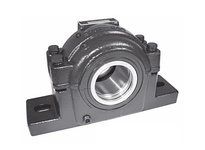
PTI PER53PTV PTV 53 V-RING FOR PER SEAL
MODEL PER53PTV
This vendor has a minimum order quantity of 3. Order minimum ($) may be applied. Add desired QTY to cart and proceed to checkout to view minimum
Contact supplier for technical support on: 704 588 1091
$14.86 Each
Prices are subject to change
FREE SHIPPING ON ORDERS OVER $100
Select Quantity
Brand Minimum Order Quantity: 3
Returnable: See conditions
Bearings The PTI PER53PTV PTV 53 V-Ring is a high-performance sealing component designed specifically for use in various bearing applications. This V-ring is engineered to provide superior sealing capabilities, ensuring optimal performance and extended service life in demanding environments.
Key Features
- Material Composition: Constructed from high-quality elastomeric materials that offer excellent resistance to wear and environmental factors.
- Design Specification: Features a unique V-shaped cross-section that enhances sealing efficiency and minimizes leakage.
- Compatibility: Designed for seamless integration with PER seals, ensuring optimal performance in conjunction with PTI's bearing solutions.
- Temperature Range: Capable of withstanding a wide temperature range, making it suitable for both high and low-temperature applications.
- Durability: Engineered to endure harsh operating conditions, providing reliable and long-lasting performance for heavy-duty applications.
Applications
- Automotive Industry: Ideal for use in automotive bearings, ensuring effective sealing and protection against contaminants.
- Industrial Machinery: Suitable for various types of industrial machinery where reliable sealing is crucial for performance and longevity.
- Aerospace & Defense: Leveraged in aerospace and defense applications where precision and reliability are paramount.
Benefits
- Enhanced Performance: The unique design and material composition provide superior sealing capabilities, reducing the risk of fluid leakage.
- Increased Reliability: Engineered for durability, the PTI PER53PTV V-ring ensures dependable operation, even in challenging conditions.
- Cost-Effectiveness: By minimizing maintenance and replacement intervals, this V-ring contributes to lower overall operational costs. --- Product information compiled with AI assistance for reference purposes.
No questions match your search.
What's the difference between ball and roller slew rings? Bearing basics
Ball slew rings are lighter and handle light-to-medium loads with smooth, low-friction rotation—ideal for positioning platforms and solar trackers. Roller-type slew rings (crossed-roller) carry heavier moment and axial loads with greater stiffness and are preferred for cranes, welding positioners, and heavy construction equipment.
How do I install a slew ring bearing correctly? Bearing basics
Verify mounting surfaces are clean, grease-free, and level using a leveling device or laser. Tighten bolts in a crosswise pattern to 30%, then 50%, then 100% of final torque to ensure even load distribution. The entire mounting interface must stay fully supported—gaps cause misalignment and premature wear.
How often should I relubricate a slew ring bearing? Bearing basics
Standard interval is every 100 operating hours under normal duty. High-speed or heavy-shock applications require more frequent relubrication. Never over-grease—excess lubricant raises internal temperature and reduces bearing life; follow manufacturer recommendations exactly.
How do I choose the right load capacity for my slew ring application? Bearing basics
Size for static radial load, static axial load, and moment load. Select a bearing rated at 1.5–2× your maximum working load depending on duty cycle. Crane applications need extra margin for impact; when in doubt, oversize rather than risk failure.
What maintenance warning signs indicate my slew ring bearing needs attention? Bearing basics
Grinding or crunching noise signals internal damage (not just low grease). Startup vibration, visible seal damage, or corrosion around bolt holes means inspect immediately. Plan periodic seal replacement every 6 months of heavy operation to prevent lubricant loss.
What is bearing life (L10) and how does it affect my equipment maintenance? Bearing basics
L10 Life Definition (ISO 281) — L10 is the basic rating life at which 90% of a large group of identical bearings are statistically expected to survive under constant load and speed. It is calculated in millions of revolutions using the formula: L10 = (C/P)^p, where C is the basic dynamic load rating, P is the equivalent dynamic bearing load, and p is the life exponent (3 for ball bearings). Converting L10 to Operating Hours — To express L10 life in hours: L10h = (L10 × 10^6) / (60 × n), where n is rotational speed in RPM. For example, a bearing with L10 = 1,000 million revolutions operating at 3,600 RPM has approximately L10h ≈ 4,630 hours. Modified Life (L10a) — Actual bearing life also depends on lubrication quality, contamination, speed, temperature, and bearing accuracy. ISO 281 defines a modified life factor (a₁ × aISO) that adjusts the theoretical L10 for these real-world conditions. High-quality lubrication and proper maintenance can extend bearing life significantly; poor lubrication or high contamination reduces it. Why It Matters for Maintenance — L10 life helps you schedule preventive maintenance, budget for bearing replacement, and select bearings adequate for your duty cycle.
How do I choose the right type of bearing for my application? Bearing basics
Start with the load and how it’s applied. You need to know if you’re dealing with radial loads, axial loads, or a mix of both. Then look at speed, operating environment, and space constraints. For example, ball bearings are great for high speed and lighter loads, while roller bearings handle heavier loads but usually at lower speeds. If there’s contamination, moisture, or heat involved, you may need sealed bearings or specific materials. In most cases, the right choice comes down to matching load type, speed, and environment to the bearing design.
How should I maintain and lubricate bearings? Bearing basics
Lubrication Importance — Improper lubrication causes over 40% of bearing failures. Proper bearing lubrication prevents friction damage, dissipates heat, protects against corrosion, and acts as a barrier against contaminants (dust, moisture, debris). Lubrication Selection — Choose between grease and oil based on: - Grease: Suitable for low-to-medium speed, sealed bearings, and applications without continuous circulation. Easier to apply and retain. Common for motors, household appliances, and sealed units. - Oil Mist or Circulating Systems: Better for high-speed applications, high-temperature environments, and heavy-load machinery where heat dissipation is critical. Best Practices: 1. Map all lubrication points and create a maintenance schedule. 2. Use the correct lubricant type and viscosity grade specified by the bearing manufacturer. 3. Store lubricants in sealed, labeled containers away from moisture and contaminants. 4. Monitor bearing temperature and vibration; unusual heat or noise may indicate inadequate lubrication or bearing wear. 5. Replace bearings before reaching L10 life if contamination or lubrication failure is detected.
What is a bearing and what does it do? Bearing basics
A bearing is a mechanical component that enables smooth rotational or linear motion by reducing friction between moving parts. Bearings support loads and facilitate the transfer of forces between moving elements, preventing direct metal-to-metal contact that would cause wear and heat buildup. Rolling element bearings contain balls or rollers that rotate within races (raceways) to minimize friction. Common types include ball bearings (used for moderate loads and high speeds), roller bearings (used for heavy loads at medium speeds), and angular contact bearings (designed for combined radial and axial loads). Bearings are essential in industrial equipment including motors, pumps, compressors, gearboxes, turbines, and conveyor systems.
How do I choose the right bearing for my application? Bearing basics
Bearing selection depends on five key factors: 1. Load Type and Direction — Determine whether your application has radial loads (perpendicular to shaft), axial loads (along the shaft), or combined loads. Deep groove ball bearings suit primarily radial loads; tapered roller bearings excel at combined loads; thrust bearings handle pure axial forces. 2. Rotational Speed — Ball bearings support higher speeds with lower friction. Roller bearings are better for medium-speed, heavy-load applications. Verify bearing speed ratings against your operating RPM. 3. Load Capacity — Select a bearing with adequate load capacity for your application. Basic dynamic load rating (C) and basic static load rating (C₀) determine how much load the bearing can safely carry. 4. Lubrication Requirements — Choose between grease and oil lubrication based on speed, temperature, and load. High-speed or high-temperature applications typically require oil circulation; lower-speed applications can use grease. 5. Precision and Rigidity — Evaluate your application's tolerance for runout deviation. High-precision applications require tighter tolerances and higher-grade bearings.
What bearing materials are available and which should I use? Bearing basics
Standard bearing materials include: - Chrome Steel — Premium bearing steel used by SKF, NSK, Timken, and most manufacturers. Offers excellent hardness, fatigue resistance, and durability in standard industrial applications. Most common for ball and roller bearings. - Stainless Steel — Provides corrosion resistance for applications in wet, humid, or chemically corrosive environments. Used in food processing, marine, and pharmaceutical equipment. - Ceramic Hybrid Bearings — Combine steel races with ceramic rolling elements. Offer reduced friction, lower heat generation, and higher temperature capability. Used in high-speed, high-precision applications and aerospace. - Polymeric Bearings — Utilize fluoropolymer composites with embedded graphite or PTFE. Provide low friction in high-speed applications where lubrication film breakdown would be problematic. Material selection depends on operating environment (temperature, moisture, chemical exposure), speed, load, and precision requirements. Standard chrome steel bearings suit most industrial MRO applications.
What are dynamic and static load ratings, and why do they matter? Bearing basics
Static Load Rating (C₀) — The maximum load a stationary or slowly rotating bearing can support without permanent deformation of its rolling elements or raceways. Defined by ISO 76 as the load producing 0.01% permanent deformation of the rolling element diameter. Static load capacity is the limiting factor when a bearing operates at very low speeds or remains stationary under heavy loads. Dynamic Load Rating (C) — The constant load a bearing can endure for a specified number of revolutions (the L10 life, at which 90% of identical bearings are expected to survive). Dynamic load rating determines how long a bearing will last under rotating or oscillating motion. ISO 281 defines the L10 calculation using the formula: L10 = (C/P)^p, where C is dynamic load rating, P is equivalent dynamic load, and p is the life exponent (3 for ball bearings, 10/3 for roller bearings). Why They Matter — Static load rating determines if a bearing can handle peak loads without permanent damage (even if not rotating). Dynamic load rating determines operational life. For high-speed applications, dynamic rating is critical. For low-speed or stationary loads, static rating may be the limiting factor. Always verify both ratings against your application's load profile.
Thanks
Verified · SKU 2197233Thanks for the help. I will be ordering again Read more
Ring roll chain tensioner
Verified · SKU 2202300easy to install, works great, extends chain life by keeping chain from whipping around. Reduces drive chain noise. Read more
Good service - good product
Verified · SKU 2206095good quality bearings Read more

#570080
Brand
Linn Gear
Model
41B24

#6281115
Brand
Bondhus
Model
13905

#97098528
Brand
AirTAC
Model
LSD35BK-HS-N-SD-SM6-E

#5072502
Brand
Timken
Model
224052

#2938123
Brand
Dongan
Model
FP12-403

#96682903
Brand
Dodge
Model
295731

#6105174
Brand
JET Tools
Model
892413

#6251320
Brand
Cutting Tool Technologies
Model
CV15160