









We never sell your data to third parties
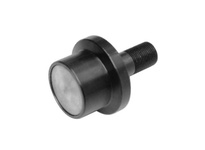
FCR-3-E Flange Stud Type Eccentric Tapered Roller Bearing Track Roller
MODEL FCR-3-E
Contact supplier for technical support on: 800-932-0076
$131.15 Each
Prices are subject to change
FREE SHIPPING ON ORDERS OVER $100
Select Quantity
Returnable: See conditions

#1381078
Brand
Isostatic
Model
EP162448

#1864016
Brand
FYH Bearing
Model
UCFB201 8

#2788918
Brand
Smith Bearings
Model
YR-2-X

#5075744
Brand
Timken
Model
LM501310-2
Cam Followers The FCR-3-E Flange Stud Type Eccentric Tapered Roller Bearing Track Roller by Smith Bearings is engineered for high-performance applications in both aerospace and industrial sectors. This precision bearing is designed to provide exceptional load-bearing capabilities and reliable operation in a variety of demanding environments.
Key Features
| Eccentric Tapered Design | Optimized for superior load distribution and stability, enhancing overall performance in track roller applications. |
|---|---|
| Flange Stud Type | Facilitates easy mounting and alignment, ensuring a secure fit in your machinery. |
| High-Quality Materials | Constructed from premium steel for enhanced durability and resistance to wear, ensuring longevity and maintenance efficiency. |
| Precision Engineering | Manufactured to meet stringent ISO 9001 and AS 9100 quality standards, ensuring reliability and performance consistency. |
| Versatile Applications | Suitable for a wide range of industries, including aerospace, automotive, and manufacturing environments. |
Applications
| Track Roller Systems | Ideal for use in conveyor systems, guiding systems, and other machinery requiring reliable motion and load support. |
|---|---|
| Aerospace Components | Approved for use in aerospace applications, providing high reliability for critical systems such as engines and airframes. |
| Industrial Machinery | Perfectly compatible with various industrial applications, enhancing performance in automated processes. |
Benefits
| Enhanced Performance | The tapered roller design significantly reduces friction and improves operational efficiency, leading to reduced energy consumption. |
|---|---|
| Long-Term Reliability | Designed to withstand harsh operational conditions, minimizing downtime and maintenance costs. |
| Easy Installation | The flange stud type simplifies installation and alignment, reducing setup time and enhancing productivity. |
No questions match your search.
What is a hex socket stud and when do I need it? Bearing basics
A hex socket stud is a design feature (often called HexLube®) that integrates a grease fitting into the hex head of a stud-type cam follower. Use hex socket studs when your application requires regular re-lubrication and you need convenient maintenance access.
Should I choose sealed or open (unsealed) cam followers for my application? Bearing basics
Sealed cam followers (2RS design with rubber seals) retain lubricant and block contaminants, making them ideal for dirty or hard-to-reach environments. Open or unsealed models permit higher speeds and allow flow-through lubrication, suitable for centralized lubrication systems.
What are the main applications for track rollers and cam followers? Bearing basics
Track rollers and cam followers are used in conveyor systems, linear guides, material handling equipment, packaging and bottling machinery, transfer systems, robotics, and construction equipment. They handle both radial loads and combined loads.
What's the difference between stud-type and yoke-type cam followers? Bearing basics
Stud-type cam followers have a threaded stud for direct mounting and are ideal for moderate loads in confined spaces. Yoke-type (clevis) cam followers consist of two bearings held in a metal yoke, mounted by a pin through the center, providing support on both sides and higher load capacity than stud variants.
How do I know if a track roller needs to handle radial, axial, or combined loads? Bearing basics
Radial loads are applied perpendicular to the bearing's axis of rotation. Axial loads are applied parallel to the bearing axis. Combined loads involve both radial and axial components. Identify your load direction by considering how force acts on your track roller.
How do crowned outer rings prevent yoke roller bearing failure? Bearing basics
The crowned profile on yoke roller outer rings distributes load evenly across the raceway width, protecting against corner loading when mounting tolerances are loose or shafts deflect. This design significantly extends bearing life in misaligned or high-deflection applications.
When should I choose yoke rollers vs. stud-type followers? Bearing basics
Yoke rollers handle higher loads and wider speed ranges than stud-type followers, making them ideal for heavy industrial machinery with fast cam profiles. Stud types are more compact and cost-effective for lighter loads. Choose yoke rollers when your load exceeds the follower's dynamic rating or when you need sealed/unsealed configuration flexibility.
What load ratings should I use when sizing yoke rollers? Bearing basics
Size to the dynamic load rating (C) for peak cam forces during normal operation, then verify the static load rating (C₀) for startup torques or shock loads. Most industrial applications are sized on dynamic rating; static rating is checked only in low-speed or high-shock scenarios.
Why do yoke rollers cost 2–3× more than needle rollers, and when is the premium justified? Bearing basics
Yoke rollers command higher prices because they handle wider speed ranges (>2000 RPM) and much heavier loads while maintaining compact mounting envelopes. The investment pays off in high-speed machinery or heavy-load applications where needle roller alternatives would fatigue prematurely.
Should yoke rollers be sealed or unsealed for oil-bath lubrication? Bearing basics
Use sealed yoke rollers (with nitrile wipers) in dirty or dusty cam boxes to prevent contamination—they reduce maximum speed slightly. Unsealed rollers suit clean, oil-immersed environments where external contamination is controlled and maximum speed is critical.
How do I choose the right bearing for my application? Bearing basics
Bearing selection depends on five key factors: 1. Load Type and Direction — Determine whether your application has radial loads (perpendicular to shaft), axial loads (along the shaft), or combined loads. Deep groove ball bearings suit primarily radial loads; tapered roller bearings excel at combined loads; thrust bearings handle pure axial forces. 2. Rotational Speed — Ball bearings support higher speeds with lower friction. Roller bearings are better for medium-speed, heavy-load applications. Verify bearing speed ratings against your operating RPM. 3. Load Capacity — Select a bearing with adequate load capacity for your application. Basic dynamic load rating (C) and basic static load rating (C₀) determine how much load the bearing can safely carry. 4. Lubrication Requirements — Choose between grease and oil lubrication based on speed, temperature, and load. High-speed or high-temperature applications typically require oil circulation; lower-speed applications can use grease. 5. Precision and Rigidity — Evaluate your application's tolerance for runout deviation. High-precision applications require tighter tolerances and higher-grade bearings.
What is a bearing and what does it do? Bearing basics
A bearing is a mechanical component that enables smooth rotational or linear motion by reducing friction between moving parts. Bearings support loads and facilitate the transfer of forces between moving elements, preventing direct metal-to-metal contact that would cause wear and heat buildup. Rolling element bearings contain balls or rollers that rotate within races (raceways) to minimize friction. Common types include ball bearings (used for moderate loads and high speeds), roller bearings (used for heavy loads at medium speeds), and angular contact bearings (designed for combined radial and axial loads). Bearings are essential in industrial equipment including motors, pumps, compressors, gearboxes, turbines, and conveyor systems.
What is bearing life (L10) and how does it affect my equipment maintenance? Bearing basics
L10 Life Definition (ISO 281) — L10 is the basic rating life at which 90% of a large group of identical bearings are statistically expected to survive under constant load and speed. It is calculated in millions of revolutions using the formula: L10 = (C/P)^p, where C is the basic dynamic load rating, P is the equivalent dynamic bearing load, and p is the life exponent (3 for ball bearings). Converting L10 to Operating Hours — To express L10 life in hours: L10h = (L10 × 10^6) / (60 × n), where n is rotational speed in RPM. For example, a bearing with L10 = 1,000 million revolutions operating at 3,600 RPM has approximately L10h ≈ 4,630 hours. Modified Life (L10a) — Actual bearing life also depends on lubrication quality, contamination, speed, temperature, and bearing accuracy. ISO 281 defines a modified life factor (a₁ × aISO) that adjusts the theoretical L10 for these real-world conditions. High-quality lubrication and proper maintenance can extend bearing life significantly; poor lubrication or high contamination reduces it. Why It Matters for Maintenance — L10 life helps you schedule preventive maintenance, budget for bearing replacement, and select bearings adequate for your duty cycle.
How should I maintain and lubricate bearings? Bearing basics
Lubrication Importance — Improper lubrication causes over 40% of bearing failures. Proper bearing lubrication prevents friction damage, dissipates heat, protects against corrosion, and acts as a barrier against contaminants (dust, moisture, debris). Lubrication Selection — Choose between grease and oil based on: - Grease: Suitable for low-to-medium speed, sealed bearings, and applications without continuous circulation. Easier to apply and retain. Common for motors, household appliances, and sealed units. - Oil Mist or Circulating Systems: Better for high-speed applications, high-temperature environments, and heavy-load machinery where heat dissipation is critical. Best Practices: 1. Map all lubrication points and create a maintenance schedule. 2. Use the correct lubricant type and viscosity grade specified by the bearing manufacturer. 3. Store lubricants in sealed, labeled containers away from moisture and contaminants. 4. Monitor bearing temperature and vibration; unusual heat or noise may indicate inadequate lubrication or bearing wear. 5. Replace bearings before reaching L10 life if contamination or lubrication failure is detected.
What are dynamic and static load ratings, and why do they matter? Bearing basics
Static Load Rating (C₀) — The maximum load a stationary or slowly rotating bearing can support without permanent deformation of its rolling elements or raceways. Defined by ISO 76 as the load producing 0.01% permanent deformation of the rolling element diameter. Static load capacity is the limiting factor when a bearing operates at very low speeds or remains stationary under heavy loads. Dynamic Load Rating (C) — The constant load a bearing can endure for a specified number of revolutions (the L10 life, at which 90% of identical bearings are expected to survive). Dynamic load rating determines how long a bearing will last under rotating or oscillating motion. ISO 281 defines the L10 calculation using the formula: L10 = (C/P)^p, where C is dynamic load rating, P is equivalent dynamic load, and p is the life exponent (3 for ball bearings, 10/3 for roller bearings). Why They Matter — Static load rating determines if a bearing can handle peak loads without permanent damage (even if not rotating). Dynamic load rating determines operational life. For high-speed applications, dynamic rating is critical. For low-speed or stationary loads, static rating may be the limiting factor. Always verify both ratings against your application's load profile.
How do I choose the right type of bearing for my application? Bearing basics
Start with the load and how it’s applied. You need to know if you’re dealing with radial loads, axial loads, or a mix of both. Then look at speed, operating environment, and space constraints. For example, ball bearings are great for high speed and lighter loads, while roller bearings handle heavier loads but usually at lower speeds. If there’s contamination, moisture, or heat involved, you may need sealed bearings or specific materials. In most cases, the right choice comes down to matching load type, speed, and environment to the bearing design.
What bearing materials are available and which should I use? Bearing basics
Standard bearing materials include: - Chrome Steel — Premium bearing steel used by SKF, NSK, Timken, and most manufacturers. Offers excellent hardness, fatigue resistance, and durability in standard industrial applications. Most common for ball and roller bearings. - Stainless Steel — Provides corrosion resistance for applications in wet, humid, or chemically corrosive environments. Used in food processing, marine, and pharmaceutical equipment. - Ceramic Hybrid Bearings — Combine steel races with ceramic rolling elements. Offer reduced friction, lower heat generation, and higher temperature capability. Used in high-speed, high-precision applications and aerospace. - Polymeric Bearings — Utilize fluoropolymer composites with embedded graphite or PTFE. Provide low friction in high-speed applications where lubrication film breakdown would be problematic. Material selection depends on operating environment (temperature, moisture, chemical exposure), speed, load, and precision requirements. Standard chrome steel bearings suit most industrial MRO applications.
Cam folowers
Verified · SKU 2788755Excellent price and service! Read more

#2850327
Brand
Cooper Wiring
Model
PJ28BK

#96790708
Brand
Goulds
Model
2K217

#2488415
Brand
Pfannenberg
Model
23311851000

#6278176
Brand
Whitney Tool
Model
05213

#6282314
Brand
Bondhus
Model
15454
Disclaimer: The return policy information shown below is merely a copy of the text as stated in IDC-USA's Annual Return Policy.
File: http://documents.mrosupply.com/file_uploads/IDCreturnpolicy.pdf
ANNUAL RETURN POLICY PURPOSE: The purpose of IDC-USA’s Annual Return Policy is to allow IDC Distributors the opportunity to return salable stock merchandise of current design that may not have adequate “turns” and replace it with faster moving product.
ACCEPTANCE: IDC Owner-Distributors shall submit a return list to IDC-USA with all pertinent information as follows:
a. Product brand name
b. Quantity
c. IDC-USA’s product identification number
d. Corresponding distributor’s P.O. number or invoice number Acceptance of return shall be subject to IDC-USA inventory levels and manufacturer’s restrictions.
AUTHORIZATION: The return shall be audited and the IDC Owner-Distributor will receive an approved return list with a Return Material Authorization (RMA) number assigned to it. RETURN DATE: Each owner-distributor shall be assigned a month during which they shall be entitled to make a single annual return.
Product Qualification: All products returned must be:
a. On the current price list
b. In good resale condition
c. In the original packaging
d. Purchased from IDC-USA within 3 years of the return
e. Stock items only; no special order items
f. Only those items which have been approved
VALUE: The IDC Owner-Distributor shall receive a credit not to exceed 5% of the owner-distributor’s prior year annual purchases from the IDC Distribution Center. Credit received shall be the actual purchase price or price in effect at the time of the return, whichever is lowest, less applicable restocking charges. Additionally, all annual returns must have a minimum return value of $100.
RESTOCKING CHARGES: There will be a 15% restocking fee unless return is offset by a noncancelable order of equal value to be placed at the time of return. All items received that are not in their original box shall be subject to an additional 15% repackaging fee.
FREIGHT: Returns will be made freight prepaid by the IDC Owner-Distributor to the IDC Distribution Center. The packing slip and all cartons must reference the RMA number. The owner-distributor will be notified of any items received that do not qualify as set forth above. Those items will not be credited and shall be scrapped unless the IDC Owner-Distributor directs otherwise and assumes any additional transportation charges.