







We never sell your data to third parties
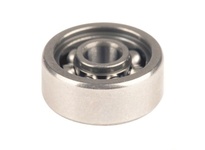
TIMKEN 604 Ball Deep Groove Radial <12 OD ISO
MODEL 604
$7.84 Each
Prices are subject to change
FREE SHIPPING ON ORDERS OVER $100
Select Quantity
Returnable: Yes
Bearings The TIMKEN 604 Ball Deep Groove Radial Bearing is engineered for durability and performance in a variety of applications. Designed with precision to meet the rigorous demands of industrial and automotive environments, this bearing ensures optimal functionality and longevity.
Key Features
| Type | Deep Groove Radial Bearing |
|---|---|
| Diameter | Outer Diameter (OD) less than 12 inches |
| Construction | High-quality steel for enhanced wear resistance and durability |
| Design | Optimized for low friction and efficient operation |
| Load Capacity | Adapted for radial and axial loads, providing versatility in applications |
Applications
| Automotive | Suitable for use in wheel hubs, gearboxes, and other critical components |
|---|---|
| Industrial Machinery | Ideal for high-speed applications in conveyors and rotating equipment |
| General Purpose | Compatible with various machinery requiring reliable bearing solutions |
Benefits
| Enhanced Reliability | Built to withstand heavy loads and harsh environments, ensuring consistent performance |
|---|---|
| Increased Efficiency | The smooth operation reduces energy consumption and wear on machinery |
| Long Lifespan | Designed to minimize maintenance needs, leading to lower operational costs |
Product information compiled with AI assistance for reference purposes.
No questions match your search.
What size is a 600 series ball bearing? Bearing basics
600 series bearings are metric miniature/instrumentation ball bearings with bore diameters ranging from 3mm to 9mm. Model numbers (603, 605, 606, etc.) indicate the specific bore size—for example, a 605 has a 5mm bore, and a 606 has a 6mm bore. Outer diameter and width vary by model to accommodate different load and speed requirements.
What is the maximum speed rating for 600 series bearings? Bearing basics
Maximum speed depends on bore size, seal or shield type, and lubrication. Open bearings run fastest, shielded (ZZ) somewhat slower, and sealed (2RS) slowest because of seal friction. Take the limiting speed for your specific bore size from the manufacturer's datasheet rather than a series-wide figure.
What's the difference between shielded (ZZ) and sealed (2RS) 600 series bearings? Bearing basics
Shielded (ZZ) bearings have metal shields on each side that protect from contamination but allow some grease migration—best for dry, clean environments and higher speeds (up to ~27,000 rpm). Sealed (2RS) bearings have rubber seals that trap grease and block contaminants more effectively—ideal for wet or dusty conditions, though they run warmer and are limited to ~21,000 rpm due to seal friction.
How do I choose the right 600 series bearing size for my application? Bearing basics
Start with your required bore diameter (dictated by shaft size), then select the model (603, 605, 606, etc.) with sufficient load capacity and speed rating. Choose shielded (ZZ) for clean, high-speed applications, or sealed (2RS) for wet/dusty environments, and verify the dynamic load rating (in Newtons) against your application's radial load.
What are typical applications for 600 series ball bearings? Bearing basics
600 series bearings are used in precision instruments, stepping motors, skateboard wheels, oscillating fans, power tools, and small electric motors. Their small bore size, high speed capability, and compact design make them ideal for applications requiring smooth rotation with minimal vibration in tight spaces.
What is the difference between single-row and double-row ball bearings? Bearing basics
Single-row ball bearings contain one line of balls and handle radial and light axial loads. Double-row angular contact ball bearings have two parallel rows of balls in a single housing, capable of accommodating heavy radial loads and axial loads in both directions simultaneously. Double-row bearings are used in heavier equipment, high-speed machinery, or applications requiring support in both load directions, such as gearboxes and precision spindles.
What is the difference between open, sealed, and shielded ball bearings? Bearing basics
Open Bearings have no seals or shields and require external lubrication. Sealed Bearings have rubber or polymer seals that trap lubricant and block contaminants. Shielded Bearings use non-contact metal shields that exclude large particles while generating minimal friction.
What do ABEC ratings mean and which should I use? Bearing basics
ABEC (Annular Bearing Engineering Committee) ratings define five precision classes—ABEC 1, 3, 5, 7, and 9—with progressively tighter tolerances on bearing dimensions and runout. Higher ABEC ratings improve bearing precision and speed capability, but ABEC ratings do NOT specify load capacity, ball quality, material hardness, lubrication, or noise. For most industrial MRO applications, ABEC-1 or ABEC-3 bearings are sufficient.
What are speed ratings for ball bearings and why do they matter? Bearing basics
ABEC precision classes enable ball bearings to operate reliably at higher speeds by reducing internal runout and friction. Speed capability is often expressed using the DN value (bore diameter in mm × RPM). Using a bearing beyond its speed capability causes excessive heat generation, reduced lubricant film, and premature wear.
What are ball bearings used for? Bearing basics
Ball bearings are precision rolling-element bearings with balls rolling between inner and outer races. They are used in industrial machinery, motors, pumps, spindles, conveyors, and precision equipment to reduce friction and enable smooth rotation under radial loads (perpendicular to the shaft) and some axial loads (along the shaft). While ball bearings have lower load capacity than roller bearings due to point contact between balls and races, their lower friction and cost make them essential across industrial MRO applications.
What is the difference between deep groove and angular contact ball bearings? Bearing basics
Deep groove ball bearings are the most common type. They’re designed to handle mainly radial loads, but they can also take some axial load in both directions. They’re simple, versatile, and used in everything from motors to conveyors. Angular contact ball bearings are built for combined loads, especially where there’s significant axial force in one direction. They’re often used in pairs and are common in higher precision or higher load applications like pumps and gearboxes. If your load is mostly radial, go deep groove. If axial load matters more, angular contact is usually the better choice.
What is bearing life (L10) and how does it affect my equipment maintenance? Bearing basics
L10 Life Definition (ISO 281) — L10 is the basic rating life at which 90% of a large group of identical bearings are statistically expected to survive under constant load and speed. It is calculated in millions of revolutions using the formula: L10 = (C/P)^p, where C is the basic dynamic load rating, P is the equivalent dynamic bearing load, and p is the life exponent (3 for ball bearings). Converting L10 to Operating Hours — To express L10 life in hours: L10h = (L10 × 10^6) / (60 × n), where n is rotational speed in RPM. For example, a bearing with L10 = 1,000 million revolutions operating at 3,600 RPM has approximately L10h ≈ 4,630 hours. Modified Life (L10a) — Actual bearing life also depends on lubrication quality, contamination, speed, temperature, and bearing accuracy. ISO 281 defines a modified life factor (a₁ × aISO) that adjusts the theoretical L10 for these real-world conditions. High-quality lubrication and proper maintenance can extend bearing life significantly; poor lubrication or high contamination reduces it. Why It Matters for Maintenance — L10 life helps you schedule preventive maintenance, budget for bearing replacement, and select bearings adequate for your duty cycle.
How should I maintain and lubricate bearings? Bearing basics
Lubrication Importance — Improper lubrication causes over 40% of bearing failures. Proper bearing lubrication prevents friction damage, dissipates heat, protects against corrosion, and acts as a barrier against contaminants (dust, moisture, debris). Lubrication Selection — Choose between grease and oil based on: - Grease: Suitable for low-to-medium speed, sealed bearings, and applications without continuous circulation. Easier to apply and retain. Common for motors, household appliances, and sealed units. - Oil Mist or Circulating Systems: Better for high-speed applications, high-temperature environments, and heavy-load machinery where heat dissipation is critical. Best Practices: 1. Map all lubrication points and create a maintenance schedule. 2. Use the correct lubricant type and viscosity grade specified by the bearing manufacturer. 3. Store lubricants in sealed, labeled containers away from moisture and contaminants. 4. Monitor bearing temperature and vibration; unusual heat or noise may indicate inadequate lubrication or bearing wear. 5. Replace bearings before reaching L10 life if contamination or lubrication failure is detected.
What are dynamic and static load ratings, and why do they matter? Bearing basics
Static Load Rating (C₀) — The maximum load a stationary or slowly rotating bearing can support without permanent deformation of its rolling elements or raceways. Defined by ISO 76 as the load producing 0.01% permanent deformation of the rolling element diameter. Static load capacity is the limiting factor when a bearing operates at very low speeds or remains stationary under heavy loads. Dynamic Load Rating (C) — The constant load a bearing can endure for a specified number of revolutions (the L10 life, at which 90% of identical bearings are expected to survive). Dynamic load rating determines how long a bearing will last under rotating or oscillating motion. ISO 281 defines the L10 calculation using the formula: L10 = (C/P)^p, where C is dynamic load rating, P is equivalent dynamic load, and p is the life exponent (3 for ball bearings, 10/3 for roller bearings). Why They Matter — Static load rating determines if a bearing can handle peak loads without permanent damage (even if not rotating). Dynamic load rating determines operational life. For high-speed applications, dynamic rating is critical. For low-speed or stationary loads, static rating may be the limiting factor. Always verify both ratings against your application's load profile.
What bearing materials are available and which should I use? Bearing basics
Standard bearing materials include: - Chrome Steel — Premium bearing steel used by SKF, NSK, Timken, and most manufacturers. Offers excellent hardness, fatigue resistance, and durability in standard industrial applications. Most common for ball and roller bearings. - Stainless Steel — Provides corrosion resistance for applications in wet, humid, or chemically corrosive environments. Used in food processing, marine, and pharmaceutical equipment. - Ceramic Hybrid Bearings — Combine steel races with ceramic rolling elements. Offer reduced friction, lower heat generation, and higher temperature capability. Used in high-speed, high-precision applications and aerospace. - Polymeric Bearings — Utilize fluoropolymer composites with embedded graphite or PTFE. Provide low friction in high-speed applications where lubrication film breakdown would be problematic. Material selection depends on operating environment (temperature, moisture, chemical exposure), speed, load, and precision requirements. Standard chrome steel bearings suit most industrial MRO applications.
How do I choose the right bearing for my application? Bearing basics
Bearing selection depends on five key factors: 1. Load Type and Direction — Determine whether your application has radial loads (perpendicular to shaft), axial loads (along the shaft), or combined loads. Deep groove ball bearings suit primarily radial loads; tapered roller bearings excel at combined loads; thrust bearings handle pure axial forces. 2. Rotational Speed — Ball bearings support higher speeds with lower friction. Roller bearings are better for medium-speed, heavy-load applications. Verify bearing speed ratings against your operating RPM. 3. Load Capacity — Select a bearing with adequate load capacity for your application. Basic dynamic load rating (C) and basic static load rating (C₀) determine how much load the bearing can safely carry. 4. Lubrication Requirements — Choose between grease and oil lubrication based on speed, temperature, and load. High-speed or high-temperature applications typically require oil circulation; lower-speed applications can use grease. 5. Precision and Rigidity — Evaluate your application's tolerance for runout deviation. High-precision applications require tighter tolerances and higher-grade bearings.
What is a bearing and what does it do? Bearing basics
A bearing is a mechanical component that enables smooth rotational or linear motion by reducing friction between moving parts. Bearings support loads and facilitate the transfer of forces between moving elements, preventing direct metal-to-metal contact that would cause wear and heat buildup. Rolling element bearings contain balls or rollers that rotate within races (raceways) to minimize friction. Common types include ball bearings (used for moderate loads and high speeds), roller bearings (used for heavy loads at medium speeds), and angular contact bearings (designed for combined radial and axial loads). Bearings are essential in industrial equipment including motors, pumps, compressors, gearboxes, turbines, and conveyor systems.
How do I choose the right type of bearing for my application? Bearing basics
Start with the load and how it’s applied. You need to know if you’re dealing with radial loads, axial loads, or a mix of both. Then look at speed, operating environment, and space constraints. For example, ball bearings are great for high speed and lighter loads, while roller bearings handle heavier loads but usually at lower speeds. If there’s contamination, moisture, or heat involved, you may need sealed bearings or specific materials. In most cases, the right choice comes down to matching load type, speed, and environment to the bearing design.
Best company to buy from
Verified · SKU 5066946I always buy from MRO is a very reliable company to work with Read more

#6107584
Brand
Greenfield Threading
Model
280207

#157081
Brand
Flexco
Model
40173

#5074473
Brand
Timken
Model
4934


#2087335
Brand
Irwin Tools
Model
73307

#96751497
Brand
Berkeley
Model
B73848

#565019
Brand
Linn Gear
Model
2080TLB10.5

#96996953
Brand
Bosch Rexroth
Model
R044209401