










We never sell your data to third parties
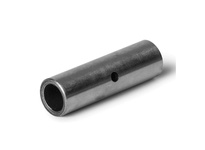
Berliss SB08-12-53 - Spanner Bushing, For Use With: Caster Bearing, 1/2 in ID x 3/4 in OD x 3-5/16 in L Dimensions
MODEL SB08-12-53
Contact supplier for technical support on: 973-992-4242
$30.30 Each
Prices are subject to change
FREE SHIPPING ON ORDERS OVER $100
Select Quantity
Returnable: Yes
Inside Diameter
1/2 in
Length
3-5/16 in
Outside Diameter
3/4 in
Suitable For Use With
Caster Bearing
Spanner Bushing
- Berliss SB08-12-53 The Berliss SB08-12-53 Spanner Bushing is an essential component designed for use with caster bearings, providing reliable and precise performance in various applications. With its durable construction and specific dimensional attributes, this bushing is engineered to enhance the functionality and longevity of your caster systems.
Key Features
- Dimensions: 1/2 in ID x 3/4 in OD x 3-5/16 in L, ensuring a perfect fit for standard caster bearing assemblies.
- Material Quality: Manufactured from high-grade materials for superior strength and resistance to wear and tear.
- Precision Engineering: Designed with attention to detail, ensuring optimal alignment and stability during operation.
- Versatile Compatibility: Ideal for use with various caster bearing configurations, making it a versatile addition to your maintenance toolkit.
- Easy Installation: Simple design allows for quick and easy installation in a range of applications, reducing downtime.
Applications
- Caster Systems: Perfectly suited for applications involving caster bearings in industrial and recreational vehicles.
- OEM Compatibility: Works seamlessly with original equipment manufacturers’ products, ensuring high performance and reliability.
- Heavy-Duty Environments: Suitable for environments that require robust components capable of withstanding significant loads and stresses.
Benefits
- Enhanced Performance: Improves the overall efficiency and functionality of caster systems, leading to smoother operation.
- Durability: Built to last, this spanner bushing minimizes the need for frequent replacements, resulting in cost savings over time.
- Reliability: Berliss’s commitment to quality engineering ensures that this product meets high performance standards, offering peace of mind in demanding applications. --- Product information compiled with AI assistance for reference purposes.
No questions match your search.
What size ranges do you stock? Bearing basics
We stock spanners across the common metric and SAE size ranges, with custom and bulk sizes available to order. Contact us with the size you need to confirm current availability, particularly for jumbo or specialty sizes.
What's the difference between open-end and combination wrenches? Bearing basics
Open-end wrenches grip bolts from the sides (fast on/off), while combination wrenches have an open end and closed loop. Closed loops grip with less slip risk — use them for high-torque or tight spaces. Open-end is faster for quick adjustments.
When should I use metric vs SAE spanners? Bearing basics
Metric (ISO) for equipment made outside North America or after ~1985 domestic; SAE for older US-built machinery. Many facilities stock both — metric bolts won't fit SAE wrenches and vice versa. Check your equipment documentation if unsure.
Are your spanners DIN or ISO certified? Bearing basics
Our spanners are manufactured to recognised DIN and ISO dimensional standards. Confirm the exact standard and certification for the part you need with our technical team before ordering if you have a specific compliance requirement.
Why choose chrome-vanadium over basic steel? Bearing basics
Chrome-vanadium is harder and less likely to round bolt heads under high torque, resists corrosion longer, and survives drop impacts better. Worth the cost for high-use or outdoor environments; basic steel works fine for light-duty shop tools.
What's the difference between a two-jaw and three-jaw bearing puller? Bearing basics
Two-jaw pullers work best for smaller bearing bore diameters in tight spaces, while three-jaw pullers distribute pulling force more evenly across larger bearings. Three-jaw designs reduce the risk of bearing damage and are preferred for precision machinery and heavy-duty applications.
What is a bearing puller and why would I need one? Bearing basics
A bearing puller is a mechanical or hydraulic tool designed to safely remove pressed bearings from shafts without damaging the shaft or bearing. They're essential for bearing replacement, preventive maintenance, and troubleshooting in industrial and automotive equipment.
How do I know what size bearing puller I need? Bearing basics
Bearing puller size is determined by the bearing bore diameter and the pulling force required for your application. Most industrial bearings need 2–10 ton capacity pullers—check your bearing bore size in millimeters and consult the puller capacity rating.
How often should bearing tools be serviced? Bearing basics
Inspect bearing pullers and installation tools for wear and corrosion before each use, and perform annual preventive maintenance on hydraulic units. Keep tools clean and dry—worn jaws or damaged threads reduce pulling efficiency and risk bearing damage during use.
What's the proper way to install a bearing without a press? Bearing basics
Small bearings can be installed by hand using a rubber mallet and bearing sleeve, while larger bearings require a hydraulic press or bearing installation tool. Always use a pilot sleeve matching the bearing bore to prevent misalignment and ensure even pressure distribution.
How do I choose the right bearing for my application? Bearing basics
Bearing selection depends on five key factors: 1. Load Type and Direction — Determine whether your application has radial loads (perpendicular to shaft), axial loads (along the shaft), or combined loads. Deep groove ball bearings suit primarily radial loads; tapered roller bearings excel at combined loads; thrust bearings handle pure axial forces. 2. Rotational Speed — Ball bearings support higher speeds with lower friction. Roller bearings are better for medium-speed, heavy-load applications. Verify bearing speed ratings against your operating RPM. 3. Load Capacity — Select a bearing with adequate load capacity for your application. Basic dynamic load rating (C) and basic static load rating (C₀) determine how much load the bearing can safely carry. 4. Lubrication Requirements — Choose between grease and oil lubrication based on speed, temperature, and load. High-speed or high-temperature applications typically require oil circulation; lower-speed applications can use grease. 5. Precision and Rigidity — Evaluate your application's tolerance for runout deviation. High-precision applications require tighter tolerances and higher-grade bearings.
What is a bearing and what does it do? Bearing basics
A bearing is a mechanical component that enables smooth rotational or linear motion by reducing friction between moving parts. Bearings support loads and facilitate the transfer of forces between moving elements, preventing direct metal-to-metal contact that would cause wear and heat buildup. Rolling element bearings contain balls or rollers that rotate within races (raceways) to minimize friction. Common types include ball bearings (used for moderate loads and high speeds), roller bearings (used for heavy loads at medium speeds), and angular contact bearings (designed for combined radial and axial loads). Bearings are essential in industrial equipment including motors, pumps, compressors, gearboxes, turbines, and conveyor systems.
What is bearing life (L10) and how does it affect my equipment maintenance? Bearing basics
L10 Life Definition (ISO 281) — L10 is the basic rating life at which 90% of a large group of identical bearings are statistically expected to survive under constant load and speed. It is calculated in millions of revolutions using the formula: L10 = (C/P)^p, where C is the basic dynamic load rating, P is the equivalent dynamic bearing load, and p is the life exponent (3 for ball bearings). Converting L10 to Operating Hours — To express L10 life in hours: L10h = (L10 × 10^6) / (60 × n), where n is rotational speed in RPM. For example, a bearing with L10 = 1,000 million revolutions operating at 3,600 RPM has approximately L10h ≈ 4,630 hours. Modified Life (L10a) — Actual bearing life also depends on lubrication quality, contamination, speed, temperature, and bearing accuracy. ISO 281 defines a modified life factor (a₁ × aISO) that adjusts the theoretical L10 for these real-world conditions. High-quality lubrication and proper maintenance can extend bearing life significantly; poor lubrication or high contamination reduces it. Why It Matters for Maintenance — L10 life helps you schedule preventive maintenance, budget for bearing replacement, and select bearings adequate for your duty cycle.
How should I maintain and lubricate bearings? Bearing basics
Lubrication Importance — Improper lubrication causes over 40% of bearing failures. Proper bearing lubrication prevents friction damage, dissipates heat, protects against corrosion, and acts as a barrier against contaminants (dust, moisture, debris). Lubrication Selection — Choose between grease and oil based on: - Grease: Suitable for low-to-medium speed, sealed bearings, and applications without continuous circulation. Easier to apply and retain. Common for motors, household appliances, and sealed units. - Oil Mist or Circulating Systems: Better for high-speed applications, high-temperature environments, and heavy-load machinery where heat dissipation is critical. Best Practices: 1. Map all lubrication points and create a maintenance schedule. 2. Use the correct lubricant type and viscosity grade specified by the bearing manufacturer. 3. Store lubricants in sealed, labeled containers away from moisture and contaminants. 4. Monitor bearing temperature and vibration; unusual heat or noise may indicate inadequate lubrication or bearing wear. 5. Replace bearings before reaching L10 life if contamination or lubrication failure is detected.
What are dynamic and static load ratings, and why do they matter? Bearing basics
Static Load Rating (C₀) — The maximum load a stationary or slowly rotating bearing can support without permanent deformation of its rolling elements or raceways. Defined by ISO 76 as the load producing 0.01% permanent deformation of the rolling element diameter. Static load capacity is the limiting factor when a bearing operates at very low speeds or remains stationary under heavy loads. Dynamic Load Rating (C) — The constant load a bearing can endure for a specified number of revolutions (the L10 life, at which 90% of identical bearings are expected to survive). Dynamic load rating determines how long a bearing will last under rotating or oscillating motion. ISO 281 defines the L10 calculation using the formula: L10 = (C/P)^p, where C is dynamic load rating, P is equivalent dynamic load, and p is the life exponent (3 for ball bearings, 10/3 for roller bearings). Why They Matter — Static load rating determines if a bearing can handle peak loads without permanent damage (even if not rotating). Dynamic load rating determines operational life. For high-speed applications, dynamic rating is critical. For low-speed or stationary loads, static rating may be the limiting factor. Always verify both ratings against your application's load profile.
How do I choose the right type of bearing for my application? Bearing basics
Start with the load and how it’s applied. You need to know if you’re dealing with radial loads, axial loads, or a mix of both. Then look at speed, operating environment, and space constraints. For example, ball bearings are great for high speed and lighter loads, while roller bearings handle heavier loads but usually at lower speeds. If there’s contamination, moisture, or heat involved, you may need sealed bearings or specific materials. In most cases, the right choice comes down to matching load type, speed, and environment to the bearing design.
What bearing materials are available and which should I use? Bearing basics
Standard bearing materials include: - Chrome Steel — Premium bearing steel used by SKF, NSK, Timken, and most manufacturers. Offers excellent hardness, fatigue resistance, and durability in standard industrial applications. Most common for ball and roller bearings. - Stainless Steel — Provides corrosion resistance for applications in wet, humid, or chemically corrosive environments. Used in food processing, marine, and pharmaceutical equipment. - Ceramic Hybrid Bearings — Combine steel races with ceramic rolling elements. Offer reduced friction, lower heat generation, and higher temperature capability. Used in high-speed, high-precision applications and aerospace. - Polymeric Bearings — Utilize fluoropolymer composites with embedded graphite or PTFE. Provide low friction in high-speed applications where lubrication film breakdown would be problematic. Material selection depends on operating environment (temperature, moisture, chemical exposure), speed, load, and precision requirements. Standard chrome steel bearings suit most industrial MRO applications.
Great service!
Verified · SKU 5217149Ordered a pump seal, Great price and quick shipping, and free shipping! Great experience Read more
Great item!
Verified · SKU 5212356Great quality and works good. Read more
Bearing order was great!
Verified · SKU 5216384Order was filled perfectly, bearings were as advertised. Shipped in a very timely manner. Thank you. Read more
X304 john deere front wheel bearings
Verified · SKU 5212566PERFECT FIT!!! Like original Very prompt delivery. Thanks. Read more

#6468551
Brand
Flowtrend
Model
37HP773106

#6173946
Brand
Schunk
Model
1420632

#5007412
Brand
Dodge
Model
232865

#6122190
Brand
Cle-Force
Model
C68937

#5072412
Brand
Timken
Model
710227

#6265006
Brand
Drillco
Model
1308A118

#96680294
Brand
Dodge
Model
227580