









We never sell your data to third parties
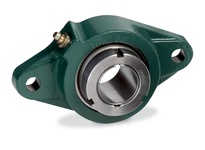
Dodge 064580 F2B-GT-100-NL
MODEL F2B-GT-100-NL
Contact supplier for technical support on: +1-864-284-5700
$118.99 Each
Prices are subject to change
FREE SHIPPING ON ORDERS OVER $100
Select Quantity
Returnable:No
Bore Diameter
1" straight bore
Duty Rating
Normal duty
Housing Material
Cast iron
Housing Type
Two-Bolt Flange (F2B) - Diamond/oval 2-bolt surface mount
Locking Mechanism
Grip Tight (GT) adapter mount with 360° full shaft contact, no shaft marring
Rolling element
Standard duty ball
Seal Type
DualGuard single lip seal
Bearings The Dodge 064580 F2B-GT-100-NL bearing is designed to provide exceptional performance in a variety of industrial and automotive applications. Renowned for its robust construction and reliability, this bearing is a crucial component for maintaining smooth operation and reducing friction in machinery. ## Key Features • **High Load Capacity**: Engineered to withstand heavy loads, ensuring durability and performance even in demanding environments. • **Precision Engineering**: Manufactured with tight tolerances for optimal performance and minimal wear over time. • **Material Composition**: Constructed from high-quality steel for enhanced strength and resistance to wear, ensuring longevity in service. • **Sealed Design**: Features seals to protect against contaminants and retain lubrication, extending the bearing's lifespan. • **Versatile Compatibility**: Suitable for a wide range of applications across various industries, including automotive and manufacturing. ## Applications • **Automotive**: Ideal for use in high-performance vehicles where reliability and efficiency are paramount, particularly in connection with Dodge's performance-oriented models. • **Industrial Machinery**: Perfect for applications requiring smooth rotational motion and minimal friction, contributing to overall operational efficiency. • **Heavy Equipment**: Compatible with various heavy machinery, supporting sustained performance under high load conditions. ## Benefits • **Enhanced Performance**: Reduces friction and wear, promoting smoother operation and increased efficiency in machinery. • **Long-lasting Reliability**: The robust construction and sealed design ensure minimal maintenance and extended service life. • **Cost-Effective Solution**: By minimizing downtime and maintenance costs, this bearing presents a valuable investment for both automotive and industrial applications. --- *Product information compiled with AI assistance for reference purposes.*
No questions match your search.
How does Dodge warranty evaluation work if a product fails? This product
Failed units go to Dodge's US plants for evaluation — about a week in transit plus one to two weeks of analysis, and you get the findings either way. Warranty covers workmanship and material defects; failures caused by the application (lubrication, installation) fall to the customer, but the failure analysis tells you the root cause so it doesn't repeat.
What is a bearing and what does it do? Bearing basics
A bearing is a mechanical component that enables smooth rotational or linear motion by reducing friction between moving parts. Bearings support loads and facilitate the transfer of forces between moving elements, preventing direct metal-to-metal contact that would cause wear and heat buildup. Rolling element bearings contain balls or rollers that rotate within races (raceways) to minimize friction. Common types include ball bearings (used for moderate loads and high speeds), roller bearings (used for heavy loads at medium speeds), and angular contact bearings (designed for combined radial and axial loads). Bearings are essential in industrial equipment including motors, pumps, compressors, gearboxes, turbines, and conveyor systems.
How do I choose the right bearing for my application? Bearing basics
Bearing selection depends on five key factors: 1. Load Type and Direction — Determine whether your application has radial loads (perpendicular to shaft), axial loads (along the shaft), or combined loads. Deep groove ball bearings suit primarily radial loads; tapered roller bearings excel at combined loads; thrust bearings handle pure axial forces. 2. Rotational Speed — Ball bearings support higher speeds with lower friction. Roller bearings are better for medium-speed, heavy-load applications. Verify bearing speed ratings against your operating RPM. 3. Load Capacity — Select a bearing with adequate load capacity for your application. Basic dynamic load rating (C) and basic static load rating (C₀) determine how much load the bearing can safely carry. 4. Lubrication Requirements — Choose between grease and oil lubrication based on speed, temperature, and load. High-speed or high-temperature applications typically require oil circulation; lower-speed applications can use grease. 5. Precision and Rigidity — Evaluate your application's tolerance for runout deviation. High-precision applications require tighter tolerances and higher-grade bearings.
What bearing materials are available and which should I use? Bearing basics
Standard bearing materials include: - Chrome Steel — Premium bearing steel used by SKF, NSK, Timken, and most manufacturers. Offers excellent hardness, fatigue resistance, and durability in standard industrial applications. Most common for ball and roller bearings. - Stainless Steel — Provides corrosion resistance for applications in wet, humid, or chemically corrosive environments. Used in food processing, marine, and pharmaceutical equipment. - Ceramic Hybrid Bearings — Combine steel races with ceramic rolling elements. Offer reduced friction, lower heat generation, and higher temperature capability. Used in high-speed, high-precision applications and aerospace. - Polymeric Bearings — Utilize fluoropolymer composites with embedded graphite or PTFE. Provide low friction in high-speed applications where lubrication film breakdown would be problematic. Material selection depends on operating environment (temperature, moisture, chemical exposure), speed, load, and precision requirements. Standard chrome steel bearings suit most industrial MRO applications.
How do I choose the right type of bearing for my application? Bearing basics
Start with the load and how it’s applied. You need to know if you’re dealing with radial loads, axial loads, or a mix of both. Then look at speed, operating environment, and space constraints. For example, ball bearings are great for high speed and lighter loads, while roller bearings handle heavier loads but usually at lower speeds. If there’s contamination, moisture, or heat involved, you may need sealed bearings or specific materials. In most cases, the right choice comes down to matching load type, speed, and environment to the bearing design.
What is bearing life (L10) and how does it affect my equipment maintenance? Bearing basics
L10 Life Definition (ISO 281) — L10 is the basic rating life at which 90% of a large group of identical bearings are statistically expected to survive under constant load and speed. It is calculated in millions of revolutions using the formula: L10 = (C/P)^p, where C is the basic dynamic load rating, P is the equivalent dynamic bearing load, and p is the life exponent (3 for ball bearings). Converting L10 to Operating Hours — To express L10 life in hours: L10h = (L10 × 10^6) / (60 × n), where n is rotational speed in RPM. For example, a bearing with L10 = 1,000 million revolutions operating at 3,600 RPM has approximately L10h ≈ 4,630 hours. Modified Life (L10a) — Actual bearing life also depends on lubrication quality, contamination, speed, temperature, and bearing accuracy. ISO 281 defines a modified life factor (a₁ × aISO) that adjusts the theoretical L10 for these real-world conditions. High-quality lubrication and proper maintenance can extend bearing life significantly; poor lubrication or high contamination reduces it. Why It Matters for Maintenance — L10 life helps you schedule preventive maintenance, budget for bearing replacement, and select bearings adequate for your duty cycle.
How should I maintain and lubricate bearings? Bearing basics
Lubrication Importance — Improper lubrication causes over 40% of bearing failures. Proper bearing lubrication prevents friction damage, dissipates heat, protects against corrosion, and acts as a barrier against contaminants (dust, moisture, debris). Lubrication Selection — Choose between grease and oil based on: - Grease: Suitable for low-to-medium speed, sealed bearings, and applications without continuous circulation. Easier to apply and retain. Common for motors, household appliances, and sealed units. - Oil Mist or Circulating Systems: Better for high-speed applications, high-temperature environments, and heavy-load machinery where heat dissipation is critical. Best Practices: 1. Map all lubrication points and create a maintenance schedule. 2. Use the correct lubricant type and viscosity grade specified by the bearing manufacturer. 3. Store lubricants in sealed, labeled containers away from moisture and contaminants. 4. Monitor bearing temperature and vibration; unusual heat or noise may indicate inadequate lubrication or bearing wear. 5. Replace bearings before reaching L10 life if contamination or lubrication failure is detected.
What are dynamic and static load ratings, and why do they matter? Bearing basics
Static Load Rating (C₀) — The maximum load a stationary or slowly rotating bearing can support without permanent deformation of its rolling elements or raceways. Defined by ISO 76 as the load producing 0.01% permanent deformation of the rolling element diameter. Static load capacity is the limiting factor when a bearing operates at very low speeds or remains stationary under heavy loads. Dynamic Load Rating (C) — The constant load a bearing can endure for a specified number of revolutions (the L10 life, at which 90% of identical bearings are expected to survive). Dynamic load rating determines how long a bearing will last under rotating or oscillating motion. ISO 281 defines the L10 calculation using the formula: L10 = (C/P)^p, where C is dynamic load rating, P is equivalent dynamic load, and p is the life exponent (3 for ball bearings, 10/3 for roller bearings). Why They Matter — Static load rating determines if a bearing can handle peak loads without permanent damage (even if not rotating). Dynamic load rating determines operational life. For high-speed applications, dynamic rating is critical. For low-speed or stationary loads, static rating may be the limiting factor. Always verify both ratings against your application's load profile.
Perfect fit and finish
Verified · SKU 704413Good product, perfect fit and finish, good price and fast shipping. Thanks Read more
E20
Verified · SKU 2835296This is exactly what I needed. Price was way below my local business that carries couplings. Thanks. Read more
Oem parts
Verified · SKU 126926I was repairing a piece of equipment and wanted the same bearings that were removed. MRO Supply had the OEM bearings at a reduced cost. Shipped and received in a timely manner. Read more
Great price/great product
Verified · SKU 117869Shipping was fast and the price was best I could find. Product was new in a the sealed Dodge box. Perfect. Read more
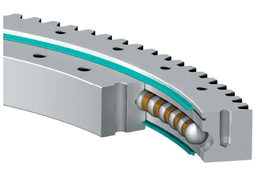
Slew ring bearings, also referred to as slewing bearings, slewing rings, or turntable bearings, are forms of bearings designed to allow rotational motion between several components.
Read More
#97185201
Brand
FEIN
Model
63134190102

#96682259
Brand
Dodge
Model
293189

#1829770
Brand
Thomson Linear
Model
511U35C3Z

#97205787
Brand
FLIR
Model
T912605

#5776124
Brand
Remke
Model
204E0164T

#1907352
Brand
SKF Seals
Model
20448

#6297512
Brand
Te-Co
Model
54903
#97210069
Brand
Walter
Model
01D510
Item must be unused and undamaged, in it's orginal package. For Dodge there is typically a 10% + $30 US re-stocking fee, although it may vary from case to case. Re-packing fees may apply. Re-stocking fee applies bor both returns for credit and return for exchange.
Warranty is redeemed directly with manufacturer. If your item was damaged during usage, please let us know and we will help you get in touch with your nearest service center, they will guide you about the steps to follow to redeem the manufacturer's warranty.
For further information on our returns/warranty policy, please visit:
https://www.mrosupply.com/page/returnwarranty-policy/