








We never sell your data to third parties
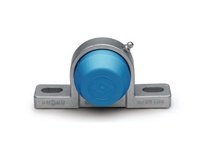
Dodge 128990 ECO-EZ-107 PATENT PENDING
MODEL 128990
Contact supplier for technical support on: +1-864-284-5700
$30.65 Each
Prices are subject to change
FREE SHIPPING ON ORDERS OVER $100
Select Quantity
Typically Ships in: 1 day
Returnable: See conditions

#9627
Brand
AMI Bearings
Model
MSER205-16

#13567
Brand
AMI Bearings
Model
MUFL005

#15043
Brand
AMI Bearings
Model
MUFL003

#15836
Brand
AMI Bearings
Model
MUFL002
Catalog Number
128990
Component Type
Bearing end cap cover
Construction
Cast iron housing material
Part Number
ECO-EZ-107
Series
ECO series bearing accessories
Weight
0.03 lb
Bearings The Dodge 128990 ECO-EZ-107 Bearing End Cap & Cover is an essential component designed to enhance the performance and longevity of your automotive systems. Specifically engineered for high-performance applications, this bearing end cap ensures optimal sealing and protection against contaminants, making it ideal for both professional and DIY mechanics.
Key Features
| Advanced Sealing Technology | The ECO-EZ-107 utilizes a patented sealing design that prevents dirt and debris from entering the bearing, significantly extending its lifespan. |
|---|---|
| Robust Construction | Made from high-quality materials, this end cap is designed to withstand extreme operating conditions, ensuring durability and reliability. |
| Precision Fit | The end cap is engineered for a precise fit, which minimizes wear and tear on the bearing, enhancing overall performance. |
| Patented Design | The innovative patent-pending design offers unique advantages over traditional bearing end caps, ensuring superior functionality. |
| Easy Installation | This product is designed for quick and straightforward installation, reducing downtime during maintenance. |
Applications
| Automotive Bearings | Perfectly suited for various automotive applications, including muscle cars and performance vehicles. |
|---|---|
| Compatibility | Designed to work seamlessly with Dodge vehicles and other automotive brands, this end cap is versatile for many setups. |
| Heavy-Duty Use | Ideal for use in high-performance and heavy-duty environments where reliability is crucial. |
Benefits
| Enhanced Performance | The ECO-EZ-107 provides superior protection, leading to improved performance and efficiency of the bearing system. |
|---|---|
| Increased Longevity | By preventing contamination and reducing friction, this bearing end cap significantly extends the lifespan of your bearings. |
| Cost-Effective Solution | The durable construction and efficient design reduce maintenance frequency and costs, making it a smart investment for any automotive enthusiast. |
No questions match your search.
How does Dodge warranty evaluation work if a product fails? This product
Failed units go to Dodge's US plants for evaluation — about a week in transit plus one to two weeks of analysis, and you get the findings either way. Warranty covers workmanship and material defects; failures caused by the application (lubrication, installation) fall to the customer, but the failure analysis tells you the root cause so it doesn't repeat.
How do end caps and seals extend bearing life? Bearing basics
End caps prevent dirt, moisture, and debris from entering the bearing cavity, where they would cause wear and lubricant breakdown. Sealed bearings last substantially longer than unsealed units in contaminated environments because lubrication stays clean and the rolling elements stay protected.
What temperature range can bearing end caps handle? Bearing basics
Metal shields tolerate the widest temperature range, followed by specialty rubber compounds; standard nitrile seals are the most limited. Exact limits vary by seal material and manufacturer, so check the datasheet for your specific part before specifying for a high- or low-temperature application.
Do bearing seals increase friction and heat? Bearing basics
Yes. Contact seals (2RS) increase torque noticeably due to the rubbing inner lip. Non-contact seals (2RU) eliminate this friction penalty while still blocking dust and moisture — a good middle ground for moderate-speed applications.
When should I choose a shielded bearing instead of a sealed one? Bearing basics
Use shields for high-speed applications (electric motors, fans) running in dry, clean environments. Shields don't reduce max RPM, whereas seals can reduce speed ~40%. For wet, dusty, or food-processing environments, seals are the better choice.
What's the difference between bearing shields (ZZ) and seals (2RS)? Bearing basics
Shields are thin metal barriers that block larger particles but don't seal tight—they add minimal friction. Seals are rubber-bonded to the outer ring with an inner lip that contacts the inner ring, stopping dust and moisture at the cost of higher torque and heat generation.
What's the difference between a two-jaw and three-jaw bearing puller? Bearing basics
Two-jaw pullers work best for smaller bearing bore diameters in tight spaces, while three-jaw pullers distribute pulling force more evenly across larger bearings. Three-jaw designs reduce the risk of bearing damage and are preferred for precision machinery and heavy-duty applications.
What is a bearing puller and why would I need one? Bearing basics
A bearing puller is a mechanical or hydraulic tool designed to safely remove pressed bearings from shafts without damaging the shaft or bearing. They're essential for bearing replacement, preventive maintenance, and troubleshooting in industrial and automotive equipment.
How do I know what size bearing puller I need? Bearing basics
Bearing puller size is determined by the bearing bore diameter and the pulling force required for your application. Most industrial bearings need 2–10 ton capacity pullers—check your bearing bore size in millimeters and consult the puller capacity rating.
How often should bearing tools be serviced? Bearing basics
Inspect bearing pullers and installation tools for wear and corrosion before each use, and perform annual preventive maintenance on hydraulic units. Keep tools clean and dry—worn jaws or damaged threads reduce pulling efficiency and risk bearing damage during use.
What's the proper way to install a bearing without a press? Bearing basics
Small bearings can be installed by hand using a rubber mallet and bearing sleeve, while larger bearings require a hydraulic press or bearing installation tool. Always use a pilot sleeve matching the bearing bore to prevent misalignment and ensure even pressure distribution.
How do I choose the right bearing for my application? Bearing basics
Bearing selection depends on five key factors: 1. Load Type and Direction — Determine whether your application has radial loads (perpendicular to shaft), axial loads (along the shaft), or combined loads. Deep groove ball bearings suit primarily radial loads; tapered roller bearings excel at combined loads; thrust bearings handle pure axial forces. 2. Rotational Speed — Ball bearings support higher speeds with lower friction. Roller bearings are better for medium-speed, heavy-load applications. Verify bearing speed ratings against your operating RPM. 3. Load Capacity — Select a bearing with adequate load capacity for your application. Basic dynamic load rating (C) and basic static load rating (C₀) determine how much load the bearing can safely carry. 4. Lubrication Requirements — Choose between grease and oil lubrication based on speed, temperature, and load. High-speed or high-temperature applications typically require oil circulation; lower-speed applications can use grease. 5. Precision and Rigidity — Evaluate your application's tolerance for runout deviation. High-precision applications require tighter tolerances and higher-grade bearings.
What is a bearing and what does it do? Bearing basics
A bearing is a mechanical component that enables smooth rotational or linear motion by reducing friction between moving parts. Bearings support loads and facilitate the transfer of forces between moving elements, preventing direct metal-to-metal contact that would cause wear and heat buildup. Rolling element bearings contain balls or rollers that rotate within races (raceways) to minimize friction. Common types include ball bearings (used for moderate loads and high speeds), roller bearings (used for heavy loads at medium speeds), and angular contact bearings (designed for combined radial and axial loads). Bearings are essential in industrial equipment including motors, pumps, compressors, gearboxes, turbines, and conveyor systems.
What is bearing life (L10) and how does it affect my equipment maintenance? Bearing basics
L10 Life Definition (ISO 281) — L10 is the basic rating life at which 90% of a large group of identical bearings are statistically expected to survive under constant load and speed. It is calculated in millions of revolutions using the formula: L10 = (C/P)^p, where C is the basic dynamic load rating, P is the equivalent dynamic bearing load, and p is the life exponent (3 for ball bearings). Converting L10 to Operating Hours — To express L10 life in hours: L10h = (L10 × 10^6) / (60 × n), where n is rotational speed in RPM. For example, a bearing with L10 = 1,000 million revolutions operating at 3,600 RPM has approximately L10h ≈ 4,630 hours. Modified Life (L10a) — Actual bearing life also depends on lubrication quality, contamination, speed, temperature, and bearing accuracy. ISO 281 defines a modified life factor (a₁ × aISO) that adjusts the theoretical L10 for these real-world conditions. High-quality lubrication and proper maintenance can extend bearing life significantly; poor lubrication or high contamination reduces it. Why It Matters for Maintenance — L10 life helps you schedule preventive maintenance, budget for bearing replacement, and select bearings adequate for your duty cycle.
How should I maintain and lubricate bearings? Bearing basics
Lubrication Importance — Improper lubrication causes over 40% of bearing failures. Proper bearing lubrication prevents friction damage, dissipates heat, protects against corrosion, and acts as a barrier against contaminants (dust, moisture, debris). Lubrication Selection — Choose between grease and oil based on: - Grease: Suitable for low-to-medium speed, sealed bearings, and applications without continuous circulation. Easier to apply and retain. Common for motors, household appliances, and sealed units. - Oil Mist or Circulating Systems: Better for high-speed applications, high-temperature environments, and heavy-load machinery where heat dissipation is critical. Best Practices: 1. Map all lubrication points and create a maintenance schedule. 2. Use the correct lubricant type and viscosity grade specified by the bearing manufacturer. 3. Store lubricants in sealed, labeled containers away from moisture and contaminants. 4. Monitor bearing temperature and vibration; unusual heat or noise may indicate inadequate lubrication or bearing wear. 5. Replace bearings before reaching L10 life if contamination or lubrication failure is detected.
What are dynamic and static load ratings, and why do they matter? Bearing basics
Static Load Rating (C₀) — The maximum load a stationary or slowly rotating bearing can support without permanent deformation of its rolling elements or raceways. Defined by ISO 76 as the load producing 0.01% permanent deformation of the rolling element diameter. Static load capacity is the limiting factor when a bearing operates at very low speeds or remains stationary under heavy loads. Dynamic Load Rating (C) — The constant load a bearing can endure for a specified number of revolutions (the L10 life, at which 90% of identical bearings are expected to survive). Dynamic load rating determines how long a bearing will last under rotating or oscillating motion. ISO 281 defines the L10 calculation using the formula: L10 = (C/P)^p, where C is dynamic load rating, P is equivalent dynamic load, and p is the life exponent (3 for ball bearings, 10/3 for roller bearings). Why They Matter — Static load rating determines if a bearing can handle peak loads without permanent damage (even if not rotating). Dynamic load rating determines operational life. For high-speed applications, dynamic rating is critical. For low-speed or stationary loads, static rating may be the limiting factor. Always verify both ratings against your application's load profile.
How do I choose the right type of bearing for my application? Bearing basics
Start with the load and how it’s applied. You need to know if you’re dealing with radial loads, axial loads, or a mix of both. Then look at speed, operating environment, and space constraints. For example, ball bearings are great for high speed and lighter loads, while roller bearings handle heavier loads but usually at lower speeds. If there’s contamination, moisture, or heat involved, you may need sealed bearings or specific materials. In most cases, the right choice comes down to matching load type, speed, and environment to the bearing design.
What bearing materials are available and which should I use? Bearing basics
Standard bearing materials include: - Chrome Steel — Premium bearing steel used by SKF, NSK, Timken, and most manufacturers. Offers excellent hardness, fatigue resistance, and durability in standard industrial applications. Most common for ball and roller bearings. - Stainless Steel — Provides corrosion resistance for applications in wet, humid, or chemically corrosive environments. Used in food processing, marine, and pharmaceutical equipment. - Ceramic Hybrid Bearings — Combine steel races with ceramic rolling elements. Offer reduced friction, lower heat generation, and higher temperature capability. Used in high-speed, high-precision applications and aerospace. - Polymeric Bearings — Utilize fluoropolymer composites with embedded graphite or PTFE. Provide low friction in high-speed applications where lubrication film breakdown would be problematic. Material selection depends on operating environment (temperature, moisture, chemical exposure), speed, load, and precision requirements. Standard chrome steel bearings suit most industrial MRO applications.
Perfect fit and finish
Verified · SKU 704413Good product, perfect fit and finish, good price and fast shipping. Thanks Read more
E20
Verified · SKU 2835296This is exactly what I needed. Price was way below my local business that carries couplings. Thanks. Read more
Oem parts
Verified · SKU 126926I was repairing a piece of equipment and wanted the same bearings that were removed. MRO Supply had the OEM bearings at a reduced cost. Shipped and received in a timely manner. Read more
Great price/great product
Verified · SKU 117869Shipping was fast and the price was best I could find. Product was new in a the sealed Dodge box. Perfect. Read more

#2295686
Brand
Morse
Model
119845

#5675854
Brand
Airmaster
Model
37140

#1405291
Brand
Brewer
Model
B5015H

#1962007
Brand
Champion
Model
7012-15/32

#1619538
Brand
Hyde Tools
Model
10520

#6106938
Brand
Edwards
Model
PDH25/32


#534903
Brand
Nexen
Model
966501
Item must be unused and undamaged, in it's orginal package. For Dodge there is typically a 10% + $30 US re-stocking fee, although it may vary from case to case. Re-packing fees may apply. Re-stocking fee applies bor both returns for credit and return for exchange.
Warranty is redeemed directly with manufacturer. If your item was damaged during usage, please let us know and we will help you get in touch with your nearest service center, they will guide you about the steps to follow to redeem the manufacturer's warranty.
For further information on our returns/warranty policy, please visit:
https://www.mrosupply.com/page/returnwarranty-policy/