











We never sell your data to third parties
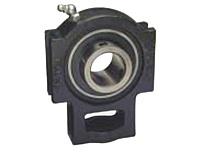
IPTCI Bearing HA 207 Housing Hanger Unit
MODEL HA 207
Contact supplier for technical support on: 704 588 1091
$27.45 Each
Prices are subject to change
FREE SHIPPING ON ORDERS OVER $100
Select Quantity
Returnable: See conditions
Dimensions
3-5/8 in L x 1-9/16 in W x 4-9/16 in H
Material
Cast Iron
Series
HA Series
Specifications
PF 3/4-14 Thread
Type
Standard
Overview
The IPTCI Bearing HA 207 Housing Hanger Unit is designed for superior performance in demanding industrial, agricultural, and food and beverage applications. Engineered with a focus on corrosion resistance and durability, this hanger unit is an essential component in rotating systems. The HA 207 features a robust design that ensures reliability, making it ideal for environments where exposure to moisture and contaminants is prevalent. Its high-quality construction guarantees long service life and reduced maintenance needs.
Key Features
| Corrosion Resistance | Constructed with materials designed to withstand harsh conditions, offering excellent protection against rust and deterioration. |
|---|---|
| Precision Manufacturing | Each unit is produced to stringent tolerances, ensuring optimal fit and function within your applications. |
| Versatile Compatibility | Suitable for a variety of applications across multiple sectors, including agriculture and food processing, enhancing operational flexibility. |
| Easy Installation | Designed for straightforward mounting, allowing for quick setup and reduced downtime during installation. |
| Durable Construction | Built with high-quality bearings that promote smooth operation and extended longevity, minimizing the need for frequent replacements. |
Applications
| Industrial Equipment | Ideal for use in conveyor systems, fans, and processing machinery where reliable support is crucial. |
|---|---|
| Agricultural Machinery | Perfect for agricultural applications such as tillers and seeders where equipment durability is essential. |
| Food and Beverage | Designed to meet the stringent hygiene standards of the food and beverage industry, ensuring safety and efficiency in production lines. |
Benefits
| Enhanced Reliability | Offers consistent performance even in challenging operating conditions, reducing the risk of equipment failure. |
|---|---|
| Cost Efficiency | Lowers maintenance costs and minimizes downtime, providing a more efficient operation overall. |
| Quality Assurance | Backed by IPTCI's reputation for high standards in product quality and customer satisfaction. |
No questions match your search.
What load ratings should I consider when selecting a housing? Bearing basics
Pillow block housings for radial loads vary by bore size—a 40mm bore (UCP208) typically supports ~25.5 kN dynamic load, while smaller 25mm (UCP205) supports ~14 kN. For very heavy radial loads exceeding 50 kN, roller-insert housings with cylindrical or spherical rollers are required.
What seal types protect housed bearings from contamination? Bearing basics
Standard housings use felt strips and V-ring seals that work together to prevent grease loss while blocking contamination ingress. These felt seals suit grease-lubricated applications at temperatures from -20°C to +100°C and are standard on most commercial pillow block and flange units.
What bore tolerance should I use when installing a bearing into a housing? Bearing basics
Housing bores should typically use an H7 tolerance fit, which provides a slip fit that balances proper support with ease of assembly and disassembly. This fit prevents race rotation while allowing maintenance access without forcing or risk of damage.
How often should I relubricate a housed bearing? Bearing basics
Most housed bearings are lifetime-lubricated at installation, requiring no routine relubrication in standard conditions. In harsh environments or elevated temperatures, relubrication through the grease nipple may be needed, though intervals depend on operating conditions and equipment manufacturer recommendations rather than a fixed schedule.
What is the difference between UCP and UCF pillow block housings? Bearing basics
UCP housings have a rectangular base for mounting on horizontal surfaces, while UCF housings feature a circular flange for vertical or wall mounting. Both accept the same bearing inserts but differ in mounting footprint and shaft orientation.
How do I install a mounted bearing correctly? Bearing basics
Verify your shaft diameter is within the bearing bore tolerance (consult the NSK or SKF datasheet), then secure the bearing to the mounting surface using the specified bolt torque and engage the locking collar or set-screw on the shaft to prevent axial slip. Hand-rotate the shaft through several complete turns with a dial indicator, laser alignment tool, or feeler gauge to confirm smooth operation and proper shaft runout within spec.
How often should I grease a mounted bearing? Bearing basics
Use the formula (OD in mm) × (Width in mm) × 0.005 = grams for periodic relubrication of the bearing element only; initial housing cavity fill is separate and should be 30–50% of free volume. Over-greasing damages seals and generates excess heat—stick to the calculated quantity and recommended relubrication schedule.
What temperature should a mounted bearing run at? Bearing basics
Monitor housing surface temperature (the standard MRO measurement point): 40–65°C is normal, 70–75°C warrants investigation of misalignment or over-greasing, and 80°C requires immediate shutdown. The inner race runs 15–30°C hotter than the housing surface, so an 80°C housing reading means lubricant degradation is accelerating and the bearing requires emergency diagnosis.
When should I replace a mounted bearing? Bearing basics
Replace based on condition: vibration signature analysis or ultrasonic emission (detected with a hand-held meter) indicates wear hours or days before audible noise appears, and is the actionable MRO signal. Other replacement triggers include continuous operation above 80°C housing temperature, visible grease leakage, or reaching the manufacturer's service interval for your duty cycle. Scheduled relubrication and temperature monitoring extend service life significantly — replacement is a last resort, not preventive maintenance.
What are the main types of mounted bearings? Bearing basics
Mounted bearings come in four main forms: pillow blocks (flat-base, shaft parallel to mounting surface), flange mounts (perpendicular shaft, available in 2-bolt and 4-bolt variants with different radial ratings), hanger bearings (overhead support for long horizontal shafts), and take-up frames (adjustable center-distance units for belt or chain drive tensioning). Select based on your shaft orientation, load direction, and space constraints.
How do I choose the right bearing for my application? Bearing basics
Bearing selection depends on five key factors: 1. Load Type and Direction — Determine whether your application has radial loads (perpendicular to shaft), axial loads (along the shaft), or combined loads. Deep groove ball bearings suit primarily radial loads; tapered roller bearings excel at combined loads; thrust bearings handle pure axial forces. 2. Rotational Speed — Ball bearings support higher speeds with lower friction. Roller bearings are better for medium-speed, heavy-load applications. Verify bearing speed ratings against your operating RPM. 3. Load Capacity — Select a bearing with adequate load capacity for your application. Basic dynamic load rating (C) and basic static load rating (C₀) determine how much load the bearing can safely carry. 4. Lubrication Requirements — Choose between grease and oil lubrication based on speed, temperature, and load. High-speed or high-temperature applications typically require oil circulation; lower-speed applications can use grease. 5. Precision and Rigidity — Evaluate your application's tolerance for runout deviation. High-precision applications require tighter tolerances and higher-grade bearings.
What is a bearing and what does it do? Bearing basics
A bearing is a mechanical component that enables smooth rotational or linear motion by reducing friction between moving parts. Bearings support loads and facilitate the transfer of forces between moving elements, preventing direct metal-to-metal contact that would cause wear and heat buildup. Rolling element bearings contain balls or rollers that rotate within races (raceways) to minimize friction. Common types include ball bearings (used for moderate loads and high speeds), roller bearings (used for heavy loads at medium speeds), and angular contact bearings (designed for combined radial and axial loads). Bearings are essential in industrial equipment including motors, pumps, compressors, gearboxes, turbines, and conveyor systems.
How do I choose the right type of bearing for my application? Bearing basics
Start with the load and how it’s applied. You need to know if you’re dealing with radial loads, axial loads, or a mix of both. Then look at speed, operating environment, and space constraints. For example, ball bearings are great for high speed and lighter loads, while roller bearings handle heavier loads but usually at lower speeds. If there’s contamination, moisture, or heat involved, you may need sealed bearings or specific materials. In most cases, the right choice comes down to matching load type, speed, and environment to the bearing design.
How should I maintain and lubricate bearings? Bearing basics
Lubrication Importance — Improper lubrication causes over 40% of bearing failures. Proper bearing lubrication prevents friction damage, dissipates heat, protects against corrosion, and acts as a barrier against contaminants (dust, moisture, debris). Lubrication Selection — Choose between grease and oil based on: - Grease: Suitable for low-to-medium speed, sealed bearings, and applications without continuous circulation. Easier to apply and retain. Common for motors, household appliances, and sealed units. - Oil Mist or Circulating Systems: Better for high-speed applications, high-temperature environments, and heavy-load machinery where heat dissipation is critical. Best Practices: 1. Map all lubrication points and create a maintenance schedule. 2. Use the correct lubricant type and viscosity grade specified by the bearing manufacturer. 3. Store lubricants in sealed, labeled containers away from moisture and contaminants. 4. Monitor bearing temperature and vibration; unusual heat or noise may indicate inadequate lubrication or bearing wear. 5. Replace bearings before reaching L10 life if contamination or lubrication failure is detected.
What is bearing life (L10) and how does it affect my equipment maintenance? Bearing basics
L10 Life Definition (ISO 281) — L10 is the basic rating life at which 90% of a large group of identical bearings are statistically expected to survive under constant load and speed. It is calculated in millions of revolutions using the formula: L10 = (C/P)^p, where C is the basic dynamic load rating, P is the equivalent dynamic bearing load, and p is the life exponent (3 for ball bearings). Converting L10 to Operating Hours — To express L10 life in hours: L10h = (L10 × 10^6) / (60 × n), where n is rotational speed in RPM. For example, a bearing with L10 = 1,000 million revolutions operating at 3,600 RPM has approximately L10h ≈ 4,630 hours. Modified Life (L10a) — Actual bearing life also depends on lubrication quality, contamination, speed, temperature, and bearing accuracy. ISO 281 defines a modified life factor (a₁ × aISO) that adjusts the theoretical L10 for these real-world conditions. High-quality lubrication and proper maintenance can extend bearing life significantly; poor lubrication or high contamination reduces it. Why It Matters for Maintenance — L10 life helps you schedule preventive maintenance, budget for bearing replacement, and select bearings adequate for your duty cycle.
What are dynamic and static load ratings, and why do they matter? Bearing basics
Static Load Rating (C₀) — The maximum load a stationary or slowly rotating bearing can support without permanent deformation of its rolling elements or raceways. Defined by ISO 76 as the load producing 0.01% permanent deformation of the rolling element diameter. Static load capacity is the limiting factor when a bearing operates at very low speeds or remains stationary under heavy loads. Dynamic Load Rating (C) — The constant load a bearing can endure for a specified number of revolutions (the L10 life, at which 90% of identical bearings are expected to survive). Dynamic load rating determines how long a bearing will last under rotating or oscillating motion. ISO 281 defines the L10 calculation using the formula: L10 = (C/P)^p, where C is dynamic load rating, P is equivalent dynamic load, and p is the life exponent (3 for ball bearings, 10/3 for roller bearings). Why They Matter — Static load rating determines if a bearing can handle peak loads without permanent damage (even if not rotating). Dynamic load rating determines operational life. For high-speed applications, dynamic rating is critical. For low-speed or stationary loads, static rating may be the limiting factor. Always verify both ratings against your application's load profile.
What bearing materials are available and which should I use? Bearing basics
Standard bearing materials include: - Chrome Steel — Premium bearing steel used by SKF, NSK, Timken, and most manufacturers. Offers excellent hardness, fatigue resistance, and durability in standard industrial applications. Most common for ball and roller bearings. - Stainless Steel — Provides corrosion resistance for applications in wet, humid, or chemically corrosive environments. Used in food processing, marine, and pharmaceutical equipment. - Ceramic Hybrid Bearings — Combine steel races with ceramic rolling elements. Offer reduced friction, lower heat generation, and higher temperature capability. Used in high-speed, high-precision applications and aerospace. - Polymeric Bearings — Utilize fluoropolymer composites with embedded graphite or PTFE. Provide low friction in high-speed applications where lubrication film breakdown would be problematic. Material selection depends on operating environment (temperature, moisture, chemical exposure), speed, load, and precision requirements. Standard chrome steel bearings suit most industrial MRO applications.
Bearings
Verified · SKU 217974Quality product, arrived in 3 days, reasonable price Read more
Itpci bearings
Verified · SKU 1152690IPTCI bearings seem to perform well for us, as we have had no returns for failure. Prices are reasonable and service is prompt. Read more
Terminal manager
Verified · SKU 218623Decent price, fast delivery Read more
Worked, 7/16" bolt holes though.
Verified · SKU 1152957For some reason I was expecting this to have 1/2" bolt holes for mounting it. They are 7/16". It still worked for my application though. Read more


#1324593
Brand
Electra/Grove Gear
Model
EL8420561.28

#5980003
Brand
NAE
Model
VC320/360-1.25B

#687020
Brand
NAE
Model
VC400-1.563

#1324671
Brand
Electra/Grove Gear
Model
EL8420570.24

#1326312
Brand
Electra/Grove Gear
Model
EL8520565.48

#2202457
Brand
PTI
Model
RVFW209X1-3/4

#1326361
Brand
Electra/Grove Gear
Model
EL8520570.47

#1326295
Brand
Electra/Grove Gear
Model
EL8520564.32