











We never sell your data to third parties
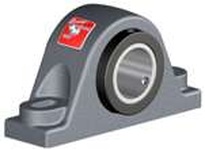
Browning PBE920X 2 1/2 E920 Bearing Unit
MODEL 730012
This product has a minimum order quantity of (4 minimum) This is the minimum order quantity available when purchasing this product.
Contact supplier for technical support on: 800-626-2120
$513.36 Each
Prices are subject to change
FREE SHIPPING ON ORDERS OVER $100
Select Quantity(4 minimum)
Returnable:No

#508356
Brand
Rexnord
Model
10419074

#2143005
Brand
Stearns
Model
475104015U0K

#2271601
Brand
Browning
Model
730010

#2271602
Brand
Browning
Model
730018
Bearing Insert Coating
Uncoated
Bolt Centerline Range
7-1/8 inch - 8-3/4 inch
Bore
2 1/2 in
Bore Shape
Straight
Height
4
Housing material
Cast iron
Housing Type
Pillow Block, Two Bolt
Length
10.63
Primary seal
Single lip contact
Rolling element
Tapered roller
Shaft Centerline Height
2-3/4 inch
Width
5.5
- Heavy duty tapered roller bearings with steel cage for radial, thrust and combined loading
- Single lip contact face-riding seals rotate with the shaft
- Double-collar interlock with 120° spacing setscrew lock, diamond faceted setscrews
- Powder coat epoxy 2-bolt cast iron housing
No questions match your search.
How do I read a Browning roller bearing number like PBE920X 2 7/16 or PBE920FX 3? This product
The number runs housing, Type E, series, then X and the bore in inches. PB is a pillow block, FB a four-bolt flange and TU a take-up. E marks Type E, and 920 is the series: setscrew lock, tapered roller bearing. An F after 920 means a four-bolt base, so PBE920X 2 7/16 is a two-bolt pillow block for a 2-7/16 in shaft and PBE920FX 3 is a four-bolt pillow block for a 3 in shaft. Browning lists two-bolt units from 1-3/16 to 3-1/2 in and four-bolt units from 2-1/4 to 5 in.
Will a Browning PBE920X replace another maker's Type E pillow block? This product
Browning lists the E920 series as a dimensional interchange with most Type E units, and the one-piece cast iron housing has elongated base bolt holes to make replacing competitive pillow blocks easier. Browning says most Type E units share dimensions, but check the dimensions and the rolling element type before ordering. PBE920X 2 7/16, for example, has a 2-3/4 in shaft height, 7-1/8 to 8-3/4 in bolt centers and a 10-1/2 in overall base. The E920 locks with double setscrew collars and uses rubber contact face seals, rated -20 to 200 F, so compare those too if you are matching an eccentric lock or labyrinth seal unit.
How much misalignment can a Browning E920 roller bearing take, and what shaft tolerance does it need? This product
Plan on none. Browning engineering confirms the E920 bearing is rigid in its housing, so set the housing true to the shaft. Where misalignment capability is needed, Browning suggests a Sealmaster tapered roller unit instead. Form 9566E (July 2016) gives the shaft tolerance by bore: +0/-0.0005 in for 1-3/16 to 2 in, +0/-0.0010 in for 2-3/16 to 4 in and +0/-0.0015 in for 4-7/16 to 5 in. The shaft should be clean and free of nicks and burrs. Do not hammer on any bearing component, and rotate the shaft slowly to center the bearing before locking.
What setscrew torque and grease does a Browning E920 roller bearing need? This product
Work each end of the inner ring in turn, because the E920 has a double lock collar: torque the first setscrew to half value, the second to full, then the first to full. Form 9566E (July 2016) lists 12 ft-lb for 1-3/16 to 1-11/16 in bores, 19 for 1-3/4 to 2-1/2, 45 for 2-11/16 to 3-1/2, 95 for 3-15/16 to 4 and 150 for 4-7/16 to 5. Recheck tightness after 500 hours or 3 months. Units come greased and need none at start-up. Browning specifies Multifak EP2 for relubrication; check compatibility before mixing in any other grease.
Which take-up frame fits a Browning TUE920X unit, and what do the numbers on a T1000 frame mean? This product
TUE920 units use the T1000 center pull frame, and the frame and bearing are ordered separately. In 12-16.6T1000F, 12 is the nominal adjustment in inches, 16.6 the actual adjustment and F the bore group. D covers up to 2 in, E 2-3/16 in, F 2-1/4 to 2-1/2 in, G 2-11/16 to 3 in and J 3-3/16 to 3-1/2 in, with K for the largest sizes. So 12-16.6T1000F takes a TUE920X 2 7/16. Browning lists no frame for the 1-3/8 and 1-7/16 in units. The removable top lets you assemble the take-up unit on the shaft before setting it in the frame.
Q2: How do dynamic and static load ratings differ in 2-bolt pillow blocks, and why does speed affect capacity? Bearing basics
Dynamic load rating (C90, measured in lbf) indicates the bearing's load capacity at its rated speed—typically ranging 3,810 to 19,600 lbf—while static load rating (C₀) is the maximum load the bearing can sustain when stationary without permanent deformation. Bearing capacity decreases significantly above rated speed because centrifugal forces on rolling elements create additional radial stress, so always verify load ratings at your actual operating speed.
Q4: What lubrication intervals and grease types are recommended for 2-bolt pillow blocks in continuous-duty applications? Bearing basics
Most 2-bolt pillow blocks ship pre-packed with NLGI #2 lithium complex grease; relubrication intervals typically run 1,000–4,000 operating hours depending on speed, temperature, and contamination risk. Use grease from the same base-oil family to prevent rapid breakdown from incompatible thickener types. Apply grease slowly until fresh grease appears at the seals; overgreasing builds pressure that can blow seals or force contaminants inward.
Q1: What bore sizes and speed ratings are typical for 2-bolt pillow block bearings? Bearing basics
2-bolt pillow blocks typically handle bore sizes from 35mm to 90mm (1.1875" to 3.5" imperial) with speed ratings ranging from 1,640 to 4,490 rpm depending on bore diameter. Smaller bores (25-35mm) achieve higher speeds (5,000+ rpm), while larger bores (75-90mm) are limited to 1,400-2,000 rpm due to centrifugal loading and heat generation.
Q5: When should I choose a 2-bolt pillow block instead of a 4-bolt housing for my application? Bearing basics
Select 2-bolt designs for space-constrained applications where base-to-centerline height and bolt-hole spacing are critical; they're common in conveyors, fans, and light-to-moderate drives. However, 4-bolt units provide superior strength and better tolerance for installation error, so use 2-bolt only when vertical or horizontal space limits the footprint. Verify that your load and speed combination falls within the unit's capacity before committing to the narrower mounting base.
Q3: Why is alignment critical for 2-bolt pillow block installations, and what types of misalignment cause problems? Bearing basics
2-bolt designs have narrower base spacing than 4-bolt units, making them more sensitive to both angular misalignment (when shafts aren't parallel) and offset misalignment (when shaft centerlines don't match). Misalignment causes excessive vibration, rapid wear, and localized pitting on bearing raceways—use laser alignment or dial indicators to verify alignment in multiple planes, then recheck after 24 hours of operation when thermal expansion may shift position.
What are standard bore sizes for pillow block bearings? Bearing basics
Pillow block bearings come in a range of standard bore sizes, typically from 15 mm to 100 mm or larger, with common sizes including 1 inch (25.4 mm), 1.5 inch (38.1 mm), and 2 inch (50.8 mm) bores. Bore selection depends on your shaft diameter—the bearing insert is manufactured approximately 0.025 mm larger than the nominal shaft size to achieve a controlled interference fit. Always verify the exact bore size against your shaft and installation requirements before ordering.
What's the proper installation procedure for pillow block bearings? Bearing basics
Begin by ensuring the shaft is clean and free of burrs, then bolt the housing base squarely to a flat, level support surface—an unlevel base causes misalignment that cannot be corrected later. Start all bolts finger-tight without final torque, use Class 8.8 or better bolts with heavy washers, and then align both bearing units by hand or rubber mallet to ensure the shaft moves freely through both bores. Finally, torque the bolts per the manufacturer's specification and verify alignment with a laser tool.
How do you select the correct load capacity for a pillow block bearing? Bearing basics
Load capacity selection requires calculating the equivalent applied load on the bearing and comparing it against the dynamic load rating provided in manufacturer datasheets. Apply a safety factor of 1.2 for smooth, steady loads and 2.0–3.0 for impact-heavy or vibration-prone machinery to ensure adequate bearing life. Undersizing on load capacity is a common failure mode, so verify your operating conditions and peak loads before finalizing your selection.
How often should pillow block bearings be lubricated? Bearing basics
Grease relubrication intervals typically occur every 1,000–4,000 operating hours, depending on bearing speed, load, and operating environment. Always use the grease type specified by the bearing manufacturer, as incompatible greases can reduce bearing life or cause overheating. Monitor bearing temperature during operation and establish a preventive maintenance schedule based on your specific application's duty cycle and environmental conditions.
What's the most common cause of pillow block bearing failure? Bearing basics
Shaft misalignment is the leading cause of premature pillow block bearing failure, as even 0.5° of angular misalignment can reduce bearing life by over 50% under certain load conditions. Misalignment places uneven load distribution across the rolling elements and creates fatigue stress concentrations that accelerate wear and failure. Use laser alignment tools during installation to achieve radial alignment within ±0.05 mm and recheck after the first 24 hours of operation.
What's the difference between pillow block and flange mounted bearings? Bearing basics
Pillow blocks mount parallel to the shaft (shaft runs horizontally along the base), while flange blocks mount perpendicular to the shaft (shaft extends out from the face). Choose pillow blocks for shafts that are level with your mounting surface; choose flange blocks when the shaft is perpendicular to your mount point.
What lubrication schedule should I follow? Bearing basics
Use the bearing manufacturer's recommended grease grade and relubricate at intervals matched to your speed and load—heavy-duty applications may need monthly service, while light-duty runs can extend to 6–12 months. Over-greasing creates drag and heat; under-greasing causes metal-to-metal contact. Wipe off excess grease to prevent contamination.
What's the difference between 2-bolt and 4-bolt flange mounts? Bearing basics
2-bolt (diamond) flanges fit tight spaces and light-to-moderate loads. Switch to 4-bolt (square) flanges for cantilevered (overhung) loads, torque reversal, or shafts over 50mm—the extra bolts distribute load more evenly and resist side thrust better.
How should I install and align a mounted roller bearing? Bearing basics
Align the bearing housing parallel to the shaft using a straightedge or dial indicator—misalignment is a leading cause of premature wear. Tighten mounting bolts in a cross pattern to seat the housing evenly. Use a soft mallet to tap the bearing unit into place; never force it. Check alignment after installation.
How do I select the right bearing size and load rating for my application? Bearing basics
Match the bore diameter to your shaft size, then verify the dynamic load rating (C) exceeds your expected radial load. For radial loads, use C ≥ 3× your maximum load as a conservative starting point. Check speed rating against your RPM—pillow blocks typically handle 3,000–4,000 rpm while flange units can push 5,000+ rpm depending on bolt strength and bearing series.
How often should I grease a mounted bearing? Bearing basics
Use the formula (OD in mm) × (Width in mm) × 0.005 = grams for periodic relubrication of the bearing element only; initial housing cavity fill is separate and should be 30–50% of free volume. Over-greasing damages seals and generates excess heat—stick to the calculated quantity and recommended relubrication schedule.
What are the main types of mounted bearings? Bearing basics
Mounted bearings come in four main forms: pillow blocks (flat-base, shaft parallel to mounting surface), flange mounts (perpendicular shaft, available in 2-bolt and 4-bolt variants with different radial ratings), hanger bearings (overhead support for long horizontal shafts), and take-up frames (adjustable center-distance units for belt or chain drive tensioning). Select based on your shaft orientation, load direction, and space constraints.
When should I replace a mounted bearing? Bearing basics
Replace based on condition: vibration signature analysis or ultrasonic emission (detected with a hand-held meter) indicates wear hours or days before audible noise appears, and is the actionable MRO signal. Other replacement triggers include continuous operation above 80°C housing temperature, visible grease leakage, or reaching the manufacturer's service interval for your duty cycle. Scheduled relubrication and temperature monitoring extend service life significantly — replacement is a last resort, not preventive maintenance.
How do I install a mounted bearing correctly? Bearing basics
Verify your shaft diameter is within the bearing bore tolerance (consult the NSK or SKF datasheet), then secure the bearing to the mounting surface using the specified bolt torque and engage the locking collar or set-screw on the shaft to prevent axial slip. Hand-rotate the shaft through several complete turns with a dial indicator, laser alignment tool, or feeler gauge to confirm smooth operation and proper shaft runout within spec.
What temperature should a mounted bearing run at? Bearing basics
Monitor housing surface temperature (the standard MRO measurement point): 40–65°C is normal, 70–75°C warrants investigation of misalignment or over-greasing, and 80°C requires immediate shutdown. The inner race runs 15–30°C hotter than the housing surface, so an 80°C housing reading means lubricant degradation is accelerating and the bearing requires emergency diagnosis.
How do I choose the right bearing for my application? Bearing basics
Bearing selection depends on five key factors: 1. Load Type and Direction — Determine whether your application has radial loads (perpendicular to shaft), axial loads (along the shaft), or combined loads. Deep groove ball bearings suit primarily radial loads; tapered roller bearings excel at combined loads; thrust bearings handle pure axial forces. 2. Rotational Speed — Ball bearings support higher speeds with lower friction. Roller bearings are better for medium-speed, heavy-load applications. Verify bearing speed ratings against your operating RPM. 3. Load Capacity — Select a bearing with adequate load capacity for your application. Basic dynamic load rating (C) and basic static load rating (C₀) determine how much load the bearing can safely carry. 4. Lubrication Requirements — Choose between grease and oil lubrication based on speed, temperature, and load. High-speed or high-temperature applications typically require oil circulation; lower-speed applications can use grease. 5. Precision and Rigidity — Evaluate your application's tolerance for runout deviation. High-precision applications require tighter tolerances and higher-grade bearings.
How do I choose the right type of bearing for my application? Bearing basics
Start with the load and how it’s applied. You need to know if you’re dealing with radial loads, axial loads, or a mix of both. Then look at speed, operating environment, and space constraints. For example, ball bearings are great for high speed and lighter loads, while roller bearings handle heavier loads but usually at lower speeds. If there’s contamination, moisture, or heat involved, you may need sealed bearings or specific materials. In most cases, the right choice comes down to matching load type, speed, and environment to the bearing design.
How should I maintain and lubricate bearings? Bearing basics
Lubrication Importance — Improper lubrication causes over 40% of bearing failures. Proper bearing lubrication prevents friction damage, dissipates heat, protects against corrosion, and acts as a barrier against contaminants (dust, moisture, debris). Lubrication Selection — Choose between grease and oil based on: - Grease: Suitable for low-to-medium speed, sealed bearings, and applications without continuous circulation. Easier to apply and retain. Common for motors, household appliances, and sealed units. - Oil Mist or Circulating Systems: Better for high-speed applications, high-temperature environments, and heavy-load machinery where heat dissipation is critical. Best Practices: 1. Map all lubrication points and create a maintenance schedule. 2. Use the correct lubricant type and viscosity grade specified by the bearing manufacturer. 3. Store lubricants in sealed, labeled containers away from moisture and contaminants. 4. Monitor bearing temperature and vibration; unusual heat or noise may indicate inadequate lubrication or bearing wear. 5. Replace bearings before reaching L10 life if contamination or lubrication failure is detected.
What is bearing life (L10) and how does it affect my equipment maintenance? Bearing basics
L10 Life Definition (ISO 281) — L10 is the basic rating life at which 90% of a large group of identical bearings are statistically expected to survive under constant load and speed. It is calculated in millions of revolutions using the formula: L10 = (C/P)^p, where C is the basic dynamic load rating, P is the equivalent dynamic bearing load, and p is the life exponent (3 for ball bearings). Converting L10 to Operating Hours — To express L10 life in hours: L10h = (L10 × 10^6) / (60 × n), where n is rotational speed in RPM. For example, a bearing with L10 = 1,000 million revolutions operating at 3,600 RPM has approximately L10h ≈ 4,630 hours. Modified Life (L10a) — Actual bearing life also depends on lubrication quality, contamination, speed, temperature, and bearing accuracy. ISO 281 defines a modified life factor (a₁ × aISO) that adjusts the theoretical L10 for these real-world conditions. High-quality lubrication and proper maintenance can extend bearing life significantly; poor lubrication or high contamination reduces it. Why It Matters for Maintenance — L10 life helps you schedule preventive maintenance, budget for bearing replacement, and select bearings adequate for your duty cycle.
What are dynamic and static load ratings, and why do they matter? Bearing basics
Static Load Rating (C₀) — The maximum load a stationary or slowly rotating bearing can support without permanent deformation of its rolling elements or raceways. Defined by ISO 76 as the load producing 0.01% permanent deformation of the rolling element diameter. Static load capacity is the limiting factor when a bearing operates at very low speeds or remains stationary under heavy loads. Dynamic Load Rating (C) — The constant load a bearing can endure for a specified number of revolutions (the L10 life, at which 90% of identical bearings are expected to survive). Dynamic load rating determines how long a bearing will last under rotating or oscillating motion. ISO 281 defines the L10 calculation using the formula: L10 = (C/P)^p, where C is dynamic load rating, P is equivalent dynamic load, and p is the life exponent (3 for ball bearings, 10/3 for roller bearings). Why They Matter — Static load rating determines if a bearing can handle peak loads without permanent damage (even if not rotating). Dynamic load rating determines operational life. For high-speed applications, dynamic rating is critical. For low-speed or stationary loads, static rating may be the limiting factor. Always verify both ratings against your application's load profile.
What bearing materials are available and which should I use? Bearing basics
Standard bearing materials include: - Chrome Steel — Premium bearing steel used by SKF, NSK, Timken, and most manufacturers. Offers excellent hardness, fatigue resistance, and durability in standard industrial applications. Most common for ball and roller bearings. - Stainless Steel — Provides corrosion resistance for applications in wet, humid, or chemically corrosive environments. Used in food processing, marine, and pharmaceutical equipment. - Ceramic Hybrid Bearings — Combine steel races with ceramic rolling elements. Offer reduced friction, lower heat generation, and higher temperature capability. Used in high-speed, high-precision applications and aerospace. - Polymeric Bearings — Utilize fluoropolymer composites with embedded graphite or PTFE. Provide low friction in high-speed applications where lubrication film breakdown would be problematic. Material selection depends on operating environment (temperature, moisture, chemical exposure), speed, load, and precision requirements. Standard chrome steel bearings suit most industrial MRO applications.
What is a bearing and what does it do? Bearing basics
A bearing is a mechanical component that enables smooth rotational or linear motion by reducing friction between moving parts. Bearings support loads and facilitate the transfer of forces between moving elements, preventing direct metal-to-metal contact that would cause wear and heat buildup. Rolling element bearings contain balls or rollers that rotate within races (raceways) to minimize friction. Common types include ball bearings (used for moderate loads and high speeds), roller bearings (used for heavy loads at medium speeds), and angular contact bearings (designed for combined radial and axial loads). Bearings are essential in industrial equipment including motors, pumps, compressors, gearboxes, turbines, and conveyor systems.
Browning taper bushing
Verified · SKU 2282815Fits perfect. Read more
Sprocket
Verified · SKU 2285689customer service was great when they handled my questions.the part arrived in great shape and is exactly what i needed to complete my project. Read more
Pulley
Verified · SKU 2286126Good price and delivered in a timely matter. Great job! Read more
Thank you caesar
Verified · SKU 2276025Product shipped quick. Browning was slow to respond but Caesar did amazing follow-up and got me the parts fast Read more




#2492808
Brand
Moline Bearing
Model
19321208

#2256504
Brand
SealMaster
Model
RPB 208-C2 CR

#5116941
Brand
Timken
Model
E-P2B-TRB-2 1/2

#1989312
Brand
Jason Industrial
Model
SPC2650

#678806
Brand
Bando
Model
SPC2650
#2492808
Brand
Moline Bearing
Model
19321208

#1241635
Brand
Gates Rubber
Model
3/B270

#1242023
Brand
Gates Rubber
Model
5/B300

#783398
Brand
Flexco
Model
75819

#783399
Brand
Flexco
Model
75820

#783402
Brand
Flexco
Model
75833