




$204.26 Each Prices subject to change



We never sell your data to third parties
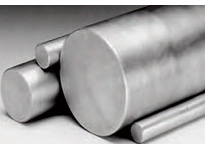
Boston Gear 30226744 SB16 bronze solid bar stock for plain sleeve bearing applications. Machinable bearing material for custom bushing and sleeve fabrication. Bronze construction provides good wear resistance and load capacity for general industrial power transmission and material handling equipment.
MODEL SB16
Contact supplier for technical support on: 800-626-2120
$204.26 Each
Prices are subject to change
THIS ORDER SHIPS FREE
Select Quantity
Typically Ships in: 1 day
Returnable: See conditions
Bearings - Solid Bar Introducing the Boston Gear 30226744 35726 Sb16 Bronze Solid Bars, a premium offering designed for exceptional performance in various industrial applications. Crafted with precision, these solid bars are engineered to meet the demanding requirements of the automotive and industrial sectors, ensuring reliability and longevity.
Key Features
| Material Composition | Made from high-quality bronze, these solid bars provide excellent wear resistance and durability, ideal for high-load applications. |
|---|---|
| Dimensions | Each bar is meticulously machined to precise specifications, ensuring consistent performance in all environments. |
| Corrosion Resistance | The bronze material exhibits superior corrosion resistance, making it suitable for harsh conditions, especially in food processing and pharmaceutical industries. |
| Versatile Applications | Designed for use in bearings, bushings, and various mechanical assemblies, these solid bars offer flexibility in application. |
| Standardized Sizing | Available in standard sizes to ensure compatibility with a wide range of industrial components and systems. |
Applications
| Food Processing | Perfect for use in machinery where hygiene and material integrity are paramount. |
|---|---|
| Material Handling | Adaptable for use in conveyor systems and other material handling equipment. |
| Pharmaceutical | Ideal for environments requiring stringent cleanliness standards and reliable performance. |
Benefits
| Enhanced Performance | The bronze construction provides excellent load-bearing capabilities, helping to minimize wear and extend the lifespan of components. |
|---|---|
| Reduced Maintenance | With their durable design and corrosion resistance, these solid bars reduce the frequency of replacements and maintenance interventions. |
| Increased Reliability | Trust in Boston Gear's longstanding commitment to quality, ensuring that these solid bars meet the rigorous standards of industrial operations. |
SKU: 37408
New lead screw gear.
Used this gear on a new lead screw l made for my old 1919 LeBlond belt drive lathe. It worked great for my application.
Read moreSKU: 32204
Excellent customer service
The couplings are just what they are supposed to be. But I wanted to comment on MRO. This was my first order with them and I was extremely surprised at how well the company is run. I will be doing more business with them in the future.
Read moreSKU: 35599
80 tooth change gear
Exact part for the machine, deliverd quickly, and priced right!
Read moreSKU: 42637
Shaft output is reversible
Description should say that shaft is reversible. Other than that perfect fit. Good communication from the shipping folks.
Read moreNo questions match your search.
What diameter sizes do you stock? Bearing basics
Carbon steel rounds (A36, A108) range from 3/8" to 3" diameter in 1-ft to 12-ft lengths. Stainless (A276) typically 1/2" to 2" diameter. Custom sizes available to order — lead time 5-7 business days. Check stock depth and lead times by diameter on the product page.
What's the difference between hot-rolled and cold-finished bars? Bearing basics
Hot-rolled (ASTM A36): Lower cost, looser tolerances (±1/16"), may have scale/oxidation. Best for structural work, bolts, general fabrication. Cold-finished (ASTM A108): Tighter tolerances (±0.005"), superior surface finish, better machinability. Use when you need precision boring, turning, or threading — saves tool wear and setup time.
What ASTM grades are available for solid round bars? Bearing basics
We stock three main grades: ASTM A36 (carbon steel, general purpose — good strength, weldable, lower cost), ASTM A108 (cold-finished carbon and alloy, tighter tolerances, better surface finish for machining), and ASTM A276 (stainless steel — grades 304, 316, 17-4 PH for corrosion resistance). A36 handles most structural and general repair work. A108 when you need precision machining and smooth finish. A276 for food, petrochemical, or high-corrosion environments.
Can you cut to length? What's the minimum order? Bearing basics
Yes — sawcut or shear to your spec at no extra charge for lengths 1" to 144". Minimum order 25 lbs per diameter/grade. Order cutoff specs on the product page or call your account rep. Turnaround 2-3 business days for stock diameters.
Which grade should I use in wet or outdoor environments? Bearing basics
For wet/corrosive conditions, specify ASTM A276 stainless (Grade 304 for general corrosion, Grade 316 if saltwater/chemical exposure). Stainless costs 3-4x carbon steel but eliminates rust and galling issues in maintenance-critical applications. A36 carbon will rust without coating or regular greasing. For temporary outdoor use (weeks), A36 is acceptable if you plan to paint/oil it.
How do I tell if a plain bearing is failing? Bearing basics
Listen for grinding or squealing noise and feel for excessive shaft play—both indicate loss of the lubrication film. Heat is another red flag; a hot-to-touch bearing has already lost critical clearance and needs immediate replacement.
When should I choose a plain bearing over a rolling-element bearing? Bearing basics
Plain bearings are ideal for high-temperature environments (above 200°C), dirty or contaminated conditions, and where simplicity and cost matter more than precision. They excel at slow speeds (below 100 RPM) with moderate radial loads and continuous lubrication.
What is the difference between sintered bronze and oil-lubricated plain bearings? Bearing basics
Sintered bronze (self-lubricating) bushings contain built-in lubricant and require no external oil—use them for sealed or hard-to-access locations. Oil-lubricated plain bearings (babbitt or solid bronze) need periodic or continuous oil supply and handle higher loads and speeds.
How do I size a plain bearing? Bearing basics
Measure your shaft diameter (bore), the housing space (OD), and the required axial width. Match the bore to your shaft, then select OD to fit your housing and width based on load requirements, referencing the manufacturer's load rating tables.
What load and speed limits do plain bearings have? Bearing basics
Sintered bronze handles 5–15 MPa at 1–2 m/s; oil-lubricated bronze handles 20–30 MPa at 3–5 m/s. Always check the material datasheet and stay within the PV limit (pressure × velocity) to prevent overheating.
What bearing materials are available and which should I use? Bearing basics
Standard bearing materials include: - Chrome Steel — Premium bearing steel used by SKF, NSK, Timken, and most manufacturers. Offers excellent hardness, fatigue resistance, and durability in standard industrial applications. Most common for ball and roller bearings. - Stainless Steel — Provides corrosion resistance for applications in wet, humid, or chemically corrosive environments. Used in food processing, marine, and pharmaceutical equipment. - Ceramic Hybrid Bearings — Combine steel races with ceramic rolling elements. Offer reduced friction, lower heat generation, and higher temperature capability. Used in high-speed, high-precision applications and aerospace. - Polymeric Bearings — Utilize fluoropolymer composites with embedded graphite or PTFE. Provide low friction in high-speed applications where lubrication film breakdown would be problematic. Material selection depends on operating environment (temperature, moisture, chemical exposure), speed, load, and precision requirements. Standard chrome steel bearings suit most industrial MRO applications.
What is a bearing and what does it do? Bearing basics
A bearing is a mechanical component that enables smooth rotational or linear motion by reducing friction between moving parts. Bearings support loads and facilitate the transfer of forces between moving elements, preventing direct metal-to-metal contact that would cause wear and heat buildup. Rolling element bearings contain balls or rollers that rotate within races (raceways) to minimize friction. Common types include ball bearings (used for moderate loads and high speeds), roller bearings (used for heavy loads at medium speeds), and angular contact bearings (designed for combined radial and axial loads). Bearings are essential in industrial equipment including motors, pumps, compressors, gearboxes, turbines, and conveyor systems.
How do I choose the right type of bearing for my application? Bearing basics
Start with the load and how it’s applied. You need to know if you’re dealing with radial loads, axial loads, or a mix of both. Then look at speed, operating environment, and space constraints. For example, ball bearings are great for high speed and lighter loads, while roller bearings handle heavier loads but usually at lower speeds. If there’s contamination, moisture, or heat involved, you may need sealed bearings or specific materials. In most cases, the right choice comes down to matching load type, speed, and environment to the bearing design.
How should I maintain and lubricate bearings? Bearing basics
Lubrication Importance — Improper lubrication causes over 40% of bearing failures. Proper bearing lubrication prevents friction damage, dissipates heat, protects against corrosion, and acts as a barrier against contaminants (dust, moisture, debris). Lubrication Selection — Choose between grease and oil based on: - Grease: Suitable for low-to-medium speed, sealed bearings, and applications without continuous circulation. Easier to apply and retain. Common for motors, household appliances, and sealed units. - Oil Mist or Circulating Systems: Better for high-speed applications, high-temperature environments, and heavy-load machinery where heat dissipation is critical. Best Practices: 1. Map all lubrication points and create a maintenance schedule. 2. Use the correct lubricant type and viscosity grade specified by the bearing manufacturer. 3. Store lubricants in sealed, labeled containers away from moisture and contaminants. 4. Monitor bearing temperature and vibration; unusual heat or noise may indicate inadequate lubrication or bearing wear. 5. Replace bearings before reaching L10 life if contamination or lubrication failure is detected.
What are dynamic and static load ratings, and why do they matter? Bearing basics
Static Load Rating (C₀) — The maximum load a stationary or slowly rotating bearing can support without permanent deformation of its rolling elements or raceways. Defined by ISO 76 as the load producing 0.01% permanent deformation of the rolling element diameter. Static load capacity is the limiting factor when a bearing operates at very low speeds or remains stationary under heavy loads. Dynamic Load Rating (C) — The constant load a bearing can endure for a specified number of revolutions (the L10 life, at which 90% of identical bearings are expected to survive). Dynamic load rating determines how long a bearing will last under rotating or oscillating motion. ISO 281 defines the L10 calculation using the formula: L10 = (C/P)^p, where C is dynamic load rating, P is equivalent dynamic load, and p is the life exponent (3 for ball bearings, 10/3 for roller bearings). Why They Matter — Static load rating determines if a bearing can handle peak loads without permanent damage (even if not rotating). Dynamic load rating determines operational life. For high-speed applications, dynamic rating is critical. For low-speed or stationary loads, static rating may be the limiting factor. Always verify both ratings against your application's load profile.
How do I choose the right bearing for my application? Bearing basics
Bearing selection depends on five key factors: 1. Load Type and Direction — Determine whether your application has radial loads (perpendicular to shaft), axial loads (along the shaft), or combined loads. Deep groove ball bearings suit primarily radial loads; tapered roller bearings excel at combined loads; thrust bearings handle pure axial forces. 2. Rotational Speed — Ball bearings support higher speeds with lower friction. Roller bearings are better for medium-speed, heavy-load applications. Verify bearing speed ratings against your operating RPM. 3. Load Capacity — Select a bearing with adequate load capacity for your application. Basic dynamic load rating (C) and basic static load rating (C₀) determine how much load the bearing can safely carry. 4. Lubrication Requirements — Choose between grease and oil lubrication based on speed, temperature, and load. High-speed or high-temperature applications typically require oil circulation; lower-speed applications can use grease. 5. Precision and Rigidity — Evaluate your application's tolerance for runout deviation. High-precision applications require tighter tolerances and higher-grade bearings.
What is bearing life (L10) and how does it affect my equipment maintenance? Bearing basics
L10 Life Definition (ISO 281) — L10 is the basic rating life at which 90% of a large group of identical bearings are statistically expected to survive under constant load and speed. It is calculated in millions of revolutions using the formula: L10 = (C/P)^p, where C is the basic dynamic load rating, P is the equivalent dynamic bearing load, and p is the life exponent (3 for ball bearings). Converting L10 to Operating Hours — To express L10 life in hours: L10h = (L10 × 10^6) / (60 × n), where n is rotational speed in RPM. For example, a bearing with L10 = 1,000 million revolutions operating at 3,600 RPM has approximately L10h ≈ 4,630 hours. Modified Life (L10a) — Actual bearing life also depends on lubrication quality, contamination, speed, temperature, and bearing accuracy. ISO 281 defines a modified life factor (a₁ × aISO) that adjusts the theoretical L10 for these real-world conditions. High-quality lubrication and proper maintenance can extend bearing life significantly; poor lubrication or high contamination reduces it. Why It Matters for Maintenance — L10 life helps you schedule preventive maintenance, budget for bearing replacement, and select bearings adequate for your duty cycle.

#2789585
Brand
Smith Bearings
Model
PYR-3

#949991
Brand
Hubbell Wiring
Model
SFFWX

#677716
Brand
Bando
Model
1922V460

#4399
Brand
AMI Bearings
Model
UCPX13-40

#6510723
Brand
RAB Lighting
Model
CDLED6PS-20W-50D940-S

#2243493
Brand
Bestorq
Model
3/3VX800

#5821635
Brand
PT Coupling
Model
54025302

#2839090
Brand
Hammond Power Solutions
Model
SG3A0075KY0C
SKU: 37408
New lead screw gear.
Used this gear on a new lead screw l made for my old 1919 LeBlond belt drive lathe. It worked great for my application.
Read moreSKU: 32204
Excellent customer service
The couplings are just what they are supposed to be. But I wanted to comment on MRO. This was my first order with them and I was extremely surprised at how well the company is run. I will be doing more business with them in the future.
Read moreSKU: 35599
80 tooth change gear
Exact part for the machine, deliverd quickly, and priced right!
Read moreSKU: 42637
Shaft output is reversible
Description should say that shaft is reversible. Other than that perfect fit. Good communication from the shipping folks.
Read moreItem must be unused.
Item must be in it's original package.
25% Restocking, shipping and handling fees may apply to any return with this manufacturer.
For more information please consult https://www.mrosupply.com/page/returnwarranty-policy/