









We never sell your data to third parties
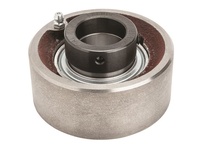
TIMKEN RC2 7/16 Ball Take-up or cartridge unit
MODEL RC2 7/16
$667.74 Each
Prices are subject to change
FREE SHIPPING ON ORDERS OVER $100
Select Quantity
Returnable: Yes
13100 lbf Shaft size
2 7/16 in Static load rating:35900 N
14.3 mm Dimension d1
84.1 mm
2.563 in Dimension E1
0.563 in
3.311 in Dynamic load rating
58200 N
Bearing Number
G1207KRRB
Bearing Type
Ball Bearing
Bore
2 7/16 in
Dynamic Load Rating
58200 N 13100 lbf
Static Load Rating
35900 N 8080 lbf
Bearings - Timken RC2 7/16 Ball Take-Up Cartridge Unit The Timken RC2 7/16 Ball Take-Up Cartridge Unit is a precision-engineered bearing solution designed for reliable performance in various industrial applications. This robust cartridge unit features a take-up design that allows for easy adjustments, ensuring optimal alignment and efficiency in operation. With Timken’s commitment to quality and innovation, this product stands out as a dependable choice for those seeking high-performance bearing solutions.
Key Features
| Precision Engineering | Designed with meticulous attention to detail, the RC2 7/16 cartridge unit ensures superior load distribution and reduced wear, enhancing its lifespan and performance. |
|---|---|
| Take-Up Design | The adjustable take-up feature allows for quick and easy alignment adjustments, accommodating shaft misalignment and ensuring consistent operation. |
| High-Quality Materials | Manufactured from premium-grade materials, the cartridge unit offers exceptional resistance to wear, corrosion, and high temperatures, making it suitable for demanding environments. |
| Sealed Construction | The sealed design protects the internal components from contaminants such as dirt and moisture, ensuring long-lasting reliability and reduced maintenance needs. |
| Compatibility | The RC2 7/16 is compatible with a variety of mounting configurations, making it versatile across different applications in the automotive and industrial sectors. |
Applications
| Industrial Machinery | Ideal for use in conveyor systems, material handling equipment, and other industrial machinery where reliable bearing support is crucial. |
|---|---|
| Agricultural Equipment | Suitable for various agricultural applications, providing dependable performance in challenging conditions. |
| Automotive Components | Commonly used in automotive systems that require precise alignment and robust support for rotating parts. |
Benefits
| Enhanced Efficiency | The adjustable take-up feature ensures optimal alignment, minimizing friction and energy loss during operation. |
|---|---|
| Increased Reliability | Timken’s reputation for quality engineering means this cartridge unit is built to withstand rigorous demands, ensuring consistent performance. |
| Reduced Downtime | The durable construction and sealed design minimize the risk of failure, leading to less frequent maintenance and longer operational life. |
Product information compiled with AI assistance for reference purposes.
No questions match your search.
Why use indexable carbide inserts instead of solid cutting tools? Bearing basics
Indexable inserts are more economical because you rotate or replace only the cutting edge once it wears, not the entire tool body. This reduces tool cost per cutting edge and minimizes machine downtime compared to resharpening solid carbide tools.
What's the difference between carbide grades P, M, and K? Bearing basics
P-grade inserts are optimized for steel machining, M-grade for stainless steel, and K-grade for cast iron and nonferrous materials. Each grade balances hardness and toughness differently based on the workpiece material and cutting conditions you're working with.
What does the ISO 1832 code on an insert mean? Bearing basics
ISO 1832 provides a standardized code describing the insert's geometry, size, thickness, radius, and material grade. Reading this code correctly ensures you select the right insert for your machine setup and workpiece material.
How long can filter cartridges be stored before they degrade? Bearing basics
Most filter cartridges remain effective for 3–5 years in dry, cool storage conditions. Pleated media can harden or crack in extreme heat or humidity, so store cartridges in controlled conditions away from direct sunlight and moisture.
When changing a filter cartridge, do I need to replace the O-rings? Bearing basics
Yes, you should replace O-rings and seals when installing a new cartridge, especially in older systems. Worn or hardened O-rings can cause bypass leaks and reduce filter effectiveness, even with fresh media.
What temperature should a mounted bearing run at? Bearing basics
Monitor housing surface temperature (the standard MRO measurement point): 40–65°C is normal, 70–75°C warrants investigation of misalignment or over-greasing, and 80°C requires immediate shutdown. The inner race runs 15–30°C hotter than the housing surface, so an 80°C housing reading means lubricant degradation is accelerating and the bearing requires emergency diagnosis.
How often should I grease a mounted bearing? Bearing basics
Use the formula (OD in mm) × (Width in mm) × 0.005 = grams for periodic relubrication of the bearing element only; initial housing cavity fill is separate and should be 30–50% of free volume. Over-greasing damages seals and generates excess heat—stick to the calculated quantity and recommended relubrication schedule.
When should I replace a mounted bearing? Bearing basics
Replace based on condition: vibration signature analysis or ultrasonic emission (detected with a hand-held meter) indicates wear hours or days before audible noise appears, and is the actionable MRO signal. Other replacement triggers include continuous operation above 80°C housing temperature, visible grease leakage, or reaching the manufacturer's service interval for your duty cycle. Scheduled relubrication and temperature monitoring extend service life significantly — replacement is a last resort, not preventive maintenance.
What are the main types of mounted bearings? Bearing basics
Mounted bearings come in four main forms: pillow blocks (flat-base, shaft parallel to mounting surface), flange mounts (perpendicular shaft, available in 2-bolt and 4-bolt variants with different radial ratings), hanger bearings (overhead support for long horizontal shafts), and take-up frames (adjustable center-distance units for belt or chain drive tensioning). Select based on your shaft orientation, load direction, and space constraints.
How do I install a mounted bearing correctly? Bearing basics
Verify your shaft diameter is within the bearing bore tolerance (consult the NSK or SKF datasheet), then secure the bearing to the mounting surface using the specified bolt torque and engage the locking collar or set-screw on the shaft to prevent axial slip. Hand-rotate the shaft through several complete turns with a dial indicator, laser alignment tool, or feeler gauge to confirm smooth operation and proper shaft runout within spec.
How do I choose the right bearing for my application? Bearing basics
Bearing selection depends on five key factors: 1. Load Type and Direction — Determine whether your application has radial loads (perpendicular to shaft), axial loads (along the shaft), or combined loads. Deep groove ball bearings suit primarily radial loads; tapered roller bearings excel at combined loads; thrust bearings handle pure axial forces. 2. Rotational Speed — Ball bearings support higher speeds with lower friction. Roller bearings are better for medium-speed, heavy-load applications. Verify bearing speed ratings against your operating RPM. 3. Load Capacity — Select a bearing with adequate load capacity for your application. Basic dynamic load rating (C) and basic static load rating (C₀) determine how much load the bearing can safely carry. 4. Lubrication Requirements — Choose between grease and oil lubrication based on speed, temperature, and load. High-speed or high-temperature applications typically require oil circulation; lower-speed applications can use grease. 5. Precision and Rigidity — Evaluate your application's tolerance for runout deviation. High-precision applications require tighter tolerances and higher-grade bearings.
What is a bearing and what does it do? Bearing basics
A bearing is a mechanical component that enables smooth rotational or linear motion by reducing friction between moving parts. Bearings support loads and facilitate the transfer of forces between moving elements, preventing direct metal-to-metal contact that would cause wear and heat buildup. Rolling element bearings contain balls or rollers that rotate within races (raceways) to minimize friction. Common types include ball bearings (used for moderate loads and high speeds), roller bearings (used for heavy loads at medium speeds), and angular contact bearings (designed for combined radial and axial loads). Bearings are essential in industrial equipment including motors, pumps, compressors, gearboxes, turbines, and conveyor systems.
What is bearing life (L10) and how does it affect my equipment maintenance? Bearing basics
L10 Life Definition (ISO 281) — L10 is the basic rating life at which 90% of a large group of identical bearings are statistically expected to survive under constant load and speed. It is calculated in millions of revolutions using the formula: L10 = (C/P)^p, where C is the basic dynamic load rating, P is the equivalent dynamic bearing load, and p is the life exponent (3 for ball bearings). Converting L10 to Operating Hours — To express L10 life in hours: L10h = (L10 × 10^6) / (60 × n), where n is rotational speed in RPM. For example, a bearing with L10 = 1,000 million revolutions operating at 3,600 RPM has approximately L10h ≈ 4,630 hours. Modified Life (L10a) — Actual bearing life also depends on lubrication quality, contamination, speed, temperature, and bearing accuracy. ISO 281 defines a modified life factor (a₁ × aISO) that adjusts the theoretical L10 for these real-world conditions. High-quality lubrication and proper maintenance can extend bearing life significantly; poor lubrication or high contamination reduces it. Why It Matters for Maintenance — L10 life helps you schedule preventive maintenance, budget for bearing replacement, and select bearings adequate for your duty cycle.
How should I maintain and lubricate bearings? Bearing basics
Lubrication Importance — Improper lubrication causes over 40% of bearing failures. Proper bearing lubrication prevents friction damage, dissipates heat, protects against corrosion, and acts as a barrier against contaminants (dust, moisture, debris). Lubrication Selection — Choose between grease and oil based on: - Grease: Suitable for low-to-medium speed, sealed bearings, and applications without continuous circulation. Easier to apply and retain. Common for motors, household appliances, and sealed units. - Oil Mist or Circulating Systems: Better for high-speed applications, high-temperature environments, and heavy-load machinery where heat dissipation is critical. Best Practices: 1. Map all lubrication points and create a maintenance schedule. 2. Use the correct lubricant type and viscosity grade specified by the bearing manufacturer. 3. Store lubricants in sealed, labeled containers away from moisture and contaminants. 4. Monitor bearing temperature and vibration; unusual heat or noise may indicate inadequate lubrication or bearing wear. 5. Replace bearings before reaching L10 life if contamination or lubrication failure is detected.
What are dynamic and static load ratings, and why do they matter? Bearing basics
Static Load Rating (C₀) — The maximum load a stationary or slowly rotating bearing can support without permanent deformation of its rolling elements or raceways. Defined by ISO 76 as the load producing 0.01% permanent deformation of the rolling element diameter. Static load capacity is the limiting factor when a bearing operates at very low speeds or remains stationary under heavy loads. Dynamic Load Rating (C) — The constant load a bearing can endure for a specified number of revolutions (the L10 life, at which 90% of identical bearings are expected to survive). Dynamic load rating determines how long a bearing will last under rotating or oscillating motion. ISO 281 defines the L10 calculation using the formula: L10 = (C/P)^p, where C is dynamic load rating, P is equivalent dynamic load, and p is the life exponent (3 for ball bearings, 10/3 for roller bearings). Why They Matter — Static load rating determines if a bearing can handle peak loads without permanent damage (even if not rotating). Dynamic load rating determines operational life. For high-speed applications, dynamic rating is critical. For low-speed or stationary loads, static rating may be the limiting factor. Always verify both ratings against your application's load profile.
How do I choose the right type of bearing for my application? Bearing basics
Start with the load and how it’s applied. You need to know if you’re dealing with radial loads, axial loads, or a mix of both. Then look at speed, operating environment, and space constraints. For example, ball bearings are great for high speed and lighter loads, while roller bearings handle heavier loads but usually at lower speeds. If there’s contamination, moisture, or heat involved, you may need sealed bearings or specific materials. In most cases, the right choice comes down to matching load type, speed, and environment to the bearing design.
What bearing materials are available and which should I use? Bearing basics
Standard bearing materials include: - Chrome Steel — Premium bearing steel used by SKF, NSK, Timken, and most manufacturers. Offers excellent hardness, fatigue resistance, and durability in standard industrial applications. Most common for ball and roller bearings. - Stainless Steel — Provides corrosion resistance for applications in wet, humid, or chemically corrosive environments. Used in food processing, marine, and pharmaceutical equipment. - Ceramic Hybrid Bearings — Combine steel races with ceramic rolling elements. Offer reduced friction, lower heat generation, and higher temperature capability. Used in high-speed, high-precision applications and aerospace. - Polymeric Bearings — Utilize fluoropolymer composites with embedded graphite or PTFE. Provide low friction in high-speed applications where lubrication film breakdown would be problematic. Material selection depends on operating environment (temperature, moisture, chemical exposure), speed, load, and precision requirements. Standard chrome steel bearings suit most industrial MRO applications.
Best company to buy from
Verified · SKU 5066946I always buy from MRO is a very reliable company to work with Read more


#845947
Brand
Rexnord
Model
781.10.171

#96944975
Brand
IFM
Model
NF5003

#5083252
Brand
Timken
Model
21158-1837

#851527
Brand
Rexnord
Model
81428071

#97185967
Brand
FEIN
Model
63134666004

#2338886
Brand
MasterDrive
Model
BK85-3/4
#97213782
Brand
Walter
Model
9872-10