









We never sell your data to third parties
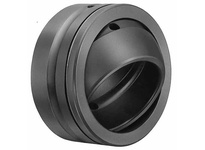
IKO Bearing SBB32 Spherical Bushing, Inch Series, High Carbon Steel, Steel on Steel, Not Seperable Spherical Bushing, Inch Series, High Carbon Steel, Steel on Steel, Not Seperable
MODEL SBB32
Contact supplier for technical support on: 562 941 1019
$74.92 Each
Prices are subject to change
FREE SHIPPING ON ORDERS OVER $100
Select Quantity
Typically Ships in: 1 day
Returnable:No

#157311
Brand
Flexco
Model
41279


#783022
Brand
Flexco
Model
40776

#861963
Brand
IKO Bearing
Model
SBB20
Bearing Material
High Carbon Steel
Bore Diameter
2 in
Dynamic Load Capacity
273000 N
Enclosure
Open
Finish
Chromium Plated
Housing Dia
80.962(3 3/16)
Inner Ring Width
44.45(1.750)
O.D.
3-3/16 in
Series
SBB Inch Series
Shaft Dia
50.800 (2)
Static Load Capacity
1640000 N
Temperature Rating
180 deg C
Type
Steel on Steel
Spherical Bushings are self-aligning spherical plain bushings that have inner and outer rings with spherical sliding surfaces, and can take a large radial load and a bi-directional axial load at the same time. There are many types of Spherical Bushings, but they are basically divided into steel-on-steel types and maintenance-free types according to the kind of sliding surfaces. Steel-on-steel Spherical Bushings have inner and outer rings of high carbon chromium bearing steel, of which sliding surfaces are phosphate-treated and then dry-coated with molybdenum disulfide (MoS2). They can, therefore, operate with low torque, and have excellent wear resistance and large load capacity. They are especially suitable for applications where there are alternate loads and shock loads. They have wide applications mainly in industrial and construction machinery. Maintenance-free Spherical Bushings consist of an outer ring which has a special PTFE liner reinforce with copper alloy meshes on the sliding surface, and a spherical inner ring of which sliding surface has a hard chromium plating. Creep deformation due to compressive load is small, and wear resistance is superior. Thus, they are maintenance-free and can be used for extended periods of time without re-lubrication. They are especially suitable in cases where fixed directional loads are applied and are used mainly in food processing machines and construction machinery and in other applications in which the use of oil is undesirable or lubrication is not possible.
No questions match your search.
How do spherical plain bearings differ from rod ends? Bearing basics
Spherical plain bearings are self-contained rings that mount between two surfaces; rod ends have an integrated threaded or pinned shank for direct attachment. Rod ends limit angular movement to ~25° and carry higher axial loads, while spherical plain bearings provide greater self-alignment and excel at radial loads.
What are spherical plain bearings used for? Bearing basics
Spherical plain bearings accommodate angular misalignment (typically 15–30°) while carrying heavy radial and axial loads under slow oscillating or rocking motion. They're essential in aircraft flight controls, landing gear, automotive suspension, and hydraulic actuators where precise alignment can't be guaranteed.
Should I choose metal-on-metal or PTFE spherical plain bearings? Bearing basics
Metal-on-metal bearings handle higher loads (up to 50,000 psi static) but require scheduled grease lubrication; PTFE bearings are maintenance-free and tolerate contaminants but carry lower load ratings (~25,000 psi) and produce more friction. Choose metal-on-metal for high-load aircraft/hydraulic systems; choose PTFE for sealed or food-industry applications.
What load and speed limits apply to spherical plain bearings? Bearing basics
Dynamic load ratings are typically 12,500 psi (86 MPa) for oscillating motion; static ratings allow up to 50,000 psi (345 MPa). Load capacity scales with bore/OD/width; larger bearings carry heavier loads. Spherical plain bearings are low-speed components designed for oscillating/rocking motion rather than continuous rotation. Manufacturer speed ratings vary by bearing design and lubrication, with typical limits around 5,000 RPM for metal-on-metal designs under moderate load; speed capability is governed by the PV factor (pressure × velocity) and drops rapidly under heavy loads or poor lubrication.
How often should spherical plain bearings be lubricated? Bearing basics
Metal-on-metal spherical plain bearings require relubrication every 50–200 operating hours depending on load and speed, using lithium or lithium-complex pressure-resistant greases. Relubricate only when unloaded so lubricant spreads evenly; loading during lubrication traps air pockets and prevents proper film formation. PTFE bearings require no maintenance or lubrication.
How do I choose the right type of bearing for my application? Bearing basics
Start with the load and how it’s applied. You need to know if you’re dealing with radial loads, axial loads, or a mix of both. Then look at speed, operating environment, and space constraints. For example, ball bearings are great for high speed and lighter loads, while roller bearings handle heavier loads but usually at lower speeds. If there’s contamination, moisture, or heat involved, you may need sealed bearings or specific materials. In most cases, the right choice comes down to matching load type, speed, and environment to the bearing design.
What is a bearing and what does it do? Bearing basics
A bearing is a mechanical component that enables smooth rotational or linear motion by reducing friction between moving parts. Bearings support loads and facilitate the transfer of forces between moving elements, preventing direct metal-to-metal contact that would cause wear and heat buildup. Rolling element bearings contain balls or rollers that rotate within races (raceways) to minimize friction. Common types include ball bearings (used for moderate loads and high speeds), roller bearings (used for heavy loads at medium speeds), and angular contact bearings (designed for combined radial and axial loads). Bearings are essential in industrial equipment including motors, pumps, compressors, gearboxes, turbines, and conveyor systems.
How do I choose the right bearing for my application? Bearing basics
Bearing selection depends on five key factors: 1. Load Type and Direction — Determine whether your application has radial loads (perpendicular to shaft), axial loads (along the shaft), or combined loads. Deep groove ball bearings suit primarily radial loads; tapered roller bearings excel at combined loads; thrust bearings handle pure axial forces. 2. Rotational Speed — Ball bearings support higher speeds with lower friction. Roller bearings are better for medium-speed, heavy-load applications. Verify bearing speed ratings against your operating RPM. 3. Load Capacity — Select a bearing with adequate load capacity for your application. Basic dynamic load rating (C) and basic static load rating (C₀) determine how much load the bearing can safely carry. 4. Lubrication Requirements — Choose between grease and oil lubrication based on speed, temperature, and load. High-speed or high-temperature applications typically require oil circulation; lower-speed applications can use grease. 5. Precision and Rigidity — Evaluate your application's tolerance for runout deviation. High-precision applications require tighter tolerances and higher-grade bearings.
What bearing materials are available and which should I use? Bearing basics
Standard bearing materials include: - Chrome Steel — Premium bearing steel used by SKF, NSK, Timken, and most manufacturers. Offers excellent hardness, fatigue resistance, and durability in standard industrial applications. Most common for ball and roller bearings. - Stainless Steel — Provides corrosion resistance for applications in wet, humid, or chemically corrosive environments. Used in food processing, marine, and pharmaceutical equipment. - Ceramic Hybrid Bearings — Combine steel races with ceramic rolling elements. Offer reduced friction, lower heat generation, and higher temperature capability. Used in high-speed, high-precision applications and aerospace. - Polymeric Bearings — Utilize fluoropolymer composites with embedded graphite or PTFE. Provide low friction in high-speed applications where lubrication film breakdown would be problematic. Material selection depends on operating environment (temperature, moisture, chemical exposure), speed, load, and precision requirements. Standard chrome steel bearings suit most industrial MRO applications.
What are dynamic and static load ratings, and why do they matter? Bearing basics
Static Load Rating (C₀) — The maximum load a stationary or slowly rotating bearing can support without permanent deformation of its rolling elements or raceways. Defined by ISO 76 as the load producing 0.01% permanent deformation of the rolling element diameter. Static load capacity is the limiting factor when a bearing operates at very low speeds or remains stationary under heavy loads. Dynamic Load Rating (C) — The constant load a bearing can endure for a specified number of revolutions (the L10 life, at which 90% of identical bearings are expected to survive). Dynamic load rating determines how long a bearing will last under rotating or oscillating motion. ISO 281 defines the L10 calculation using the formula: L10 = (C/P)^p, where C is dynamic load rating, P is equivalent dynamic load, and p is the life exponent (3 for ball bearings, 10/3 for roller bearings). Why They Matter — Static load rating determines if a bearing can handle peak loads without permanent damage (even if not rotating). Dynamic load rating determines operational life. For high-speed applications, dynamic rating is critical. For low-speed or stationary loads, static rating may be the limiting factor. Always verify both ratings against your application's load profile.
What is bearing life (L10) and how does it affect my equipment maintenance? Bearing basics
L10 Life Definition (ISO 281) — L10 is the basic rating life at which 90% of a large group of identical bearings are statistically expected to survive under constant load and speed. It is calculated in millions of revolutions using the formula: L10 = (C/P)^p, where C is the basic dynamic load rating, P is the equivalent dynamic bearing load, and p is the life exponent (3 for ball bearings). Converting L10 to Operating Hours — To express L10 life in hours: L10h = (L10 × 10^6) / (60 × n), where n is rotational speed in RPM. For example, a bearing with L10 = 1,000 million revolutions operating at 3,600 RPM has approximately L10h ≈ 4,630 hours. Modified Life (L10a) — Actual bearing life also depends on lubrication quality, contamination, speed, temperature, and bearing accuracy. ISO 281 defines a modified life factor (a₁ × aISO) that adjusts the theoretical L10 for these real-world conditions. High-quality lubrication and proper maintenance can extend bearing life significantly; poor lubrication or high contamination reduces it. Why It Matters for Maintenance — L10 life helps you schedule preventive maintenance, budget for bearing replacement, and select bearings adequate for your duty cycle.
How should I maintain and lubricate bearings? Bearing basics
Lubrication Importance — Improper lubrication causes over 40% of bearing failures. Proper bearing lubrication prevents friction damage, dissipates heat, protects against corrosion, and acts as a barrier against contaminants (dust, moisture, debris). Lubrication Selection — Choose between grease and oil based on: - Grease: Suitable for low-to-medium speed, sealed bearings, and applications without continuous circulation. Easier to apply and retain. Common for motors, household appliances, and sealed units. - Oil Mist or Circulating Systems: Better for high-speed applications, high-temperature environments, and heavy-load machinery where heat dissipation is critical. Best Practices: 1. Map all lubrication points and create a maintenance schedule. 2. Use the correct lubricant type and viscosity grade specified by the bearing manufacturer. 3. Store lubricants in sealed, labeled containers away from moisture and contaminants. 4. Monitor bearing temperature and vibration; unusual heat or noise may indicate inadequate lubrication or bearing wear. 5. Replace bearings before reaching L10 life if contamination or lubrication failure is detected.
Bearings
Verified · SKU 1911538perfect just what i ordered shipping was very fast and it got the job done Read more
Excellent service!
Verified · SKU 861291I like this company. They are quick with their shipping, their prices are very fair, and the orders are always right! Read more
Combination thrust-radial bearing
Verified · SKU 863092Special application bearings like this one is hard to find. It's great that I can turn to MRO Supply for my bearing needs. Read more



#6576359
Brand
Consolidated Bearings
Model
GEZ-200 ES


#1412584
Brand
Orbit Industries
Model
DWJ-642-I

#1380691
Brand
Isostatic
Model
CB-2733-28

#5019626
Brand
Hubbell Wiring
Model
HBTEBWHT


#5821128
Brand
PT Coupling
Model
5007740

#2038892
Brand
United Abrasives
Model
84075

#158513
Brand
Gates Rubber
Model
4535 4.3/8