










We never sell your data to third parties
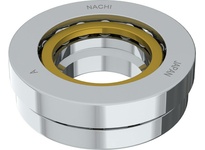
Image for Illustration purposes only. Actual product may vary
Nachi Bearing 29352E Spherical Roller Thrust Bearing 260mm Inner Diameter x 420mm Outer Diameter x 95mm Width Spherical Roller Thrust Bearing
MODEL 29352E
Contact supplier for technical support on: 800-829-5787
$6,155.17 Each
Prices are subject to change
FREE SHIPPING ON ORDERS OVER $100
Select Quantity
Typically Ships in: 1 day
Returnable: See conditions
Bearing Material
Steel Alloy
Bore Type
Cylindrical
Cage Material
Machined High Strength Brass Cage
Contact Angle (Deg)
N/A
Dynamic Load Capacity (N)
1810000
Grease Fill
No Fill
Inner Diameter (mm)
260
Inner Ring Material
JIS SUJ2 Steel
Internal Clearance
CN/C0
ISO Precision Class
P0
Limiting Speed - Grease (RPM)
N/A
Limiting Speed - Oil (RPM)
860
Max Operating Temp.
200°C (392°F)
Outer Diameter (mm)
420
Outer Ring Material
JIS SUJ2 Steel
Preload
N/A
Rolling Element Material
JIS SUJ2 Steel
Seals or Shields
N/A
Series
29300
Snap Ring
N/A
Static Load Capacity (N)
7500000
Thrust Direction
Single
Type
Open
Universally (Flush) Ground
N/A
Width (mm)
860
A spherical roller thrust bearing is a bearing that utilizes barrel shaped rollers to manage extreme thrust loads while rotating with low friction and allowing for some angular misalignment. There are two basic designs. A conventional "E-Type" design uses a machined brass cages while the "EX-Type" design uses an optimized internal design, larger rollers and a stamped steel cage for higher loads and longer life. Spherical roller thrust bearings are used mostly in heavy duty industrial applications where heavy axial or shock loads exist. They are commonly used in gearboxes, extruders, pumps, screw conveyors, marine propulsion and drilling equipment. Improved roller roundness and raceway accuracy. Reduced noise and vibration. Cages are stamped steel (EX) for extra capacity or machined brass (E). Self-aligning and can accommodate low and high speeds. Long life. Low operating temperature.

How do I choose the right type of bearing for my application?
Start with the load and how it’s applied. You need to know if you’re dealing with radial loads, axial loads, or a mix of both. Then look at speed, operating environment, and space constraints. For example, ball bearings are great for high speed and lighter loads, while roller bearings handle heavier loads but usually at lower speeds. If there’s contamination, moisture, or heat involved, you may need sealed bearings or specific materials. In most cases, the right choice comes down to matching load type, speed, and environment to the bearing design.
