









We never sell your data to third parties
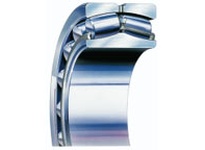
SKF 22310 E/VA405 is a 50mm bore spherical roller bearing with enhanced capacity and full complement design (no cage). The VA405 suffix indicates a vibratory screen application package with special heat treatment and clearance. Suitable for heavy radial loads in vibrating screens and industrial equipment.
MODEL 22310 E/VA405
$309.95 Each
Prices are subject to change
FREE SHIPPING ON ORDERS OVER $100
Select Quantity
Typically Ships in: 1 day
Returnable:No
Bore Type
Cylindrical
Cage
Sheet metal
Dimension Type
Metric
I.D.
2 in
Inner Diameter (mm)
50.000
Lubricant (in Bearing)
None
Material
Bearing steel
Material/Treatment
Bearing steel
O.D. (in)
4 1/3
Outer Diameter (mm)
110.000
Radial Internal Clearance
C4
Relubrication Feature
With
Sealing
None
Width (mm)
40.000


SKU: 320006
Bearing purchase
Good price and fast delivery!! Also a pleasure doing business with MROSupply.com!!
Read moreHow should I install a tapered bore spherical roller bearing?
Tapered bore spherical roller bearings install via an adapter sleeve that wedges onto the tapered bore as you apply axial force. Begin by cleaning the shaft and bore thoroughly, then slide the adapter sleeve and bearing assembly onto the shaft. Secure a lock nut or lock washer on the shaft end and tighten gradually while monitoring axial displacement with a dial gauge until you reach the specified clearance (typically 0.002″–0.010″ depending on bearing size and design). For smaller bores (up to approximately 150 mm), standard spanners and a dial gauge are sufficient. Do not exceed the recommended lock-nut tension, as over-tightening generates excessive preload and premature wear. Once properly seated, confirm the bearing rotates freely without binding. For larger or critical applications, follow the specific installation card provided by the bearing manufacturer, as taper ratios vary by series (e.g., 1:12 for 222, 223, 230–233, 239 series versus 1:30 for 240–242 series).
What applications are tapered bore spherical roller bearings best suited for, and why?
Tapered bore spherical roller bearings excel in heavy-duty, shock-intensive environments where alignment precision is difficult to maintain. Common applications include mining equipment (crushers, vibrating screens, conveyor drives), construction machinery (wheel loaders, excavators), steel mill machinery, wind turbines, paper mill drives, and agricultural equipment. Their self-aligning capability (0.5°–2° angular tolerance) makes them ideal for long, flexible shafts and field-assembled systems where shaft tilt or housing deflection is expected. The ability to sustain combined radial and axial loads simultaneously, along with excellent shock and vibration absorption, provides reliability in environments with dynamic stresses. Gearbox inputs and main shafts frequently use these bearings because they tolerate both heavy radial loads from tooth mesh and axial thrust from helical gears. The trade-off is lower speed capacity compared to cylindrical roller bearings—typical maximum speeds range from 1,000 to 3,000 RPM depending on bore size and load. For applications exceeding these speed limits, cylindrical roller bearings or higher-speed spherical designs may be preferred.
What are the key technical specifications I should consider when selecting a tapered bore spherical roller bearing?
The critical specifications for tapered bore spherical roller bearings include bore diameter (d), outer diameter (D), and width (B), which determine mounting fit and available space. Dynamic load rating (C) indicates the radial load capacity during rotation, while static load rating (C₀) reflects the load the bearing can safely support when stationary. Industry standard bore sizes range from 25 mm to over 1000 mm, with static load capacities from 10,000 to over 6 million pounds-force depending on size. The taper angle (1:12 or 1:30) affects the adapter sleeve selection and installation method. For your application, verify the contact angle (typically 10°–29°), which determines whether the bearing is optimized for heavy radial loads, balanced radial-axial loads, or large axial loads. Cross-reference the bearing designation with the manufacturers datasheet (NSK, SKF, Timken, FAG, or NTN) to confirm bore taper ratio, cage material, and lubrication features (such as oil grooves on the outer ring).
What maintenance is required for tapered bore spherical roller bearings?
Regular maintenance is essential to maximize bearing life and prevent failures due to heavy loads and harsh environments. Establish a lubrication schedule appropriate to your application: most spherical roller bearings in industrial settings benefit from oil or grease relubrication at intervals ranging from weeks to months, depending on speed, load, and contamination exposure. Use manufacturer-recommended lubricants (typically ISO VG 32–100 mineral oils or lithium-complex greases) and monitor for grease hardening or oil oxidation. Never attempt to clean or spin a bearing with compressed air—the high-velocity jets can damage rolling surfaces and cages. Inspect the bearing periodically for noise, vibration, temperature rise, or visible damage; excessive heat or noise indicates potential wear or inadequate lubrication requiring prompt bearing replacement. Sealed or shielded variants reduce contamination ingress and extend relubrication intervals. Keep the bearing environment as clean and dry as possible to prevent corrosion and particle contamination.
What are tapered bore spherical roller bearings and how do they differ from other bearing types?
Tapered bore spherical roller bearings are self-aligning rolling bearings with barrel-shaped rollers mounted on a curved outer raceway. The tapered bore design integrates a conical bore surface (typically at a 1:12 or 1:30 taper ratio) that accepts an adapter sleeve for easy installation on shafts. Unlike cylindrical roller bearings, spherical designs automatically compensate for angular misalignment of 0.5° to 2°, making them ideal for applications where perfect shaft alignment is impractical. They handle combined radial and axial loads simultaneously—a capability standard cylindrical bearings lack. The stress distribution across the barrel roller surface prevents edge concentration and damage, providing superior performance in shock-heavy and heavy-load environments such as mining equipment, conveyors, gearboxes, and construction machinery.
Can spherical roller bearings handle both radial and axial loads?
Spherical roller bearings excel at handling heavy radial loads — they are among the highest radial load-rated bearings available. However, their axial load capacity is moderate and limited. What this means in practice: - Use spherical roller bearings when radial load is the dominant force (e.g., on a conveyor roller shaft). - If your application requires equal or heavy axial loading (thrust), consider tapered roller bearings or a combination bearing arrangement. - Some applications combine spherical roller bearings with separate thrust bearings to handle both load directions. Source: Load rating tables and bearing selection guidelines on MROSupply product pages and manufacturer datasheets.
What's the difference between spherical roller bearings and cylindrical or tapered roller bearings?
Spherical roller bearings have barrel-shaped rolling elements that give them two distinct advantages: 1. Self-aligning capability — The curved raceways allow the bearing to automatically compensate for shaft misalignment or deflection, reducing stress on the bearing and extending its life. 2. Load capacity — They handle very high radial loads. However, unlike tapered roller bearings, they have limited axial load capability and are best suited when radial load is the primary concern. Cylindrical roller bearings, by comparison, can handle both radial and axial loads equally well but cannot self-align and are better for precision, high-speed applications. Source: Bearing design and load rating specifications on product datasheets.
What are adapter sleeves and withdrawal sleeves used for with spherical roller bearings?
Adapter sleeves and withdrawal sleeves simplify bearing installation and removal: - Adapter sleeves — Press onto the shaft to create a larger mounting surface, allowing the bearing inner ring to be installed without interference fits that can damage the bearing. - Withdrawal sleeves — Mount on the bearing outer ring and allow the bearing to be pulled or extracted from the shaft using a mechanical puller, eliminating the risk of damage during removal. These sleeves are especially valuable in industrial settings where bearings need to be changed frequently or where skilled press equipment is not available. They reduce maintenance downtime and extend bearing life by preventing installation damage. Source: Bearing installation and maintenance guides.
What applications use spherical roller bearings?
Spherical roller bearings are used in heavy-duty industrial applications that require high radial load capacity and some axial load tolerance. Common applications include: - Mining equipment — conveyor systems, crushers, and grinding mills - Paper mills — paper machine frames and rolls - Heavy machinery — gearboxes, pump drives, and motor applications - Construction equipment — excavators and other heavy mobile machinery These bearings are engineered for machines where vibration, misalignment, and heavy radial loading are normal operating conditions. Source: Manufacturer bearing application guides and MROSupply product category descriptions.
What do "CA" and "CC" suffixes mean on spherical roller bearings?
These suffixes describe the internal clearance of the bearing — the space between the rolling elements and raceways: - CA suffix — Clearance C (normal internal clearance for standard operating conditions) - CC suffix — Clearance C (or alternate designation for specific clearance grades) Clearance is critical because it affects how the bearing distributes load and handles temperature changes. Higher operating temperatures require slightly larger clearances to prevent the bearing from binding as the rolling elements expand. Manufacturers specify which clearance grade is recommended for different temperature ranges and applications. Source: Manufacturer bearing specification tables and clearance selection guides.
What are the main types of roller bearings and what is each used for?
Roller bearings are classified by roller geometry, with each type optimized for different load and speed conditions: Cylindrical Roller Bearings handle pure radial loads at the highest speeds among roller bearing types. They feature linear contact between cylindrical rollers and raceways. Common applications include machine tool spindles, wind turbine generators, printing presses, and rolling mills. Their low sliding friction enables them to operate at DN (bore diameter mm × speed rpm) values up to 2,000,000+. Tapered Roller Bearings are designed for combined radial and axial loads simultaneously, with the ability to absorb moment loads when used in pairs. They feature trapezoidal rollers with angled raceways. Typical applications include automotive wheel hubs, transmissions, pumps, and compressors. Spherical Roller Bearings excel in heavy machinery with shock loads and misalignment. They contain two rows of barrel-shaped rollers in a spherical outer raceway, enabling self-alignment up to ±3 degrees and simultaneous high radial and axial load capacity. Common applications include mining conveyors, crushers, cement mills, steel rolling mills, and wind turbine main shafts. Needle Roller Bearings provide maximum load capacity in minimum space through a distinctive high length-to-diameter ratio (typically 3-10:1 or higher). This slender, elongated roller geometry enables compact bearing designs where radial height must be minimized. Despite their compact profile, needle rollers deliver high stiffness and radial load capacity.
How do load ratings and bearing life relate to operating speed?
Roller bearing load ratings are specified under the ISO 281 standard. Understanding how load and speed interact helps predict bearing service life. Basic Dynamic Load Rating (ISO 281): The Basic Dynamic Load Rating (C) is a constant load that results in exactly one million revolutions before 90% of identical bearings fail from fatigue. This is the benchmark used by all bearing manufacturers (SKF, NSK, Timken, JTEKT). Fatigue Life Calculation: L₁₀ = (C ÷ P)^(10/3), where C = Basic Dynamic Load Rating, P = Actual dynamic equivalent load, L₁₀ = life in millions of revolutions at 90% reliability. Load-Life Relationship: If you reduce operating load to 50% of rated capacity, bearing life increases by a factor of 10×. If you double the load, bearing life reduces to 1/10 original life. Speed Rating and Operating Limits (DN = bore diameter mm × speed rpm): - DN <1,000,000: Grease-lubricated bearings perform optimally - DN 1,000,000-1,500,000: Transition zone; oil lubrication recommended - DN 1,500,000+: Oil lubrication required; risk of grease breakdown and bearing overheating Example: A cylindrical roller bearing with C = 100 kN carrying 20 kN load: L₁₀ = (100 ÷ 20)^(10/3) = 5^(10/3) ≈ 63 million revolutions. At 1,000 rpm this equals ~1,050 operating hours.
Which roller bearing type is best for heavy loads and shock impacts?
Spherical Roller Bearings are the first choice for heavy loads combined with shock impacts, vibration, and misalignment. Why Spherical Rollers Excel in Harsh Conditions: Their self-aligning design (±3 degree tolerance) accommodates shaft deflection and installation misalignment without premature wear. Two rows of barrel-shaped rollers distribute shock loads across multiple rolling elements, extending bearing life dramatically compared to single-row designs. The spherical raceway design enables simultaneous high radial load capacity and significant axial load capacity. Typical Applications: - Mining equipment and conveyors - Crushers, vibrating screens, and ore mills - Cement industry kiln systems - Steel rolling mill equipment - Paper machine dryer cylinders - Wind turbine main shafts - Marine propulsion systems Alternative for Combined Loads: If your application requires both heavy radial and axial loads but less misalignment tolerance, Tapered Roller Bearings (often used in matched pairs) provide superior precision and combined load handling. However, they require careful alignment and are less forgiving of shaft deflection than spherical rollers.
How do I properly mount a tapered roller bearing on a shaft?
Tapered roller bearing installation requires specific procedures to achieve proper preload and longevity. 1. Prepare the Shaft: Clean shaft surface thoroughly. Ensure bore diameter tolerance is within specification per bearing manufacturer guidance. 2. Determine Taper Ratio and Drive-Up Measurement: Tapered roller bearings are mounted on tapered shafts or tapered sleeves with specific reduction ratios: - 1:12 solid steel tapered shaft: 16× reduction - 1:12 tapered sleeve: 18× reduction - 1:30 solid steel tapered shaft: 39× reduction - 1:30 tapered sleeve: 42× reduction Example: 1:12 ratio with bearing bore 50mm requires approximately 50mm ÷ 16 = 3.1mm of axial movement to achieve the target preload. 3. Mount with Interference Fit: The inner ring must be seated with slight interference fit on the shaft taper. Do NOT install bearings loosely; negative clearance (preload) is essential for fatigue performance and stiffness. 4. Apply Lubrication Before Operation: For non-greased bearings, apply bearing grease into the housing grease sector via grease nipple before operation. Never leave a dry bearing installed. 5. Verify Installation: Measure the drive-up displacement along the shaft axis to confirm proper seating. Consult bearing specification sheet for target preload force.
When should I use a roller bearing instead of a ball bearing?
Roller bearings and ball bearings serve different load, speed, and precision combinations. Roller bearings have line contact between rolling elements and raceways, giving higher load capacity per unit volume than point-contact ball bearings, but that same line contact creates more sliding friction and limits speed. Choose roller bearings for heavy radial loads at low-to-moderate speeds, and ball bearings for high-speed rotation, lighter loads, combined radial and axial loads, or high precision.
What bearing materials are available and which should I use?
Standard bearing materials include: - Chrome Steel — Premium bearing steel used by SKF, NSK, Timken, and most manufacturers. Offers excellent hardness, fatigue resistance, and durability in standard industrial applications. Most common for ball and roller bearings. - Stainless Steel — Provides corrosion resistance for applications in wet, humid, or chemically corrosive environments. Used in food processing, marine, and pharmaceutical equipment. - Ceramic Hybrid Bearings — Combine steel races with ceramic rolling elements. Offer reduced friction, lower heat generation, and higher temperature capability. Used in high-speed, high-precision applications and aerospace. - Polymeric Bearings — Utilize fluoropolymer composites with embedded graphite or PTFE. Provide low friction in high-speed applications where lubrication film breakdown would be problematic. Material selection depends on operating environment (temperature, moisture, chemical exposure), speed, load, and precision requirements. Standard chrome steel bearings suit most industrial MRO applications.
What is a bearing and what does it do?
A bearing is a mechanical component that enables smooth rotational or linear motion by reducing friction between moving parts. Bearings support loads and facilitate the transfer of forces between moving elements, preventing direct metal-to-metal contact that would cause wear and heat buildup. Rolling element bearings contain balls or rollers that rotate within races (raceways) to minimize friction. Common types include ball bearings (used for moderate loads and high speeds), roller bearings (used for heavy loads at medium speeds), and angular contact bearings (designed for combined radial and axial loads). Bearings are essential in industrial equipment including motors, pumps, compressors, gearboxes, turbines, and conveyor systems.
How do I choose the right type of bearing for my application?
Start with the load and how it’s applied. You need to know if you’re dealing with radial loads, axial loads, or a mix of both. Then look at speed, operating environment, and space constraints. For example, ball bearings are great for high speed and lighter loads, while roller bearings handle heavier loads but usually at lower speeds. If there’s contamination, moisture, or heat involved, you may need sealed bearings or specific materials. In most cases, the right choice comes down to matching load type, speed, and environment to the bearing design.
How should I maintain and lubricate bearings?
Lubrication Importance — Improper lubrication causes over 40% of bearing failures. Proper bearing lubrication prevents friction damage, dissipates heat, protects against corrosion, and acts as a barrier against contaminants (dust, moisture, debris). Lubrication Selection — Choose between grease and oil based on: - Grease: Suitable for low-to-medium speed, sealed bearings, and applications without continuous circulation. Easier to apply and retain. Common for motors, household appliances, and sealed units. - Oil Mist or Circulating Systems: Better for high-speed applications, high-temperature environments, and heavy-load machinery where heat dissipation is critical. Best Practices: 1. Map all lubrication points and create a maintenance schedule. 2. Use the correct lubricant type and viscosity grade specified by the bearing manufacturer. 3. Store lubricants in sealed, labeled containers away from moisture and contaminants. 4. Monitor bearing temperature and vibration; unusual heat or noise may indicate inadequate lubrication or bearing wear. 5. Replace bearings before reaching L10 life if contamination or lubrication failure is detected.
What are dynamic and static load ratings, and why do they matter?
Static Load Rating (C₀) — The maximum load a stationary or slowly rotating bearing can support without permanent deformation of its rolling elements or raceways. Defined by ISO 76 as the load producing 0.01% permanent deformation of the rolling element diameter. Static load capacity is the limiting factor when a bearing operates at very low speeds or remains stationary under heavy loads. Dynamic Load Rating (C) — The constant load a bearing can endure for a specified number of revolutions (the L10 life, at which 90% of identical bearings are expected to survive). Dynamic load rating determines how long a bearing will last under rotating or oscillating motion. ISO 281 defines the L10 calculation using the formula: L10 = (C/P)^p, where C is dynamic load rating, P is equivalent dynamic load, and p is the life exponent (3 for ball bearings, 10/3 for roller bearings). Why They Matter — Static load rating determines if a bearing can handle peak loads without permanent damage (even if not rotating). Dynamic load rating determines operational life. For high-speed applications, dynamic rating is critical. For low-speed or stationary loads, static rating may be the limiting factor. Always verify both ratings against your application's load profile.
How do I choose the right bearing for my application?
Bearing selection depends on five key factors: 1. Load Type and Direction — Determine whether your application has radial loads (perpendicular to shaft), axial loads (along the shaft), or combined loads. Deep groove ball bearings suit primarily radial loads; tapered roller bearings excel at combined loads; thrust bearings handle pure axial forces. 2. Rotational Speed — Ball bearings support higher speeds with lower friction. Roller bearings are better for medium-speed, heavy-load applications. Verify bearing speed ratings against your operating RPM. 3. Load Capacity — Select a bearing with adequate load capacity for your application. Basic dynamic load rating (C) and basic static load rating (C₀) determine how much load the bearing can safely carry. 4. Lubrication Requirements — Choose between grease and oil lubrication based on speed, temperature, and load. High-speed or high-temperature applications typically require oil circulation; lower-speed applications can use grease. 5. Precision and Rigidity — Evaluate your application's tolerance for runout deviation. High-precision applications require tighter tolerances and higher-grade bearings.
What is bearing life (L10) and how does it affect my equipment maintenance?
L10 Life Definition (ISO 281) — L10 is the basic rating life at which 90% of a large group of identical bearings are statistically expected to survive under constant load and speed. It is calculated in millions of revolutions using the formula: L10 = (C/P)^p, where C is the basic dynamic load rating, P is the equivalent dynamic bearing load, and p is the life exponent (3 for ball bearings). Converting L10 to Operating Hours — To express L10 life in hours: L10h = (L10 × 10^6) / (60 × n), where n is rotational speed in RPM. For example, a bearing with L10 = 1,000 million revolutions operating at 3,600 RPM has approximately L10h ≈ 4,630 hours. Modified Life (L10a) — Actual bearing life also depends on lubrication quality, contamination, speed, temperature, and bearing accuracy. ISO 281 defines a modified life factor (a₁ × aISO) that adjusts the theoretical L10 for these real-world conditions. High-quality lubrication and proper maintenance can extend bearing life significantly; poor lubrication or high contamination reduces it. Why It Matters for Maintenance — L10 life helps you schedule preventive maintenance, budget for bearing replacement, and select bearings adequate for your duty cycle.

#2250278
Brand
McGill Bearing
Model
SB 22310 W33 SS


| Brand | Chicago-Latrobe |
| Model | 47508 |


| Brand | WEG |
| Model | FLC-IM112DIN-AL-UBC |


| Brand | Jason Industrial |
| Model | XPZ1270 |


SKU: 320006
Bearing purchase
Good price and fast delivery!! Also a pleasure doing business with MROSupply.com!!
Read moreDisclaimer: The return policy information shown below is merely an excerpt from SKF's General Conditions of Sale.
RETURN OF GOODS FOR CREDIT
Goods will not be accepted for return without prior written approval from SKF. The return freight must be prepaid by the Buyer. Unless return of Goods is due to Supplier error, Goods returned will be subject to a credit service fee of $25.00 or 15% of the credit value, whichever is greater. An additional service fee may apply is further inspection is required at the discretion of SKF