







We never sell your data to third parties
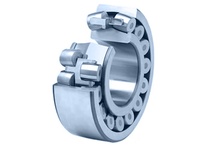
Image for Illustration purposes only. Actual product may vary
Link-Belt A22196MC0 (10425215) is a spherical roller bearing insert from the A20000M series. It features a 1.968" bore, direct shaft mount locking, C0 standard clearance, and a steel retainer. This unmounted replacement insert is designed for fixed (non-expansion) applications with a dynamic load rating of 21,200 lbf and static load rating of 33,200 lbf.
MODEL 10425215
Contact supplier for technical support on: 800-626-2120
$256.26 Each
Prices are subject to change
FREE SHIPPING ON ORDERS OVER $100
Select Quantity
Typically Ships in: 1 day
Returnable: Yes
Bearing Type
Spherical roller brg
Bore length (in)
1.526 in
Bore size (in)
1.968 in
Bore type
Straight
C dynamic load rating
21200 lb
Co static load rating
33200 lb
Fixed vs. Expansion
Fixed
Height
2.00
Housing fillet radius (in)
0.062 in
Inner Ring Bore Radius (in)
0.078 in
Length
4.00
Locking Type
Direct Shaft Mount
Max shoulder diameter (in)
3.18 in
Maximum Speed (RPM)
4500 rpm
Minimum Shoulder Diameter (in)
2.25 in
Mounted clearance
C0 standard
Outer Ring Width (in)
0.6510 in
Outside diameter (in)
3.5433 in
Retainer type
Steel
Sealed
None
Service instructions
BR3-006 LINK-BELT A SERIES
Unit of dimension
in
Vibration frequency fundamental train
Call Eng cps
Vibration frequency inner ring defect
Call Eng cps
Vibration frequency outer ring defect
Call Eng cps
Vibration frequency roller spin
Call Eng cps
Volume
0.524
Volume unit
CDM
Width
4.00
Link-Belt A20000 Spherical Roller Bearing Inserts (Unmounted Replacements)
- Bore range 1" - 3 3/4"
- Cylindrical Bore
- Direct shaft mounted
- Double row
How do I choose the right type of bearing for my application?
Start with the load and how it’s applied. You need to know if you’re dealing with radial loads, axial loads, or a mix of both. Then look at speed, operating environment, and space constraints. For example, ball bearings are great for high speed and lighter loads, while roller bearings handle heavier loads but usually at lower speeds. If there’s contamination, moisture, or heat involved, you may need sealed bearings or specific materials. In most cases, the right choice comes down to matching load type, speed, and environment to the bearing design.