










We never sell your data to third parties
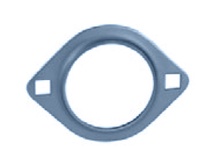
Image for Illustration purposes only. Actual product may vary
Link-Belt 40MST 10426648 two-bolt flange housing half, stamped steel construction with zinc plating. Designed for Link-Belt 200 series ball bearings, this housing half features a 1-15/16 in frame opening, 2-1/2 in bolt hole spacing, and a radial load rating of 600 lbf. Suitable for light-duty industrial applications.
MODEL 10426648
This product has a minimum order quantity of (10 minimum) This is the minimum order quantity available when purchasing this product.
Contact supplier for technical support on: 800-626-2120
$6.75 Each
Prices are subject to change
FREE SHIPPING ON ORDERS OVER $100
Select Quantity(10 minimum)
Typically Ships in: 1 day
Returnable: Yes
Carriage Bolt Long Shank Length (in)
0.1 in
Carriage Bolt Short Shank Length (in)
0.01 in
Carriage Bolt Size (in)
1/4 in
Distance between bolt holes (in)
2 1/2 in
Frame Opening (in)
1 15/16 in
Hole Diameter to Clear Mounting Bolt Square Shank (in)
13/32 in
Housing
FLANGE 2 PC 2 BLT SQ BLT H
Housing coating
ZINC PLATED
Housing Half Width (in)
9/32 in
Housing length (in)
3 3/16 in
Housing material
Stamped Steel
Nominal Hole Size (in)
9/32 in
Radial Load Rating of Housing Assembly (lbf)
600 lbs
Series
Housings & Seals
Size code
203
Stock Thickness (in)
0.08 in
Product Features
- 2-piece formed steel housing
- For collar mounted, round, square or hex bore bearings
- Alignable & non-relubricatable
- 2-bolt carriage mounting
- Bearing not included
How do I choose the right type of bearing for my application?
Start with the load and how it’s applied. You need to know if you’re dealing with radial loads, axial loads, or a mix of both. Then look at speed, operating environment, and space constraints. For example, ball bearings are great for high speed and lighter loads, while roller bearings handle heavier loads but usually at lower speeds. If there’s contamination, moisture, or heat involved, you may need sealed bearings or specific materials. In most cases, the right choice comes down to matching load type, speed, and environment to the bearing design.

