








We never sell your data to third parties
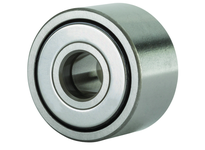
NTN NATV10XLL yoke type track roller bearing with 10 mm bore and spherical outer diameter. Double sealed for contaminant protection. High carbon chrome steel construction. Designed for cam follower and track roller applications in material handling and industrial machinery.
MODEL NATV10XLL
$83.36 Each
Prices are subject to change
FREE SHIPPING ON ORDERS OVER $100
Select Quantity
Typically Ships in: 1 day
Returnable: See conditions
B (in)
0.5906
B Tolerance
0/-0.180 mm
Bearing Type
Needle Roller Bearing
C (in)
0.5512
Cage material
None
D (0/-0.050)
1.1811 in
d (in)
0.3937
Dynamic load rating
2700 lbf
Dynamic Load Rating
2700 lbf
e (in)
0.9055
Enclosure
Double Sealed
F (in)
0.5906
I.D.
10 mm
Limiting speed - grease
6500 RPM
Limiting Speed - Grease
6500 RPM
Limiting speed - oil
8500 RPM
Limiting Speed - Oil
8500 RPM
Load Rating of Track
1730 lbf
Material
High Carbon Chrome Steel
O.D.
30 mm
Operating temperature range
-40 to 250 ºF
Operating Temperature Range
-40 to 250 °F
Outside Ring Type
Cylindrical
Roller type
Needle
Roller Type
Needle
Static load rating
4550 lbf
Static Load Rating
4550 lbf
Type
Yoke Type Track Roller
Technical Specifications
Type | Yoke Type Track Roller |
|---|---|
Roller Type | Needle |
Bearing Type | Needle Roller Bearing |
Material | High Carbon Chrome Steel |
Cage Material | None |
Outside Ring Type | Cylindrical |
Limiting Speed - Oil | 8500 RPM |
Limiting Speed - Grease | 6500 RPM |
Enclosure | Double Sealed |
Static Load Rating | 91 lbf20300 N20.30 kN |
Dynamic Load Rating | 270 lbf12000 N12.00 kN |
Load Rating of Track | 1730 lbf7700 N |
Weight | 0.143 lb0.065 kg |
Operating Temperature Range | -40 to 250 F-40 to 120 C |
Dimensional Specifications
| |
d | 0.3937 in10.000 mm |
|---|---|
D (0/-0.050) | 1.1811 in30.000 mm |
F | 0.5906 in15.000 mm |
e | 0.9055 in23.000 mm |
C | 0.5512 in14.000 mm |
B | 0.5906 in15.000 mm |
B Tolerance | 0/-0.180 mm |

How do I choose the right type of bearing for my application?
Start with the load and how it’s applied. You need to know if you’re dealing with radial loads, axial loads, or a mix of both. Then look at speed, operating environment, and space constraints. For example, ball bearings are great for high speed and lighter loads, while roller bearings handle heavier loads but usually at lower speeds. If there’s contamination, moisture, or heat involved, you may need sealed bearings or specific materials. In most cases, the right choice comes down to matching load type, speed, and environment to the bearing design.