








We never sell your data to third parties
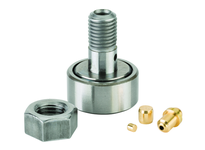
Image for Illustration purposes only. Actual product may vary
NTN NATR25LL/LP03 yoke type track roller bearing with inner ring, 25 mm bore, cylindrical outer diameter. Double sealed with steel cage. High carbon chrome steel construction for heavy-duty cam and track applications.
MODEL NATR25LL/LP03
$135.89 Each
Prices are subject to change
FREE SHIPPING ON ORDERS OVER $100
Select Quantity
Typically Ships in: 1 day
Returnable: See conditions
B (in)
0.9843
B Tolerance
0/-0.210 mm
Bearing Type
Needle Roller Bearing
C (in)
0.9449
Cage material
Steel
Cage Material
Steel
D (0/-0.050)
2.0472 in
d (in)
0.9843
Dynamic load rating
5150 lbf
Dynamic Load Rating
5150 lbf
e (in)
1.6535
Enclosure
Double Sealed
F (in)
1.1811
I.D.
25 mm
Limiting speed - grease
5000 RPM
Limiting Speed - Grease
5000 RPM
Limiting speed - oil
6500 RPM
Limiting Speed - Oil
6500 RPM
Load Rating of Track
1240 lbf
Material
High Carbon Chrome Steel
O.D.
52 mm
Operating temperature range
-40 to 250 ºF
Operating Temperature Range
-40 to 250 °F
Outside Ring Type
Spherical
Roller type
Needle
Roller Type
Needle
Static load rating
9100 lbf
Static Load Rating
9100 lbf
Type
Yoke Type Track Roller
Technical Specifications
Type | Yoke Type Track Roller |
Roller Type | Needle |
Bearing Type | Needle Roller Bearing |
Material | High Carbon Chrome Steel |
Cage Material | Steel |
Outside Ring Type | Spherical |
Limiting Speed - Oil | 6500 RPM |
Limiting Speed - Grease | 5000 RPM |
Enclosure | Double Sealed |
Static Load Rating | 182 lbf40500 N40.50 kN |
Dynamic Load Rating | 103 lbf22800 N22.80 kN |
Load Rating of Track | 1240 lbf5500 N |
Weight | 0.606 lb0.275 kg |
Operating Temperature Range | -40 to 250 F-40 to 120 C |

How do I choose the right type of bearing for my application?
Start with the load and how it’s applied. You need to know if you’re dealing with radial loads, axial loads, or a mix of both. Then look at speed, operating environment, and space constraints. For example, ball bearings are great for high speed and lighter loads, while roller bearings handle heavier loads but usually at lower speeds. If there’s contamination, moisture, or heat involved, you may need sealed bearings or specific materials. In most cases, the right choice comes down to matching load type, speed, and environment to the bearing design.