










We never sell your data to third parties
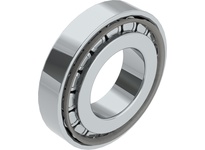
Image for Illustration purposes only. Actual product may vary
Nachi Bearing H-M12649/10 Tapered Roller Bearing Inch 0.8437mm Inner Diameter x 1.9687mm Outer Diameter x 0.69mm Width Tapered Roller Bearing
MODEL H-M12649/10
Contact supplier for technical support on: 800-829-5787
Returnable: See conditions
Bearing Material
Japanese Steel
Bore Diameter
21.43 mm
Bore Type
Cylindrical
Cage Material
JIS SPCC Steel
Closure Type
Open
Contact Angle (Deg)
N/A
Dynamic Load Capacity (N)
8790
Grease Fill
No Fill
Inner Diameter (mm)
21.42998
Inner Ring Material
JIS SUJ2 Steel
Internal Clearance
N/A
ISO Precision Class
P0
Limiting Speed - Grease (RPM)
8500
Limiting Speed - Oil (RPM)
11000
Max Operating Temp.
120°C (248°F)
Number of Rows
1
Outer Diameter (mm)
50.00498
Outer Ring Material
JIS SUJ2 Steel
Preload
N/A
Rolling Element Material
JIS SUJ2 Steel
Seals or Shields
No
Snap Ring
N/A
Static Load Capacity (N)
9150
Universally (Flush) Ground
N/A
Width (mm)
11000
A tapered roller bearing consists of a cone (or inner ring), the cup (or outer ring), tapered rollers and a cage. The tapered rollers allows the bearing to handle a combination of heavy radial and thrust loads. The bearings are separable. Internal clearance is established during mounting by the axial positioning of the cone relative to the cup. Preloading this bearing can obtain a higher rigidity and better running accuracy to optimize performance. They are used mostly for heavy duty, moderate speed applications. These bearings are generally used in pairs and are most common on agriculture, construction and mining equipment, vehicle and trailer axles and in gear boxes. Economical. Long life. Low friction and operating temperatures. Adjustable preload. Heavy radial/axial, vibrating and impact loads. Used as a combination or a double-row. Load carrying capacity - radial load and single-direction thrust load. Composite load. High-speed rotation. Accuracy. Low torque. Low noise. Rigidity. Permissible aligning. Separable inner ring/outer ring.
How do I choose the right type of bearing for my application?
Start with the load and how it’s applied. You need to know if you’re dealing with radial loads, axial loads, or a mix of both. Then look at speed, operating environment, and space constraints. For example, ball bearings are great for high speed and lighter loads, while roller bearings handle heavier loads but usually at lower speeds. If there’s contamination, moisture, or heat involved, you may need sealed bearings or specific materials. In most cases, the right choice comes down to matching load type, speed, and environment to the bearing design.

| Brand | Guardair |
| Model | TRP02 |
