










We never sell your data to third parties
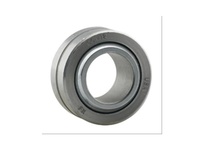
FK Bearing Jfl10t-F1
MODEL Jfl10t-F1
This vendor has a minimum order quantity of 2. Order minimum ($) may be applied. Add desired QTY to cart and proceed to checkout to view minimum
$28.54 Each
Prices are subject to change
FREE SHIPPING ON ORDERS OVER $100
Select Quantity
Brand Minimum Order Quantity: 2
Typically Ships in: 1 day
Returnable: See conditions
Bearings - FK Bearing Jfl10t-F1 The FK Bearing Jfl10t-F1 is a top-tier rod end accessory designed for optimal performance in various industrial applications. Manufactured by FK Bearing, a pioneer in bearing technology since 1969, this product exemplifies precision engineering and reliability, making it essential for operations requiring high-performance bearing solutions.
Key Features
| Robust Construction | Engineered from high-quality materials, the Jfl10t-F1 ensures longevity and durability in demanding environments. |
|---|---|
| Precision Design | Features a sleek design that accommodates moderate initial misalignment during installation, enhancing flexibility and ease of use. |
| Versatile Applications | Suitable for a wide range of applications, including factory automation, heavy-duty machinery, and agricultural equipment. |
| High Load Capacity | Designed to withstand significant loads, making it ideal for heavy-duty and industrial applications. |
| National Standards Compliance | Manufactured according to the national standards set by the National Rolling Bearing Standardization Technical Committee, ensuring reliable performance. |
Applications
| Industrial Automation | Perfect for use in robotic arms and conveyor systems, where precision and reliability are crucial. |
|---|---|
| Agricultural Machinery | Ideal for various agricultural applications, facilitating smooth operation in tractors and harvesters. |
| Heavy-Duty Machinery | Provides essential support in heavy machinery, ensuring efficient operation under extreme conditions. |
| Food and Pharmaceutical Production | Designed to meet stringent hygiene standards, making it suitable for use in food processing and pharmaceutical industries. |
Benefits
| Enhanced Performance | The Jfl10t-F1 provides superior performance, reducing downtime and maintenance costs in industrial operations. |
|---|---|
| Long Lifespan | Engineered for high reliability, this rod end accessory minimizes wear and extends the service life of machinery. |
| Ease of Installation | User-friendly design allows for quick and easy installation, saving time and resources during setup. |
| Custom Solutions | FK Bearing's commitment to tailored solutions ensures that this product meets the specific needs of various industries. |
Product information compiled with AI assistance for reference purposes.
No questions match your search.
What sizes do rod ends come in and what are the load ratings? Bearing basics
Rod end bore sizes range from 6mm to 22mm (DIN ISO 12240-4 standard). Dynamic load capacities span from 2,750 N (6mm bore) to 9,300 N (22mm bore). The right size depends on your application's load, speed, and misalignment angle requirements.
Why use a rod end instead of a plain spherical bearing? Bearing basics
Rod ends are self-contained units designed for linkages that need to accommodate angular misalignment (typically ±4° to ±8° per side). They mount directly via threaded shanks or bores, eliminating the need for separate housings and reducing assembly time. Load capacity is limited by the bearing system, shank stress, and eye hoop tension—verify all three when sizing.
Do rod ends need regular maintenance? Bearing basics
Lubricated rod ends with ball bearings require periodic grease relubrication per manufacturer intervals. Maintenance-free versions use PTFE self-lubricating liners and require no scheduled maintenance, making them ideal for sealed or inaccessible linkages. Check the application environment before choosing.
What materials are available and when should I use each? Bearing basics
Standard rod ends use drop-forged, tempered steel with electro zinc-plating (RoHS compliant). Stainless steel (316 grade) is specified for marine or corrosive environments. Aluminum rod ends are available for weight-critical aerospace and precision applications. Steel is the default for machinery and plant linkages.
What's the difference between male and female rod ends? Bearing basics
Male rod ends have external shank threads that screw into a fixed hole or fitting. Female rod ends have internal bore threads and accept a threaded pin or bolt. Choose male when you need to adjust position axially; choose female when the rod end mounts on a fixed bolt.
Can I apply axial loads to rod ends? Bearing basics
Yes, but axial capacity is much lower than radial. Limit axial load to 15% of ultimate radial capacity (or 10% for three-piece designs) to avoid premature failure in the hoop tension area.
How often should rod ends be re-lubricated? Bearing basics
High-frequency rod ends (>100 cycles/hour) typically need re-greasing every 50–100 hours; slower applications can go 6–12 months. Use lithium-complex or polyurea greases per your bearing datasheet; PTFE-lined rod ends require no periodic lubrication.
What's the difference between static and dynamic load ratings? Bearing basics
Static ratings apply to fixed loads or single-stroke applications. Dynamic ratings apply to continuous oscillating movement, like control linkages cycling repeatedly. For rod ends that move repeatedly, use the dynamic rating.
What are common installation mistakes that shorten rod end life? Bearing basics
The top three are improper shim installation, neglecting to align the oil hole with the bearing passage, and over-torquing the mounting bolt. Always follow the OEM installation manual—assembly errors are the leading cause of early failure.
Why did my rod end ball discolor and stop moving? Bearing basics
Discoloration (blue, brown, or black marks) indicates overheating from inadequate lubrication, causing micro-welding between ball and race. Replace the rod end immediately and establish a re-greasing schedule to prevent recurrence.
How do I choose the right bearing for my application? Bearing basics
Bearing selection depends on five key factors: 1. Load Type and Direction — Determine whether your application has radial loads (perpendicular to shaft), axial loads (along the shaft), or combined loads. Deep groove ball bearings suit primarily radial loads; tapered roller bearings excel at combined loads; thrust bearings handle pure axial forces. 2. Rotational Speed — Ball bearings support higher speeds with lower friction. Roller bearings are better for medium-speed, heavy-load applications. Verify bearing speed ratings against your operating RPM. 3. Load Capacity — Select a bearing with adequate load capacity for your application. Basic dynamic load rating (C) and basic static load rating (C₀) determine how much load the bearing can safely carry. 4. Lubrication Requirements — Choose between grease and oil lubrication based on speed, temperature, and load. High-speed or high-temperature applications typically require oil circulation; lower-speed applications can use grease. 5. Precision and Rigidity — Evaluate your application's tolerance for runout deviation. High-precision applications require tighter tolerances and higher-grade bearings.
What is a bearing and what does it do? Bearing basics
A bearing is a mechanical component that enables smooth rotational or linear motion by reducing friction between moving parts. Bearings support loads and facilitate the transfer of forces between moving elements, preventing direct metal-to-metal contact that would cause wear and heat buildup. Rolling element bearings contain balls or rollers that rotate within races (raceways) to minimize friction. Common types include ball bearings (used for moderate loads and high speeds), roller bearings (used for heavy loads at medium speeds), and angular contact bearings (designed for combined radial and axial loads). Bearings are essential in industrial equipment including motors, pumps, compressors, gearboxes, turbines, and conveyor systems.
How do I choose the right type of bearing for my application? Bearing basics
Start with the load and how it’s applied. You need to know if you’re dealing with radial loads, axial loads, or a mix of both. Then look at speed, operating environment, and space constraints. For example, ball bearings are great for high speed and lighter loads, while roller bearings handle heavier loads but usually at lower speeds. If there’s contamination, moisture, or heat involved, you may need sealed bearings or specific materials. In most cases, the right choice comes down to matching load type, speed, and environment to the bearing design.
How should I maintain and lubricate bearings? Bearing basics
Lubrication Importance — Improper lubrication causes over 40% of bearing failures. Proper bearing lubrication prevents friction damage, dissipates heat, protects against corrosion, and acts as a barrier against contaminants (dust, moisture, debris). Lubrication Selection — Choose between grease and oil based on: - Grease: Suitable for low-to-medium speed, sealed bearings, and applications without continuous circulation. Easier to apply and retain. Common for motors, household appliances, and sealed units. - Oil Mist or Circulating Systems: Better for high-speed applications, high-temperature environments, and heavy-load machinery where heat dissipation is critical. Best Practices: 1. Map all lubrication points and create a maintenance schedule. 2. Use the correct lubricant type and viscosity grade specified by the bearing manufacturer. 3. Store lubricants in sealed, labeled containers away from moisture and contaminants. 4. Monitor bearing temperature and vibration; unusual heat or noise may indicate inadequate lubrication or bearing wear. 5. Replace bearings before reaching L10 life if contamination or lubrication failure is detected.
What is bearing life (L10) and how does it affect my equipment maintenance? Bearing basics
L10 Life Definition (ISO 281) — L10 is the basic rating life at which 90% of a large group of identical bearings are statistically expected to survive under constant load and speed. It is calculated in millions of revolutions using the formula: L10 = (C/P)^p, where C is the basic dynamic load rating, P is the equivalent dynamic bearing load, and p is the life exponent (3 for ball bearings). Converting L10 to Operating Hours — To express L10 life in hours: L10h = (L10 × 10^6) / (60 × n), where n is rotational speed in RPM. For example, a bearing with L10 = 1,000 million revolutions operating at 3,600 RPM has approximately L10h ≈ 4,630 hours. Modified Life (L10a) — Actual bearing life also depends on lubrication quality, contamination, speed, temperature, and bearing accuracy. ISO 281 defines a modified life factor (a₁ × aISO) that adjusts the theoretical L10 for these real-world conditions. High-quality lubrication and proper maintenance can extend bearing life significantly; poor lubrication or high contamination reduces it. Why It Matters for Maintenance — L10 life helps you schedule preventive maintenance, budget for bearing replacement, and select bearings adequate for your duty cycle.
What are dynamic and static load ratings, and why do they matter? Bearing basics
Static Load Rating (C₀) — The maximum load a stationary or slowly rotating bearing can support without permanent deformation of its rolling elements or raceways. Defined by ISO 76 as the load producing 0.01% permanent deformation of the rolling element diameter. Static load capacity is the limiting factor when a bearing operates at very low speeds or remains stationary under heavy loads. Dynamic Load Rating (C) — The constant load a bearing can endure for a specified number of revolutions (the L10 life, at which 90% of identical bearings are expected to survive). Dynamic load rating determines how long a bearing will last under rotating or oscillating motion. ISO 281 defines the L10 calculation using the formula: L10 = (C/P)^p, where C is dynamic load rating, P is equivalent dynamic load, and p is the life exponent (3 for ball bearings, 10/3 for roller bearings). Why They Matter — Static load rating determines if a bearing can handle peak loads without permanent damage (even if not rotating). Dynamic load rating determines operational life. For high-speed applications, dynamic rating is critical. For low-speed or stationary loads, static rating may be the limiting factor. Always verify both ratings against your application's load profile.
What bearing materials are available and which should I use? Bearing basics
Standard bearing materials include: - Chrome Steel — Premium bearing steel used by SKF, NSK, Timken, and most manufacturers. Offers excellent hardness, fatigue resistance, and durability in standard industrial applications. Most common for ball and roller bearings. - Stainless Steel — Provides corrosion resistance for applications in wet, humid, or chemically corrosive environments. Used in food processing, marine, and pharmaceutical equipment. - Ceramic Hybrid Bearings — Combine steel races with ceramic rolling elements. Offer reduced friction, lower heat generation, and higher temperature capability. Used in high-speed, high-precision applications and aerospace. - Polymeric Bearings — Utilize fluoropolymer composites with embedded graphite or PTFE. Provide low friction in high-speed applications where lubrication film breakdown would be problematic. Material selection depends on operating environment (temperature, moisture, chemical exposure), speed, load, and precision requirements. Standard chrome steel bearings suit most industrial MRO applications.
Great product, great service, free shipping
Verified · SKU 724542The title says it all, except to say it's unusual to find that type service ... it's a pleasure to buy from them. Read more

#1748680
Brand
Toshiba
Model
0104XSSC42A-P

#2520242
Brand
WEG
Model
01036ET3H215TC-S

#1748230
Brand
Toshiba
Model
0104SDSC42A-P

#1748774
Brand
Toshiba
Model
0102XSSB44A-P

#1748314
Brand
Toshiba
Model
0054SDSR44A-P

#2520238
Brand
WEG
Model
01036ET3ER215TC-S

#2520193
Brand
WEG
Model
01018ET3HR215TC-S

#1748226
Brand
Toshiba
Model
0102SDSC42A-P
Item must be unused.
Item must be in it's original package
15% Restocking, shipping and handling fees may apply to any return with this manufacturer.
For more information please consult https://www.mrosupply.com/page/returnwarranty-policy/