









We never sell your data to third parties
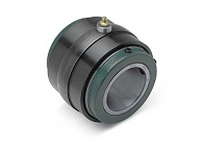
Dodge 077202 S1U-EXL-200R tapered roller bearing insert with 2" bore and set screw locking. Features triple-lip contact seal for heavy-duty applications requiring high radial and thrust load capacity. Greasable design for extended service life in demanding industrial environments.
MODEL 077202
Contact supplier for technical support on: +1-864-284-5700
$433.33 Each
Prices are subject to change
FREE SHIPPING ON ORDERS OVER $100
Select Quantity
Typically Ships in: 1 day
Returnable:No
Bearing type
Tapered roller, tapered roller
Bore length
3.5000 in, 88.9 mm
Greasable
Yes
Insert outer dia
3.6950 in, 93.853 mm
Locking
Set screw
Rolling element
Tapered roller
Seal type
Triple-lip contact
Shaft attachment
Setscrew
Shaft diameter
2.0000 in
Dodge 077202 S1U-EXL-200R BEARINGS The Dodge 077202 S1U-EXL-200R Bearings are high-quality components designed for optimal performance in various industrial applications. Engineered to meet the rigorous demands of automotive and machinery operations, these bearings offer exceptional reliability and longevity.
Key Features
| Precision Engineering | Manufactured with high-grade materials, ensuring minimal friction and wear for extended service life. |
|---|---|
| Load Capacity | Designed to handle significant radial and axial loads, making them suitable for heavy-duty applications. |
| Dimensions | Standard bore diameter of 200mm, providing compatibility with various machinery setups. |
| Sealing Technology | Integrated sealing system prevents contamination, ensuring consistent performance under challenging conditions. |
| Operating Temperature | Capable of functioning efficiently within a temperature range of -20°C to +100°C, accommodating diverse operational environments. |
Applications
| Automotive Industry | Ideal for use in performance vehicles, including muscle cars and SUVs, where durability and reliability are paramount. |
|---|---|
| Industrial Machinery | Suitable for various machinery applications, from manufacturing equipment to conveyor systems. |
| Compatibility | Designed to fit seamlessly with a range of Dodge vehicles and compatible machinery, ensuring ease of installation and maintenance. |
Benefits
| Enhanced Performance | The DODGE 077202 bearings reduce friction, allowing for smoother operation and improved efficiency in your systems. |
|---|---|
| Durability | Built to withstand harsh operating conditions, these bearings offer long-lasting service, reducing the need for frequent replacements. |
| Reduced Maintenance Costs | With their reliable performance and durability, these bearings help minimize downtime and maintenance expenses in both automotive and industrial applications. |

SKU: 126926
Oem parts
I was repairing a piece of equipment and wanted the same bearings that were removed. MRO Supply had the OEM bearings at a reduced cost. Shipped and received in a timely manner.
Read moreHow do I keep water out of a bearing on a wet shaft (washers, washdown conveyors)?
Three factory-recommended angles: a more robust multi-lip seal option for the housing where one exists; Dodge's modern SAF-style mounted bearing, which installs faster than a traditional SAF assembly and seals better; and continuous lubrication with an automatic lubricator (IntelliLube), which keeps a positive grease purge at the seal so water is pushed out instead of drawn in.
Which Dodge bearings hold up on sand-and-gravel conveyors with regular washdown?
Dodge's Harsh Duty series (formerly the Defender series) was designed for aggregate duty. It's a seal upgrade over the standard product with identical mounting dimensions, so it drops into your existing footprint: Harsh Duty versions exist for Type E and TAF tapered-roller pillow blocks and for ball bearings (ED suffix). The tapered line carries a one-year performance guarantee against solid-particle-contamination failure when commissioned with a Dodge IntelliLube automatic lubricator.
What grease do Dodge bearings come with from the factory?
Standard Dodge mounted bearings ship shaft-ready with an NLGI #2 lithium-based grease. Ball bearing inserts are factory-filled with Mobil Unirex N2 (a lithium complex grease); roller bearings get a heavier grease, Mobil XHP 222. Bearings can also be ordered dry, or with a special grease, if your plant runs its own lubrication standard.
How much grease is in a Dodge bearing out of the box?
Most standard Dodge bearings ship with a 33–35% factory grease fill. Washdown bearings ship 100% full; Harsh Duty ball bearings ship at 66%. All are shaft-ready out of the box — no pre-lube needed before installation.
How does Dodge warranty evaluation work if a product fails?
Failed units go to Dodge's US plants for evaluation — about a week in transit plus one to two weeks of analysis, and you get the findings either way. Warranty covers workmanship and material defects; failures caused by the application (lubrication, installation) fall to the customer, but the failure analysis tells you the root cause so it doesn't repeat.
What are the three key dimensions for selecting an insert bearing or cartridge unit?
The bore (inner diameter), outer diameter (OD), and width define an insert bearing's size and mounting requirements. These three dimensions must match both your shaft and housing specifications to ensure proper fit and load capacity. Measure all three with digital calipers against the manufacturer's size chart to confirm the correct unit.
What seal types are available for insert bearings and cartridges, and when should I use each?
Rubber seals provide basic contamination protection for standard conditions, while heavy-duty triple-lip seals are required for dusty or wet environments. For high-temperature applications, PTFE (Teflon) or FKM (Viton) seals are specified; FKM operates from -40°F to 400°F, while PTFE tolerates temperatures up to 500°F.
What is the difference between standard clearance and C3 clearance in insert bearings and cartridges?
C3 clearance provides larger internal gaps between the rolling elements and races, making it suitable for high-temperature applications or high-speed operation where thermal expansion occurs. Standard clearance is appropriate for normal operating temperatures and speeds; C3 should be specified when operating above 100°C or at sustained high RPM to avoid binding.
How should I install an insert bearing into a housing to avoid damage?
Always apply pressing force only to the inner race being inserted, never through the rolling elements, which can cause permanent damage. Lubricate the housing bore lightly and use steady, even pressure with a press or dead-blow mallet, beginning with light taps to ensure square entry before final seating.
Are sealed insert bearing cartridges maintenance-free, and do they need relubrication?
Sealed cartridge bearings are packed with lithium-based grease and are considered maintenance-free for the bearing's service life. Once the original lubricant fully dissipates, the bearing typically requires replacement rather than relubrication; attempting to overfill can damage seals and reduce bearing life.
What's the difference between pillow block and flange mounted bearings?
Pillow blocks mount parallel to the shaft (shaft runs horizontally along the base), while flange blocks mount perpendicular to the shaft (shaft extends out from the face). Choose pillow blocks for shafts that are level with your mounting surface; choose flange blocks when the shaft is perpendicular to your mount point.
How should I install and align a mounted roller bearing?
Align the bearing housing parallel to the shaft using a straightedge or dial indicator—misalignment is a leading cause of premature wear. Tighten mounting bolts in a cross pattern to seat the housing evenly. Use a soft mallet to tap the bearing unit into place; never force it. Check alignment after installation.
What's the difference between 2-bolt and 4-bolt flange mounts?
2-bolt (diamond) flanges fit tight spaces and light-to-moderate loads. Switch to 4-bolt (square) flanges for cantilevered (overhung) loads, torque reversal, or shafts over 50mm—the extra bolts distribute load more evenly and resist side thrust better.
How do I select the right bearing size and load rating for my application?
Match the bore diameter to your shaft size, then verify the dynamic load rating (C) exceeds your expected radial load. For radial loads, use C ≥ 3× your maximum load as a conservative starting point. Check speed rating against your RPM—pillow blocks typically handle 3,000–4,000 rpm while flange units can push 5,000+ rpm depending on bolt strength and bearing series.
What lubrication schedule should I follow?
Use the bearing manufacturer's recommended grease grade and relubricate at intervals matched to your speed and load—heavy-duty applications may need monthly service, while light-duty runs can extend to 6–12 months. Over-greasing creates drag and heat; under-greasing causes metal-to-metal contact. Wipe off excess grease to prevent contamination.
How do I install a mounted bearing correctly?
Verify your shaft diameter is within the bearing bore tolerance (consult the NSK or SKF datasheet), then secure the bearing to the mounting surface using the specified bolt torque and engage the locking collar or set-screw on the shaft to prevent axial slip. Hand-rotate the shaft through several complete turns with a dial indicator, laser alignment tool, or feeler gauge to confirm smooth operation and proper shaft runout within spec.
How often should I grease a mounted bearing?
Use the formula (OD in mm) × (Width in mm) × 0.005 = grams for periodic relubrication of the bearing element only; initial housing cavity fill is separate and should be 30–50% of free volume. Over-greasing damages seals and generates excess heat—stick to the calculated quantity and recommended relubrication schedule.
What temperature should a mounted bearing run at?
Monitor housing surface temperature (the standard MRO measurement point): 40–65°C is normal, 70–75°C warrants investigation of misalignment or over-greasing, and 80°C requires immediate shutdown. The inner race runs 15–30°C hotter than the housing surface, so an 80°C housing reading means lubricant degradation is accelerating and the bearing requires emergency diagnosis.
When should I replace a mounted bearing?
Replace based on condition: vibration signature analysis or ultrasonic emission (detected with a hand-held meter) indicates wear hours or days before audible noise appears, and is the actionable MRO signal. Other replacement triggers include continuous operation above 80°C housing temperature, visible grease leakage, or reaching the manufacturer's service interval for your duty cycle. Scheduled relubrication and temperature monitoring extend service life significantly — replacement is a last resort, not preventive maintenance.
What are the main types of mounted bearings?
Mounted bearings come in four main forms: pillow blocks (flat-base, shaft parallel to mounting surface), flange mounts (perpendicular shaft, available in 2-bolt and 4-bolt variants with different radial ratings), hanger bearings (overhead support for long horizontal shafts), and take-up frames (adjustable center-distance units for belt or chain drive tensioning). Select based on your shaft orientation, load direction, and space constraints.
How do I choose the right type of bearing for my application?
Start with the load and how it’s applied. You need to know if you’re dealing with radial loads, axial loads, or a mix of both. Then look at speed, operating environment, and space constraints. For example, ball bearings are great for high speed and lighter loads, while roller bearings handle heavier loads but usually at lower speeds. If there’s contamination, moisture, or heat involved, you may need sealed bearings or specific materials. In most cases, the right choice comes down to matching load type, speed, and environment to the bearing design.
How do I choose the right bearing for my application?
Bearing selection depends on five key factors: 1. Load Type and Direction — Determine whether your application has radial loads (perpendicular to shaft), axial loads (along the shaft), or combined loads. Deep groove ball bearings suit primarily radial loads; tapered roller bearings excel at combined loads; thrust bearings handle pure axial forces. 2. Rotational Speed — Ball bearings support higher speeds with lower friction. Roller bearings are better for medium-speed, heavy-load applications. Verify bearing speed ratings against your operating RPM. 3. Load Capacity — Select a bearing with adequate load capacity for your application. Basic dynamic load rating (C) and basic static load rating (C₀) determine how much load the bearing can safely carry. 4. Lubrication Requirements — Choose between grease and oil lubrication based on speed, temperature, and load. High-speed or high-temperature applications typically require oil circulation; lower-speed applications can use grease. 5. Precision and Rigidity — Evaluate your application's tolerance for runout deviation. High-precision applications require tighter tolerances and higher-grade bearings.
What is bearing life (L10) and how does it affect my equipment maintenance?
L10 Life Definition (ISO 281) — L10 is the basic rating life at which 90% of a large group of identical bearings are statistically expected to survive under constant load and speed. It is calculated in millions of revolutions using the formula: L10 = (C/P)^p, where C is the basic dynamic load rating, P is the equivalent dynamic bearing load, and p is the life exponent (3 for ball bearings). Converting L10 to Operating Hours — To express L10 life in hours: L10h = (L10 × 10^6) / (60 × n), where n is rotational speed in RPM. For example, a bearing with L10 = 1,000 million revolutions operating at 3,600 RPM has approximately L10h ≈ 4,630 hours. Modified Life (L10a) — Actual bearing life also depends on lubrication quality, contamination, speed, temperature, and bearing accuracy. ISO 281 defines a modified life factor (a₁ × aISO) that adjusts the theoretical L10 for these real-world conditions. High-quality lubrication and proper maintenance can extend bearing life significantly; poor lubrication or high contamination reduces it. Why It Matters for Maintenance — L10 life helps you schedule preventive maintenance, budget for bearing replacement, and select bearings adequate for your duty cycle.
How should I maintain and lubricate bearings?
Lubrication Importance — Improper lubrication causes over 40% of bearing failures. Proper bearing lubrication prevents friction damage, dissipates heat, protects against corrosion, and acts as a barrier against contaminants (dust, moisture, debris). Lubrication Selection — Choose between grease and oil based on: - Grease: Suitable for low-to-medium speed, sealed bearings, and applications without continuous circulation. Easier to apply and retain. Common for motors, household appliances, and sealed units. - Oil Mist or Circulating Systems: Better for high-speed applications, high-temperature environments, and heavy-load machinery where heat dissipation is critical. Best Practices: 1. Map all lubrication points and create a maintenance schedule. 2. Use the correct lubricant type and viscosity grade specified by the bearing manufacturer. 3. Store lubricants in sealed, labeled containers away from moisture and contaminants. 4. Monitor bearing temperature and vibration; unusual heat or noise may indicate inadequate lubrication or bearing wear. 5. Replace bearings before reaching L10 life if contamination or lubrication failure is detected.
What are dynamic and static load ratings, and why do they matter?
Static Load Rating (C₀) — The maximum load a stationary or slowly rotating bearing can support without permanent deformation of its rolling elements or raceways. Defined by ISO 76 as the load producing 0.01% permanent deformation of the rolling element diameter. Static load capacity is the limiting factor when a bearing operates at very low speeds or remains stationary under heavy loads. Dynamic Load Rating (C) — The constant load a bearing can endure for a specified number of revolutions (the L10 life, at which 90% of identical bearings are expected to survive). Dynamic load rating determines how long a bearing will last under rotating or oscillating motion. ISO 281 defines the L10 calculation using the formula: L10 = (C/P)^p, where C is dynamic load rating, P is equivalent dynamic load, and p is the life exponent (3 for ball bearings, 10/3 for roller bearings). Why They Matter — Static load rating determines if a bearing can handle peak loads without permanent damage (even if not rotating). Dynamic load rating determines operational life. For high-speed applications, dynamic rating is critical. For low-speed or stationary loads, static rating may be the limiting factor. Always verify both ratings against your application's load profile.
What bearing materials are available and which should I use?
Standard bearing materials include: - Chrome Steel — Premium bearing steel used by SKF, NSK, Timken, and most manufacturers. Offers excellent hardness, fatigue resistance, and durability in standard industrial applications. Most common for ball and roller bearings. - Stainless Steel — Provides corrosion resistance for applications in wet, humid, or chemically corrosive environments. Used in food processing, marine, and pharmaceutical equipment. - Ceramic Hybrid Bearings — Combine steel races with ceramic rolling elements. Offer reduced friction, lower heat generation, and higher temperature capability. Used in high-speed, high-precision applications and aerospace. - Polymeric Bearings — Utilize fluoropolymer composites with embedded graphite or PTFE. Provide low friction in high-speed applications where lubrication film breakdown would be problematic. Material selection depends on operating environment (temperature, moisture, chemical exposure), speed, load, and precision requirements. Standard chrome steel bearings suit most industrial MRO applications.
What is a bearing and what does it do?
A bearing is a mechanical component that enables smooth rotational or linear motion by reducing friction between moving parts. Bearings support loads and facilitate the transfer of forces between moving elements, preventing direct metal-to-metal contact that would cause wear and heat buildup. Rolling element bearings contain balls or rollers that rotate within races (raceways) to minimize friction. Common types include ball bearings (used for moderate loads and high speeds), roller bearings (used for heavy loads at medium speeds), and angular contact bearings (designed for combined radial and axial loads). Bearings are essential in industrial equipment including motors, pumps, compressors, gearboxes, turbines, and conveyor systems.


| Brand | VORTEX |
| Model | VOR XS325-40-R |


| Brand | SKF Bearing |
| Model | 7009 CD/P4ADGA |


| Brand | SKF Bearing |
| Model | NU 2209 ECP |
SKU: 126926
Oem parts
I was repairing a piece of equipment and wanted the same bearings that were removed. MRO Supply had the OEM bearings at a reduced cost. Shipped and received in a timely manner.
Read moreItem must be unused and undamaged, in it's orginal package. For Dodge there is typically a 10% + $30 US re-stocking fee, although it may vary from case to case. Re-packing fees may apply. Re-stocking fee applies bor both returns for credit and return for exchange.
Warranty is redeemed directly with manufacturer. If your item was damaged during usage, please let us know and we will help you get in touch with your nearest service center, they will guide you about the steps to follow to redeem the manufacturer's warranty.
For further information on our returns/warranty policy, please visit:
https://www.mrosupply.com/page/returnwarranty-policy/