







We never sell your data to third parties
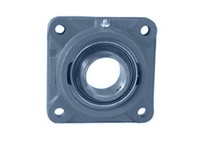
Link-Belt F3U220NZ48 (mfg part 10424012) is a 4-bolt flange ball bearing with a 1-1/4" bore, set screw locking, and a cast iron housing. This standard-duty mounted ball bearing features a single lip contact seal and a nylon retainer. It is fixed (non-expansion) and nickel-plated for corrosion resistance. The insert is UG220NLK4.
MODEL 10424012
Contact supplier for technical support on: 800-626-2120
$175.79 Each
Prices are subject to change
FREE SHIPPING ON ORDERS OVER $100
Select Quantity
Typically Ships in: 1 day
Returnable: Yes
Ability to Relubricate
Yes
Available end cap
Y2236N
Available seal type
E3 Triple lip seal;N lip seal;H labyrinth seal
Bearing housing
Flange block 4 bolt square BB
Bearing housing material
Cast iron
Bearing Insert Material
52100 Bearing Steel
Bearing Type
Standard duty ball brg
Bolt hole spacing (width) (in)
3.625
Bore diameter (in)
1.25
Bore length (in)
1 49/64 in
Bore Shape
Straight
C dynamic load rating
5810 lb
Cage Material
Molded fiber glass reinforced nylon
Cage Type
Ball Riding Retainer
Co static load rating
3440 lb
Distance between bolt holes (in)
3 5/8 in
Distance from housing cast face to inner ring long hub face (in)
33/64 in
Distance from Mounting Surface to Cap Face (in)
2 23/64 in
Distance from mounting surface to outer most bearing face (in)
1 59/64 in
Fixed expansion
Fixed
Foot Height (in)
0.63
Grease fitting size
1/8 NPT
Height
2.19
Housing coating
Nickel plated
Housing Color
Silver
Housing construction
One Piece
Housing Overall Circle Diameter (in)
6 1/8 in
Housing type
Flange, Four Bolt
Inner Ring Outside Diameter (in)
1.847
Insert
UG220NLK4
Length
5.31
Lubricant
Lithium Complex NLGI 2 Grease
Lubrication type
EXXON RONEX MP STD
Max Speed
6850 rpm
Max temperature (°F (°C))
225 (107) F (C)
Maximum Temperature (C)
107
Misalignment Capability
±2.0° Misalignment - Static Only
Misalignment Type
Static Only
Mounted clearance
C3 standard
Mounting bolt size (in)
1/2 in
Mounting Housing Width (in)
5/8 in
Mounting pad width (in)
4 5/8 in
Outer Ring Land Profile
Standard
Pilot Configuration
No Pilot
Primary seal
BUNA single lip contact seal
Retainer type
Nylon
Rolling element
Ball Bearing
Service instructions
BR3-007 LB 200 ball-300 ball
Setscrew torque (in-lbs)
165-185 in/lbs
Shaft diameter (in)
1 1/4 in
Shaft locking
Setscrew locking
Size code
207
Special lube fitting
Housing plugged
Special lube percent
100% grease fill
Standoff distance (in)
5/32 in
Type of seal
Single lip contact seal
Unit of dimension
in
Vibration frequency fundamental train
0.0067 cps
Vibration frequency inner ring defect
0.0905 cps
Vibration frequency outer ring defect
0.0595 cps
Vibration frequency roller spin
0.0383 cps
Volume
1.012
Volume unit
CDM
Width
5.31
1 1/4" Mounted Ball Bearing, Standard Duty, Cast Iron Nickel Plated 4-Bolt Square Flange Block, Setscrew Locking, Single Lip Contact Seal, 100% Grease Filled, Housing Plugged


How do I choose the right type of bearing for my application?
Start with the load and how it’s applied. You need to know if you’re dealing with radial loads, axial loads, or a mix of both. Then look at speed, operating environment, and space constraints. For example, ball bearings are great for high speed and lighter loads, while roller bearings handle heavier loads but usually at lower speeds. If there’s contamination, moisture, or heat involved, you may need sealed bearings or specific materials. In most cases, the right choice comes down to matching load type, speed, and environment to the bearing design.


