











We never sell your data to third parties
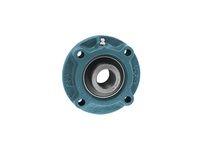
AMI UCFCX08 medium-duty piloted flange cartridge bearing with set-screw locking, wide inner ring, and cast iron housing. Chrome steel insert for reliable performance in industrial applications. Piloted design ensures precise alignment and secure mounting in medium-duty machinery.
MODEL UCFCX08
Contact supplier for technical support on: 800 882 8642
$97.28 Each
Prices are subject to change
FREE SHIPPING ON ORDERS OVER $100
Select Quantity
Typically Ships in: 1 day
Returnable: See conditions

#2199776
Brand
PTI
Model
HRC13E

#2199777
Brand
PTI
Model
HRC13F

#2876459
Brand
Magnetics
Model
708

#131696
Brand
Dodge
Model
P2B-SC-100
Application
General Purpose
Bearing
UCX08
Bolt Size
M10
Covers
No
Duty
Medium
Expansion
No
High Temp
212f
Housing
Cast iron
Housing Style
FCX08
HTS code
8483.20.40.40
I.D.
40mm
Inner Ring Width
Wide
Insert Material
Bearing steel
Insert Type
Ball Bearing
Locking
Set screw
Lubrication Fitting Tap
1/8-27 NPT
Relubrication
Yes
Seal
Contact Seal with Slinger
Type
Piloted flange
Specifications
- Catalog Number: UCFCX08
- Housing Type: Piloted Flange Cartridge
- Locking Type: Set-Screw
- Housing Material: Cast Iron
- Insert Material: Chrome Steel
- Duty Rating: Medium
- Weight: 3.9600 lb
No questions match your search.
What do the housing letters in an AMI flange bearing part number mean? This product
The letters after the insert code give the housing. F is a 4-bolt gray cast iron flange (UCF205-16). FT, FL and FJT are 2-bolt gray iron flanges, FA a 2-bolt adjustable flange, FX and LCTE 2-bolt malleable iron flanges (BFX205-16, KHFX205-16), and PFL a pressed steel 2-bolt. TM is a malleable 3-bolt flange, PF and PFT pressed steel 3-bolt, and FB and FK 3-bolt flange brackets. FC, FCS and FCF are piloted flange cartridges, and FS a heavy duty piloted 4-bolt. Thermoplastic housings use FPL (4-bolt), NFL (2-bolt) and FBL (bracket). An X in place of the 2 in the size marks medium duty (UCFX05-16, UCFLX05-16). Each 2-bolt style has its own mounting dimensions and matches a different brand.
Should I order an AMI UCFT or a UCFL 2-bolt flange? This product
Order the one that matches the unit you are replacing. Both are gray cast iron 2-bolt flanges with the same UC insert, but AMI's interchange maps them to different families. UCFT205-16 lines up with Dodge F2B-SC-100, SealMaster SFT-16 and Browning VF2S-216, while UCFL205-16 lines up with the FYH and NTN UCFL units. At 1 in bore both have 3-57/64 in bolt centres, but the UCFT205 is 4-7/8 in long and takes 7/16 in bolts, and the UCFL205 is 5-1/8 in long and takes 9/16 in bolts. Check length and bolt size on the old flange.
Which AMI flange bearings interchange with Dodge and SealMaster flanges? This product
AMI's interchange gives a direct match for the common styles. 4-bolt: UCF205-16 matches Dodge F4B-SC-100, SealMaster SF-16, Browning VF4S-216 and Link-Belt F3-U216N; Accu-Loc UEF205-16 matches Dodge F4B-DL-100 and SealMaster SF-16T. 2-bolt: UCFT205-16 matches Dodge F2B-SC-100 and SealMaster SFT-16. 3-bolt bracket: UCFB205-16 matches Dodge FB-SC-100 and SealMaster FB-16. Piloted flange cartridge: UCFCS208-24 matches Dodge FC-SC-108 and SealMaster SFC-24. The same series pattern runs through the other bore sizes, and each catalog page lists its interchange series at the foot.
What is the difference between AMI thermoplastic and stainless steel flange bearings for washdown? This product
AMI's corrosion range pairs a protected insert with a non-rusting housing. Prime units (MUCFPL, MUCNFL, MUCFBL) put a 440C stainless insert in a glass reinforced PBT thermoplastic housing, W for white or B for black; Prime Plus (MUCF, MUCFL, MUCFB) uses a 304 cast stainless housing. Select Plus (UCFPL...MZ2) uses a zinc protected insert and Choice Extra (UEFPL...MZ20) a Kanigen Accu-Loc insert. The thermoplastic is FDA compliant, rated -30F to 280F, and has about 70% of the tensile strength of cast iron. Inserts are rated 0F to 212F with H1 food grade grease. AMI says both housings suit frequent washdown, so choose by the application and environment. CE adds closed and open covers, and back seals are offered on 204 to 210 sizes.
What is different about AMI high temperature flange bearings like UCF208-24C4HR5? This product
The C4HR5 and C4HR23 suffixes mark AMI's high temperature units, offered in 4-bolt (UCF), 2-bolt (UCFL), bracket (UCFB) and piloted (UCFCS, UCFCF) flanges as well as pillow blocks. AMI's catalog rates C4HR5 to 392F (200C) with Yuken Super-Lube No.3 grease (its flyer rounds this to 400F), and C4HR23 to 450F with Kluber Noxlub BF4026. AMI says grease alone does not make a high temperature bearing: these inserts also use C4 internal clearance for thermal growth, silicone rubber seals in place of nitrile, and a zinc anodized slinger. In oven conveyors AMI recommends a fixed unit on one end and an expansion locking device on the float side.
What are the typical load ratings for piloted flange bearings? Bearing basics
Piloted flange bearings in the UCFC series range from 34,100 N to 84,000 N in dynamic load capacity, with static ratings from 21,300 N to 61,900 N depending on bore size. Bore sizes typically range from 45 mm to 85 mm, with prelubricated designs rated for speeds that require robust sealing and grease retention.
What maintenance do piloted flange bearings require? Bearing basics
Piloted flange bearings come prelubricated and ready for immediate installation with grease fittings for ongoing maintenance. Periodic regreasing extends bearing life; bonded seal designs with slinger and lip seals protect against contamination in wet or dusty environments, making them suitable for agricultural and food-processing applications.
What applications are piloted flange bearings used in? Bearing basics
Piloted flange bearings are used in conveyors, fans, pumps, compressors, and agricultural equipment where precise shaft positioning is critical. The pilot register simplifies replacement and ensures consistent alignment when bearing units are changed during maintenance.
How does a piloted flange differ from a non-piloted flange? Bearing basics
A piloted flange includes a machined boss that seats into a corresponding bore, while non-piloted flanges rely only on bolt friction for load transmission. This pilot design provides superior alignment accuracy, easier installation, and better vibration control, making it ideal for high-speed applications where precision positioning is critical.
What is a piloted flange bearing? Bearing basics
A piloted flange bearing is a mounted bearing unit with an integrated pilot register that fits into a precise bore on the mounting surface, ensuring accurate centering and alignment during installation. The pilot design reduces misalignment to within 0.02-0.05mm and transmits radial loads directly into the mounting structure for enhanced stability.
Can flanged mounted bearings handle both radial and axial loads? Bearing basics
Most flanged mounted bearings are designed to absorb high radial loads, while some units can handle moderate axial loads in both directions. Check the manufacturer datasheet for your specific bearing model to confirm dynamic and static load ratings before final selection.
What critical dimensions do I need to know to select the right flanged mounted bearing? Bearing basics
You need to verify four key dimensions: bore diameter (the shaft size), outer diameter (housing bore fit), bearing width, and flange outer diameter and thickness. These specifications ensure proper load distribution and prevent slipping or misalignment during operation.
What is the main advantage of a flanged mounted bearing over a standard bearing? Bearing basics
Flanged mounted bearings have an integrated mounting flange that acts as a built-in retaining surface, eliminating the need for separate brackets, adapters, or machining. The flange provides precise axial positioning and simplifies installation by allowing you to bolt directly to your housing surface, reducing assembly time and cost.
What mounting surface requirements must I meet for proper flange installation? Bearing basics
The mounting surface must be flat and stable to prevent angular, axial, or parallel misalignment that can cause edge loads and premature bearing failure. Confirm that your housing face is clean and flat within tolerance, and that all bolt holes align correctly before installation.
Do flanged mounted bearings require periodic maintenance like standard bearings? Bearing basics
Many flanged mounted bearings come with permanent grease lubrication sealed for life, eliminating the need for re-greasing during operation. However, some designs may require periodic relubrication depending on operating conditions, so always verify the maintenance requirements with your bearing's technical documentation.
When should I replace a mounted bearing? Bearing basics
Replace based on condition: vibration signature analysis or ultrasonic emission (detected with a hand-held meter) indicates wear hours or days before audible noise appears, and is the actionable MRO signal. Other replacement triggers include continuous operation above 80°C housing temperature, visible grease leakage, or reaching the manufacturer's service interval for your duty cycle. Scheduled relubrication and temperature monitoring extend service life significantly — replacement is a last resort, not preventive maintenance.
How do I install a mounted bearing correctly? Bearing basics
Verify your shaft diameter is within the bearing bore tolerance (consult the NSK or SKF datasheet), then secure the bearing to the mounting surface using the specified bolt torque and engage the locking collar or set-screw on the shaft to prevent axial slip. Hand-rotate the shaft through several complete turns with a dial indicator, laser alignment tool, or feeler gauge to confirm smooth operation and proper shaft runout within spec.
What temperature should a mounted bearing run at? Bearing basics
Monitor housing surface temperature (the standard MRO measurement point): 40–65°C is normal, 70–75°C warrants investigation of misalignment or over-greasing, and 80°C requires immediate shutdown. The inner race runs 15–30°C hotter than the housing surface, so an 80°C housing reading means lubricant degradation is accelerating and the bearing requires emergency diagnosis.
How often should I grease a mounted bearing? Bearing basics
Use the formula (OD in mm) × (Width in mm) × 0.005 = grams for periodic relubrication of the bearing element only; initial housing cavity fill is separate and should be 30–50% of free volume. Over-greasing damages seals and generates excess heat—stick to the calculated quantity and recommended relubrication schedule.
What are the main types of mounted bearings? Bearing basics
Mounted bearings come in four main forms: pillow blocks (flat-base, shaft parallel to mounting surface), flange mounts (perpendicular shaft, available in 2-bolt and 4-bolt variants with different radial ratings), hanger bearings (overhead support for long horizontal shafts), and take-up frames (adjustable center-distance units for belt or chain drive tensioning). Select based on your shaft orientation, load direction, and space constraints.
How do I choose the right type of bearing for my application? Bearing basics
Start with the load and how it’s applied. You need to know if you’re dealing with radial loads, axial loads, or a mix of both. Then look at speed, operating environment, and space constraints. For example, ball bearings are great for high speed and lighter loads, while roller bearings handle heavier loads but usually at lower speeds. If there’s contamination, moisture, or heat involved, you may need sealed bearings or specific materials. In most cases, the right choice comes down to matching load type, speed, and environment to the bearing design.
How do I choose the right bearing for my application? Bearing basics
Bearing selection depends on five key factors: 1. Load Type and Direction — Determine whether your application has radial loads (perpendicular to shaft), axial loads (along the shaft), or combined loads. Deep groove ball bearings suit primarily radial loads; tapered roller bearings excel at combined loads; thrust bearings handle pure axial forces. 2. Rotational Speed — Ball bearings support higher speeds with lower friction. Roller bearings are better for medium-speed, heavy-load applications. Verify bearing speed ratings against your operating RPM. 3. Load Capacity — Select a bearing with adequate load capacity for your application. Basic dynamic load rating (C) and basic static load rating (C₀) determine how much load the bearing can safely carry. 4. Lubrication Requirements — Choose between grease and oil lubrication based on speed, temperature, and load. High-speed or high-temperature applications typically require oil circulation; lower-speed applications can use grease. 5. Precision and Rigidity — Evaluate your application's tolerance for runout deviation. High-precision applications require tighter tolerances and higher-grade bearings.
What bearing materials are available and which should I use? Bearing basics
Standard bearing materials include: - Chrome Steel — Premium bearing steel used by SKF, NSK, Timken, and most manufacturers. Offers excellent hardness, fatigue resistance, and durability in standard industrial applications. Most common for ball and roller bearings. - Stainless Steel — Provides corrosion resistance for applications in wet, humid, or chemically corrosive environments. Used in food processing, marine, and pharmaceutical equipment. - Ceramic Hybrid Bearings — Combine steel races with ceramic rolling elements. Offer reduced friction, lower heat generation, and higher temperature capability. Used in high-speed, high-precision applications and aerospace. - Polymeric Bearings — Utilize fluoropolymer composites with embedded graphite or PTFE. Provide low friction in high-speed applications where lubrication film breakdown would be problematic. Material selection depends on operating environment (temperature, moisture, chemical exposure), speed, load, and precision requirements. Standard chrome steel bearings suit most industrial MRO applications.
What is a bearing and what does it do? Bearing basics
A bearing is a mechanical component that enables smooth rotational or linear motion by reducing friction between moving parts. Bearings support loads and facilitate the transfer of forces between moving elements, preventing direct metal-to-metal contact that would cause wear and heat buildup. Rolling element bearings contain balls or rollers that rotate within races (raceways) to minimize friction. Common types include ball bearings (used for moderate loads and high speeds), roller bearings (used for heavy loads at medium speeds), and angular contact bearings (designed for combined radial and axial loads). Bearings are essential in industrial equipment including motors, pumps, compressors, gearboxes, turbines, and conveyor systems.
How should I maintain and lubricate bearings? Bearing basics
Lubrication Importance — Improper lubrication causes over 40% of bearing failures. Proper bearing lubrication prevents friction damage, dissipates heat, protects against corrosion, and acts as a barrier against contaminants (dust, moisture, debris). Lubrication Selection — Choose between grease and oil based on: - Grease: Suitable for low-to-medium speed, sealed bearings, and applications without continuous circulation. Easier to apply and retain. Common for motors, household appliances, and sealed units. - Oil Mist or Circulating Systems: Better for high-speed applications, high-temperature environments, and heavy-load machinery where heat dissipation is critical. Best Practices: 1. Map all lubrication points and create a maintenance schedule. 2. Use the correct lubricant type and viscosity grade specified by the bearing manufacturer. 3. Store lubricants in sealed, labeled containers away from moisture and contaminants. 4. Monitor bearing temperature and vibration; unusual heat or noise may indicate inadequate lubrication or bearing wear. 5. Replace bearings before reaching L10 life if contamination or lubrication failure is detected.
What is bearing life (L10) and how does it affect my equipment maintenance? Bearing basics
L10 Life Definition (ISO 281) — L10 is the basic rating life at which 90% of a large group of identical bearings are statistically expected to survive under constant load and speed. It is calculated in millions of revolutions using the formula: L10 = (C/P)^p, where C is the basic dynamic load rating, P is the equivalent dynamic bearing load, and p is the life exponent (3 for ball bearings). Converting L10 to Operating Hours — To express L10 life in hours: L10h = (L10 × 10^6) / (60 × n), where n is rotational speed in RPM. For example, a bearing with L10 = 1,000 million revolutions operating at 3,600 RPM has approximately L10h ≈ 4,630 hours. Modified Life (L10a) — Actual bearing life also depends on lubrication quality, contamination, speed, temperature, and bearing accuracy. ISO 281 defines a modified life factor (a₁ × aISO) that adjusts the theoretical L10 for these real-world conditions. High-quality lubrication and proper maintenance can extend bearing life significantly; poor lubrication or high contamination reduces it. Why It Matters for Maintenance — L10 life helps you schedule preventive maintenance, budget for bearing replacement, and select bearings adequate for your duty cycle.
What are dynamic and static load ratings, and why do they matter? Bearing basics
Static Load Rating (C₀) — The maximum load a stationary or slowly rotating bearing can support without permanent deformation of its rolling elements or raceways. Defined by ISO 76 as the load producing 0.01% permanent deformation of the rolling element diameter. Static load capacity is the limiting factor when a bearing operates at very low speeds or remains stationary under heavy loads. Dynamic Load Rating (C) — The constant load a bearing can endure for a specified number of revolutions (the L10 life, at which 90% of identical bearings are expected to survive). Dynamic load rating determines how long a bearing will last under rotating or oscillating motion. ISO 281 defines the L10 calculation using the formula: L10 = (C/P)^p, where C is dynamic load rating, P is equivalent dynamic load, and p is the life exponent (3 for ball bearings, 10/3 for roller bearings). Why They Matter — Static load rating determines if a bearing can handle peak loads without permanent damage (even if not rotating). Dynamic load rating determines operational life. For high-speed applications, dynamic rating is critical. For low-speed or stationary loads, static rating may be the limiting factor. Always verify both ratings against your application's load profile.
Barons for my sweeper truck
Verified · SKU 14292Great product well recommend to anybody Read more
Excellent company
Verified · SKU 14292I love my new found Bearings Company. I love the price, lighting fast shipping and great customers service . Thank you. Read more
Great job
Verified · SKU 793219Had my bearings in stock and shipped right away. Read more
Ami bearings
Verified · SKU 15063I've been using AMI bearings for several years now and have had zero problems. There made in Japan, so seem remarkably high quality but half the price of NTN. Read more


#263234
Brand
Martin Sprocket
Model
50BTB21

#1383389
Brand
Isostatic
Model
WM20TU

#6139201
Brand
Telemecanique
Model
XS618B1MBL2

#2485816
Brand
MasterDrive
Model
8/SPB800-4545

#1017359
Brand
Hubbell Wiring
Model
DS120W

#96927908
Brand
DURUS
Model
DRS 112174 VBY

#2938094
Brand
Dongan
Model
ES-31380.542

#1430707
Brand
RAB Lighting
Model
HB101A
Item must be unused.
Item must be in it's original package.
Restocking, shipping and handling fees may apply to any return with this manufacturer.
For more information please consult https://www.mrosupply.com/page/returnwarranty-policy/